
Spray Foam Removal in Hampshire
Spray Foam Removal in Hampshire — Independent Surveys & Professional Removal
SOLENT COAST & NEW FOREST PROPERTY SPECIALISTS
Spray Foam Surveys & Removal Across Hampshire
We provide independent spray foam surveys, professional spray foam insulation removal, and full remedial solutions across Hampshire — from Southampton and Portsmouth to Winchester, Basingstoke, Fareham, and the New Forest. If spray foam insulation is affecting your mortgage, remortgage, or property sale, our specialist teams are here to help.
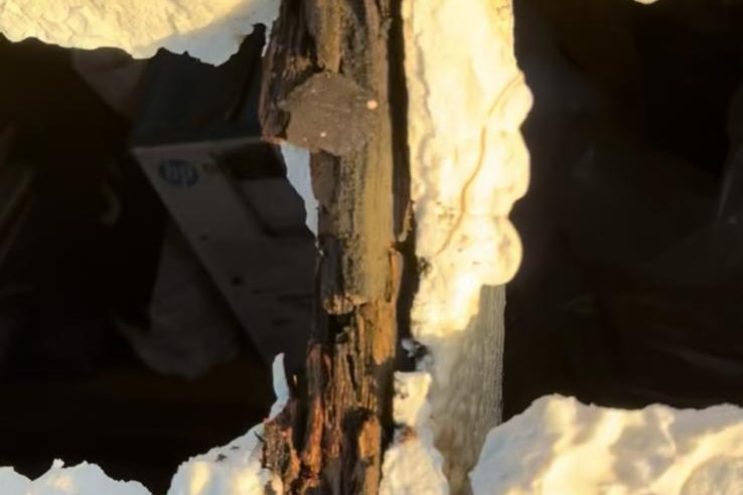
Hampshire's Housing Stock and Why Spray Foam Is Such a Common Problem Here
Hampshire is one of England’s most diverse counties when it comes to residential property. Portsmouth’s dense grid of Victorian naval terraces — built in their thousands to house Royal Navy workers and their families in the late nineteenth century — sits alongside Southampton’s post-war rebuilding estates, Winchester’s Georgian and Victorian city properties, Basingstoke’s new-town era development, and the rural vernacular buildings of the New Forest and the South Downs.
What connects these very different property types is a common vulnerability to spray foam insulation — and a consistent lender response when it is discovered. Across all of Hampshire’s housing stock, the same issue applies: properties built with ventilated cold roof structures that were never designed to have foam sealed against their rafters are now facing lender refusals at the point of sale, remortgage, or equity release.
Hampshire’s Solent-facing coastline adds a specific dimension. Properties in Portsmouth, Southsea, Gosport, Fareham, Lee-on-the-Solent, Emsworth, and the coastal villages of the south of the county face salt-laden air and elevated humidity from the sea — conditions that accelerate the moisture damage that spray foam causes to roof timbers significantly faster than in sheltered inland locations.

Laying insulation and positioning the red breathable membrane over the exposed timber trusses. Essential mid-renovation steps for a secure, weatherproof roof in Hampshire.
A Recent Hampshire Case: Southampton Homeowner, Sale Fell Through — Rescued After Removal
Last autumn, a homeowner in Southampton’s Bitterne area contacted us after their property sale had collapsed. Their buyer’s lender — Lloyds — had instructed a survey on the 1960s semi-detached property and flagged open-cell spray foam across the full loft floor and lower rafter sections. The foam had been applied in 2010 during a Southampton City Council energy efficiency scheme that targeted a number of streets in the area. Lloyds declined to lend until independent specialist removal and a written completion report were provided. The buyer, under pressure from their own deadline, pulled out.
The homeowner relisted the property and instructed us before accepting a new offer — specifically to survey and resolve the foam issue before it derailed a second sale. Our survey confirmed open-cell foam throughout, with elevated moisture readings in the upper foam layer — consistent with fifteen years of coastal-adjacent humidity — but no structural timber decay beneath. The report was honest about the moisture findings and clear about what removal would involve.
Removal was completed over two days. A detailed completion report was issued the same afternoon, confirming the loft was fully cleared, the timbers were accessible and structurally sound, and all works had been carried out by vetted specialist contractors.
The new buyer’s lender — Santander — accepted the completion report without further query. The sale completed four weeks later. The homeowner told us that having the survey and removal done before accepting the new offer gave them confidence, transparency, and — most importantly — a sale that actually completed.
Southampton’s post-war housing stock — particularly in Bitterne, Shirley, Woolston, and Hedge End — was widely targeted by local authority energy schemes in the 2000s. Spray foam discovery during property sales is, as a result, one of the most regular enquiry types we receive from the Southampton area.
TESTIMONIAL
Client Feedback & Reviews
See what our customers say about us.
Had spray foam removed from our loft in Bitterne after Lloyds flagged it during our remortgage survey. The team at Spray Foam Removal UK completed the work over two days and issued the completion report the same afternoon. Lloyds accepted it without any further questions.


What Hampshire's Mortgage Lenders and Surveyors Need to See
RICS guidance on spray foam insulation — which underpins the policies of all major UK lenders including Halifax, Nationwide, Barclays, Santander, and NatWest — is clear about the three concerns that consistently drive nil valuations and application refusals. Understanding these is important for Hampshire homeowners because it clarifies exactly what needs to be resolved and what evidence is required to resolve it.
- Physical access for structural inspection: A lender's valuer must be able to inspect the roof structure before any mortgage or equity release is agreed. Spray foam — particularly rigid closed-cell foam bonded directly to rafters — prevents this completely. There is no workaround: until the foam is removed and the structure is accessible, the lender will not proceed.
- The risk of concealed structural damage: Spray foam is well-documented as a concealer of timber decay. In Hampshire's coastal and Solent-facing properties, where moisture levels are elevated, the damage behind sealed foam can be significant. Lenders are not prepared to lend against a structure where major elements are both inaccessible and potentially compromised.
- Long-term maintenance and resale risk: A Hampshire property with closed-cell foam bonded to its roof timbers is more expensive to maintain, repair, and ultimately to re-roof. This is a real financial risk to the lender's security — particularly for longer-term mortgage products and equity release agreements that may span twenty or thirty years.
An independent completion report — issued following professional removal by a specialist contractor — provides the specific evidence that lenders need to address all three of these concerns simultaneously. Without it, removing the foam physically does not resolve the lender issue. With it, in most cases, the application can be reinstated.
Why Acting Before Your Transaction Is Almost Always the Better Option
The Southampton case above illustrates a pattern we see regularly across Hampshire: spray foam discovered mid-sale causes the transaction to collapse, and the homeowner then faces the cost and delay of resolution under significantly more pressure — and often with a relisting that raises questions from new buyers about why the property came back to market.
For Hampshire homeowners who know or suspect spray foam is in their loft, acting proactively — before a transaction goes live — delivers several important advantages:
- You control the timeline rather than working against a buyer's deadline or a lender's notice period
- You can market the property with confidence, having already resolved the issue that would otherwise derail a sale
- You avoid the reputational cost of a property sale falling through and being relisted
- You have time to understand the full scope of work — including any remedial works that removal may reveal — without emergency pressure
- In the case of remortgage, you can plan around your existing deal's end date rather than scrambling when the new application is declined
Our Hampshire Services: Survey, Removal, and the Completion Report That Resolves the Problem
- Independent Spray Foam Survey
Every project starts with a thorough independent inspection carried out by one of our vetted specialist contractors. We identify the type of spray foam present — open-cell or closed-cell — assess the full extent and method of application, and examine the condition of the underlying roof timbers. For Hampshire coastal and Solent-facing properties, we take particular care with moisture readings and signs of timber deterioration that foam may be concealing.
The written survey report you receive is structured specifically around the questions mortgage lenders, equity release providers, and conveyancers ask — not a generic inspection document. It gives you and your lender a precise, documented picture of the situation and a clear basis for planning next steps.
- Professional Spray Foam Removal
Our Hampshire removal teams use specialist equipment to detach spray foam from roof timbers with minimum disruption to the structure. The removal method — and the time it takes — depends on the foam type, its adhesion, and the age and construction of the roof. All of this is confirmed at survey stage, so there are no unexpected complications when work begins. Following removal, all foam debris and waste is cleared from the loft, the structure is inspected, and a formal completion report is issued the same day.
- Remedial Works and Roof Replacement
In some Hampshire properties — particularly those on or near the Solent coast where moisture has had extended time to work on timbers sealed behind foam — removal reveals damage that needs addressing. This can range from repairs to individual rafter sections through to replacement of deteriorated sarking felt or, in more serious cases, a partial or full roof replacement. We provide clear, honest guidance on what is needed before any additional works are agreed. Qualifying projects are eligible for a 10-Year Insurance-Backed Guarantee.
Hampshire's Housing Stock: Which Properties Are Most Commonly Affected?
Hampshire’s unusual breadth of housing types — from one of England’s largest naval port cities to a national park and one of its most historic county towns — means spray foam affects properties here in a range of different ways:
- Portsmouth and Southsea Victorian naval terraces: Streets of two-up-two-down and bay-fronted terraces built in the late nineteenth century for dockyard workers and naval families. These properties were designed for natural ventilation and are particularly susceptible to moisture damage when spray foam seals the roof void. The Solent's proximity compounds this risk significantly.
- Southampton post-war and 1960s–1980s housing: Built as part of Southampton's reconstruction after wartime bombing, this housing stock — particularly in Shirley, Bitterne, Woolston, and the suburbs east of the city — was widely targeted by early insulation schemes. Spray foam discovery during surveys is very common in this property type.
- Basingstoke new-town era properties: Basingstoke's rapid expansion from the 1960s onwards created large estates of 1970s–1980s family homes that were among the most systematically targeted by energy efficiency schemes in the county. Survey discoveries here are routine.
- Winchester Georgian and Victorian city centre properties: High-value historic city housing where lender scrutiny at valuation is intense. The consequences of a nil valuation in Winchester are significant given the property values involved, and the conservation area context means any external remedial works require careful consideration.
- New Forest rural properties and vernacular cottages: Traditional Hampshire brick, flint, and timber construction where spray foam disrupts the natural moisture management of the building. The New Forest AONB designation means planning consent may be needed for certain external remedial works following removal.
📍 Areas We Cover Across Hampshire
We provide spray foam surveys and removal across the whole of Hampshire. Our teams regularly work across:
- Aldershot
- Alton
- Awbridge
- Bishops Waltham
- Brockenhurst
- Emsworth
- Farnborough
- Fordingbridge
- Hartley Wintney
- Hayling Island
- Lee-on-the-Solent
- Farnham
- Lyndhurst
- New Milton
- Portsmouth
- Romsey
- Southampton
- Stockbridge
- Swanwick
- Tidworth
- Waterlooville
- Winchester
- Alresford
- Andover
- Basingstoke
- Bordon
- Chandler’s Ford
- Eastleigh
- Fareham
- Fleet
- Gosport
- Havant
- Hedge End
- Liphook
- Lymington
- New Arlesford
- North Warnborough
- Petersfield
- Ringwood
- Southsea
- Stubbington
- Tadley
- Totton
- Whitchurch
- Yateley
If your town or village is not listed, please contact us — our service covers the full county of Hampshire.
Why Hampshire Homeowners Choose Spray Foam Removal UK
Spray foam removal is a niche specialism — and the difference between a specialist and a general roofing contractor who offers removal as a side service is significant. The physical removal of foam from a loft is only part of what resolves a lender’s refusal. The completion report that follows — structured around the documentation requirements of mainstream mortgage lenders and equity release providers — is what actually changes the outcome of your application. We produce both.
- Specialist focus — spray foam surveys and removal is all we do
- Vetted contractors — all field teams are Checkatrade-approved before working on customer properties
- ORC members — contractors hold membership of the Confederation of Roofing Contractors
- Lender-aware reporting — every survey and completion report is structured around what lenders and equity release providers need to see, not just what was done on site
- Solent and coastal property experience — our Hampshire teams understand the specific moisture risk profile of south-facing coastal properties
- 10-Year Insurance-Backed Guarantee — available on qualifying removal and roof replacement projects
- Free online estimate — understand indicative costs before committing to a survey
- Proactive scheduling — we will discuss your transaction timeline at the outset and plan works accordingly
All works are carried out by vetted specialist contractors who are members of the Confederation of Roofing Contractors and approved by Checkatrade.
Where qualifying works are undertaken, projects may be supported by a 10-Year Insurance-Backed Guarantee.
Get a Free Online Estimate for Your Hampshire Property
Whether you are preparing to sell a Portsmouth terrace, remortgaging a Southampton family home, or dealing with a spray foam refusal on a New Forest cottage — the first and most important step is understanding exactly what you are dealing with and what it will cost to resolve it cleanly.
Use our free online estimate tool for an early indication of likely costs and next steps, or contact us directly to arrange an independent spray foam survey. We cover the whole of Hampshire and are experienced in scheduling around live property transactions, conveyancing deadlines, and mortgage renewal timelines.
FAQ's
Frequently Asked Questions
Conservation area designation does not restrict the removal of spray foam from inside the loft — this is internal work and does not require consent. Where it becomes relevant is if remedial works following removal involve any changes to the external roof — for example, replacing damaged ridge tiles, repairing copings, or replacing slates. In a conservation area, some of these works may require planning consent, and the materials used may need to match the existing. Our contractors are experienced working in Portsmouth's conservation areas and will flag any relevant planning considerations identified at survey stage.
Yes. Southampton's post-war housing stock — built across Shirley, Bitterne, Woolston, Townhill Park, and the suburbs east of the city between the 1940s and 1970s — was among the most comprehensively targeted by energy efficiency initiatives in the South of England. Many of these properties received spray foam insulation during council-coordinated schemes in the 2000s, often without the occupants having a full understanding of what was being installed. If you live in post-war Southampton housing and have not checked your loft recently, it is worth doing so before you proceed with any mortgage application or property transaction.
In terms of structural risk, yes — though every property is different and our survey will give you the accurate picture for your specific home. The Solent environment — persistent salt air, elevated coastal humidity, and the temperature cycling of a maritime location — creates conditions in which moisture trapped by spray foam against roof timbers can cause decay to develop meaningfully faster than in sheltered inland Hampshire properties. The survey findings from coastal properties in our area regularly show higher moisture readings than comparable inland properties with foam of the same age.
The New Forest National Park designation does not restrict spray foam removal from inside the property — that is internal works and requires no consent. Where the National Park designation becomes relevant is if remedial works following removal involve any external changes to the roof structure or covering — ridge repairs, tile replacement, new felt or breathable membrane. Permitted development rights within the National Park are more restricted than elsewhere in Hampshire, and some works that would be permitted development outside the Park may require consent within it. Our survey will identify whether any external remedial works are likely, and our contractors are experienced with National Park planning considerations.
Costs vary depending on the property size, foam type, extent of coverage, and the complexity of the roof structure. A standard Portsmouth Victorian terrace with typical open-cell foam coverage will typically cost less than a larger Southampton 1970s detached or a New Forest rural property with more complex roof construction. Coastal properties where moisture complications are identified at survey may occasionally require additional care during removal, which affects pricing. Our free online estimate tool gives you a realistic early indication before you commit to a survey. Full, itemised pricing is confirmed following the survey — there are no hidden charges and no obligation to proceed.
Start with a Free Online Estimate for Your Property
If spray foam insulation is affecting your Hampshire property — whether you are in Portsmouth, Southampton, Winchester, the New Forest, or anywhere across the county — the quickest way to understand your options and likely costs is through our free online estimate tool. You can also call or email us directly to arrange an independent survey.