
Spray Foam Removal in Herefordshire
Spray Foam Removal in Herefordshire — Independent Surveys & Professional Removal
WYE VALLEY, GOLDEN VALLEY & WELSH MARCHES SPECIALISTS
Spray Foam Surveys & Removal Across Herefordshire
We provide independent spray foam surveys, professional removal, and full remedial solutions across Herefordshire — from Hereford city and Ross-on-Wye to Ledbury, Leominster, Bromyard, and the rural Welsh Marches parishes. If spray foam insulation is blocking your mortgage, remortgage, or equity release, our specialist teams can help.
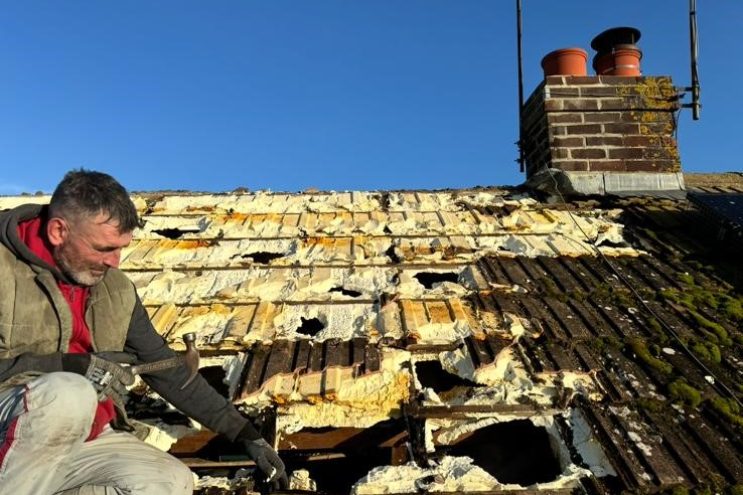
Herefordshire's Black-and-White Buildings and Why Spray Foam Presents the Most Specialist Removal Challenge in the County
Herefordshire is home to some of England’s finest examples of black-and-white timber-framed architecture. The villages of Weobley, Pembridge, Eardisland, Dilwyn, and Eardisley are among the most complete timber-framed settlements in the country, and the tradition extends across the county’s farmhouses, market town buildings, and rural cottages. These buildings are not merely picturesque — they are structurally distinct from any other construction type in England, and spray foam applied within them creates challenges that require the most specialist assessment we undertake anywhere in our coverage area.
Timber-framed construction relies on the entire building fabric breathing — moisture moves through the timber, through the infill panels, and through the roof structure in a carefully balanced system that has kept these buildings standing for centuries. When spray foam is introduced into the roof void of a timber-framed building, it disrupts this system at the point of the roof structure, trapping moisture at the very junction where timber-framing is most vulnerable. The consequences can include accelerated decay of the structural roof members, damage to historic fabric, and — in older buildings where the distinction between structural roof and wall framing is less clear — complications that extend beyond the loft space alone.
Lenders are acutely aware of this. A timber-framed Herefordshire property with spray foam in its roof void is not merely a standard spray foam flagging — it is a heritage construction with a well-documented moisture management requirement that the foam demonstrably undermines. Lender scrutiny at valuation for these properties is among the most intense we encounter across all 44 counties we cover.
A Recent Herefordshire Case: Leominster Homeowner, Remortgage Declined — Timber-Framed Property, Foam Concealing Structural Concerns
Last year, a homeowner in Leominster contacted us after their remortgage application was declined by Halifax. The property — a partly timber-framed Victorian town house with an older timber-framed range at the rear — had closed-cell spray foam applied to the rafters of the rear range in 2013. Halifax’s valuer flagged the foam with particular concern, noting both the standard lender spray foam risk factors and the specific heritage construction concerns that apply to timber-framed buildings. The nil valuation notice specifically referenced the inability to inspect the structural roof members and the moisture risk to historic timber.
We surveyed within five days. The report required particular care: in a partly timber-framed property, the distinction between roof rafters and structural wall plates is less clear than in standard construction, and we documented the foam’s application and adhesion characteristics in the context of the building’s specific structural system. The underlying timber condition — once the adhesion characteristics were assessed — showed some surface moisture staining on the historic wall plates but no structural decay. This was an important finding: Halifax’s concern about the structural risk was real, but the actual current condition was acceptable.
Removal was completed over three days, with specialist care taken around the historic timber junctions. The completion report addressed Halifax’s specific heritage construction concerns explicitly, documenting the timber condition, the moisture management implications, and the post-removal state of the structural members.
Halifax accepted the comprehensive completion report and the remortgage was approved four weeks later. The homeowner told us the detail of the survey documentation had been the key — it gave Halifax’s valuer the specific technical information about the timber-framed construction that a standard completion report would not have addressed.
This case illustrates why spray foam removal in a Herefordshire timber-framed property is genuinely more complex than in a standard suburban semi — and why the survey documentation needs to be correspondingly more detailed and specific.
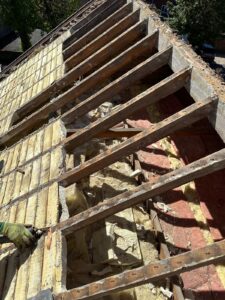
Stripping back the roof to expose the timber rafters and clear old insulation. Essential preparation work for a complete structural renewal in Herefordshire.
Herefordshire's Rural Character and Why Remote Properties Face Specific Challenges
Herefordshire is one of England’s least densely populated counties. The vast majority of the county’s area is rural — a patchwork of farmland, orchards, ancient woodland, and river valleys with a settlement pattern of small villages, isolated farmsteads, and scattered cottages. This rurality creates specific challenges when spray foam is present that urban and suburban counties do not face.
The first challenge is discovery. In more urban counties, spray foam tends to surface at the point of a sale or remortgage because there is high transactional activity. In rural Herefordshire, where properties may have a single owner for decades, spray foam installed during the 2000s energy schemes can remain undiscovered for a very long time. When it does surface — often at the point of an equity release application by a long-term owner, or at a sale following a bereavement — the foam may be significantly older and the moisture-related consequences more advanced than in counties with higher turnover.
The second challenge is logistics. Herefordshire’s rural geography means that some properties are genuinely remote — difficult to access, at the end of long farm tracks, or in valley locations with limited vehicle access. Our teams are experienced with remote rural access across the Welsh Marches and will confirm access logistics at the survey stage before any works are agreed.
The third is planning. Herefordshire has an exceptionally high proportion of listed buildings and conservation area coverage relative to its size. The county’s traditional settlement character is legally protected across much of its area, and external remedial works following removal — even minor tile repairs or felt replacement — may require listed building consent or planning permission that would not be needed in a standard suburban location.
TESTIMONIAL
Client Feedback & Reviews
See what our customers say about us.
Had the lads out to our place in Hereford yesterday. No fluff, just got the job done. I was half-expecting them to find 'extra' problems once they got in the loft, but they stuck to the price and worked like trojans. Bagged up all the old foam and left the place clean as a whistle. If you want a proper job without the usual headache, these are your guys.

Right result this. We were having a nightmare with our mortgage company over the insulation in our Ross-on-Wye semi. These guys didn't mess about. They turned up early, cracked on, and cleared the lot in a few hours. Even showed me the timbers afterwards so I knew it was done right. Saved us a massive amount of bother. Spot on.

Herefordshire's Housing Stock: What Spray Foam Means for Different Property Types
Herefordshire’s housing stock is unlike that of most English counties — it is older on average, more rural, more heritage-sensitive, and more varied in its traditional construction than virtually anywhere else we cover. Spray foam affects different property types here in meaningfully different ways:
- Black-and-white timber-framed buildings (Weobley, Pembridge, Eardisland, Dilwyn, and throughout the county): As described above — the most technically demanding spray foam removal scenario in the county. Requires specialist assessment of the timber-framing system before any removal approach is agreed. Lender scrutiny is at its most intense for these properties.
- Hereford city Victorian and Edwardian terraces: Standard cold-roof construction designed for natural ventilation. The city's inner suburbs — Whitecross, Hunderton, Tupsley, and Belmont — contain Victorian and Edwardian terraced housing where spray foam is found regularly, particularly from local authority energy schemes in the 2000s.
- Rural farmhouses and agricultural properties across the Herefordshire plain: Brick, stone, and timber-framed construction in varied combinations. Many farms and smallholdings have received spray foam during energy improvement programmes targeting rural properties. The remoteness of some properties means foam may have been in place for a long time before being identified at sale or equity release.
- Wye Valley and Golden Valley period properties: The scenic river valleys attract buyers seeking character rural properties. Period farmhouses, Victorian villas, and converted outbuildings are common in these areas. High property values combined with traditional construction and lender heritage scrutiny make spray foam resolution particularly important.
- Wye Valley and Golden Valley period properties: The scenic river valleys attract buyers seeking character rural properties. Period farmhouses, Victorian villas, and converted outbuildings are common in these areas. High property values combined with traditional construction and lender heritage scrutiny make spray foam resolution particularly important.
- Leominster, Ledbury, Ross-on-Wye, and Bromyard market town housing: Victorian and Edwardian market town housing with some 1950s–1970s suburban expansion. All four towns have conservation area designations covering their historic cores, and external remedial works following removal may require consent within these areas.
What Herefordshire Lenders Require — and Why the Documentation Matters More Here Than Most Counties
The RICS guidance on spray foam applies uniformly across Herefordshire. Halifax, Nationwide, Barclays, Santander, and NatWest all require professional removal confirmed by a specialist contractor, an independent completion report, and evidence of any remedial works. For standard Herefordshire suburban properties — Derby Victorian terraces, market town semis — this is the same process as anywhere else.
For Herefordshire’s timber-framed and historic rural properties, the documentation requirements are more demanding. The Leominster case above illustrates this: a standard completion report would not have addressed Halifax’s specific concerns about the heritage construction. Our survey and completion reports for heritage and timber-framed properties are structured with the construction type explicitly documented, the foam’s interaction with the traditional building fabric assessed, and the post-removal condition of heritage structural elements described in the specific terms that lenders dealing with historic properties need to see.
Our Herefordshire Services: Survey, Removal, and Specialist Documentation
- Independent Spray Foam Survey
We begin with a thorough independent inspection of your loft space. Our vetted contractors identify the type of spray foam — open-cell or closed-cell — assess the extent of application, and examine the condition of the underlying roof timbers. For East Sussex coastal properties we pay particular attention to signs of moisture absorption and early-stage timber deterioration that the foam may be concealing. You receive a detailed written report structured to address the specific questions mortgage lenders, equity release providers, and conveyancers need answered.
- Professional Spray Foam Removal
Removal in standard Herefordshire properties follows our established process. For timber-framed buildings, the removal approach is confirmed individually at survey stage, with specialist care taken around historic timber junctions and wall plate connections. Remote rural properties in Herefordshire may require additional logistical planning which is confirmed at survey stage. On completion, all debris is cleared, the structure is inspected, and the completion report — tailored to the property’s specific construction — is issued the same day.
- Remedial Works and Roof Replacement
Where removal reveals underlying damage, we provide honest guidance on the remedial works needed. For historic Herefordshire properties where listed building consent may be needed for external works, we flag the planning considerations clearly before any works are agreed. All qualifying projects are supported by a 10-Year Insurance-Backed Guarantee.
📍 Areas We Cover Across Herefordshire
We provide spray foam surveys and removal across the whole of Herefordshire. Our teams regularly work across:
- Hereford
- Ross-on-Wye
- Ledbury
- Leominster
- Bromyard
- Kington
- Weobley
- Pembridge
- Eardisland
- Hay-on-Wye
If your town, village, or rural property is not listed, please contact us — our service covers the full county of Herefordshire, including remote and difficult-access locations.
Why Herefordshire Homeowners Choose Spray Foam Removal UK
Herefordshire’s housing stock demands more from a spray foam specialist than almost any other county we cover. The combination of timber-framed heritage construction, rural remoteness, listed building sensitivity, and the requirement for survey documentation that addresses heritage lender concerns means that a generic removal service is genuinely not sufficient for many properties in this county. Our survey-first process, specialist assessment for heritage buildings, and lender-specific completion reports are built around exactly these requirements.
- Specialist focus — spray foam surveys and removal is our entire operation
- Vetted contractors — all field teams are Checkatrade-approved
- CORC members — contractors hold membership of the Confederation of Roofing Contractors
- Heritage construction experience — our teams understand black-and-white timber framing, Welsh Marches traditional construction, and the specific moisture management requirements of Herefordshire's oldest buildings
- Lender-aware documentation — survey and completion reports for heritage properties address the specific technical concerns that lenders applying heritage scrutiny require, going beyond standard completion report format
- Remote rural capability — our teams can reach and work at Herefordshire's most remote rural properties
- Listed building and conservation area awareness — planning implications for external remedial works are identified at survey stage
- Listed building and conservation area awareness — planning implications for external remedial works are identified at survey stage
- 10-Year Insurance-Backed Guarantee — available on qualifying removal and roof replacement projects
- Free online estimate — understand indicative costs before committing to a survey
Get a Free Online Estimate for Your Herefordshire Property
Whether you have a timber-framed black-and-white village property, a Wye Valley farmhouse, a Hereford city Victorian terrace, or a remote Welsh Marches rural home — if spray foam insulation is affecting your ability to sell, remortgage, or release equity, the starting point is the same: an independent survey and a clear, honest assessment of what you are dealing with.
Use our free online estimate tool for an early indication of costs and timescales, or contact us directly to arrange a survey. We cover the whole of Herefordshire — including its most remote rural parishes — and our survey documentation is structured for the specific heritage and lender requirements that Herefordshire’s traditional housing demands.
FAQ's
Questions Herefordshire Homeowners Ask Us Most
Yes — but the removal process requires specialist assessment and care that differs from standard removal. Our survey will document the timber-framing system specifically, identify the foam's adhesion to historic members, and confirm the appropriate removal method before any works begin. For listed timber-framed buildings, the removal process is planned with particular care around wall plate connections and historic structural junctions. If the removal involves any works that might affect the listed structure — even in minor ways — we will flag these for discussion with your listed building officer before proceeding. Internal loft foam removal does not typically require listed building consent, but we will confirm this for your specific property.
Yes. We cover the full county of Herefordshire including its most remote rural properties. Herefordshire's rural geography does require advance planning for access — narrow lanes, farm tracks, limited turning space, and in some cases seasonal access restrictions all need to be considered. At the survey stage, we confirm the access logistics for your specific property and plan the removal works accordingly. Additional travel time may be factored into scheduling for very remote properties, and we will confirm this clearly at the outset.
Herefordshire's inland location means moisture conditions are generally less severe than in coastal counties, and structural timber decay from long-term foam presence is less common here than in, for example, Cornwall or Cumbria. That said, older installations — particularly in historic timber-framed buildings where the foam is in contact with original wall plates — can show meaningful moisture staining and early-stage deterioration. Our survey will give you an accurate picture of the current timber condition, whatever the foam's age. Honest findings are always more valuable than reassuring ones — they allow you to plan realistically.
Yes — strongly recommended, particularly for Herefordshire rural properties. In a rural market, your buyer pool is already limited compared to urban areas, and a spray foam flag during conveyancing will restrict you to cash buyers only — eliminating the majority of prospective purchasers. Resolving the foam before going to market means you can present the property with a clean survey status, market to the full buyer pool, and avoid the disruption and cost of a mid-conveyancing discovery. For Herefordshire's more remote properties where transactions can be slower-moving, this proactive approach is particularly important.
Costs vary significantly across Herefordshire depending on property type and construction. A standard Hereford city Victorian terrace with typical foam coverage will be at the lower end of our range. A timber-framed Herefordshire farmhouse requiring specialist heritage assessment and careful removal around historic timbers, or a remote rural property requiring additional logistical planning, will be costed differently. Our free online estimate gives you a realistic early indication before you commit to a survey. Full itemised pricing — specific to your property's construction type and location — is confirmed following the survey with no hidden charges.
Start with a Free Online Estimate for Your Herefordshire Property
If spray foam insulation is affecting your Herefordshire property — whether you are in Hereford city, a market town, a Wye Valley farmhouse, or a remote rural parish — the quickest way to understand your options and likely costs is through our free online estimate tool. You can also call or email us directly to arrange an independent spray foam survey anywhere across Herefordshire.