
Spray Foam Removal in the West Midlands
Spray Foam Removal in the West Midlands — Independent Surveys & Professional Removal
BIRMINGHAM, THE BLACK COUNTRY & COVENTRY SPECIALISTS
Spray Foam Surveys & Removal Across the West Midlands
The West Midlands contains the highest concentration of Victorian industrial workers’ housing in England outside London. The Black Country’s iron and steel heritage, Birmingham’s diverse inner city, post-war Coventry, and affluent Solihull each create distinct spray foam challenges — and our vetted contractors understand all of them.
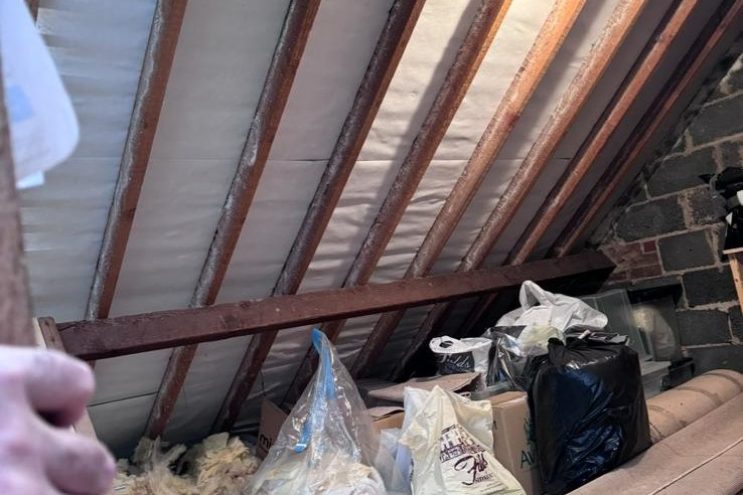
The Black Country: England's Industrial Heartland and the Highest Spray Foam Concentration of Any Metropolitan Area
The Black Country — Dudley, Walsall, West Bromwich, Wolverhampton, and the dense industrial towns of Sandwell, Tipton, Oldbury, Smethwick, and Halesowen — was the crucible of the Industrial Revolution. Iron foundries, chain works, glass factories, nail-making workshops, and steel rolling mills drove the world’s first industrial economy here in the eighteenth and nineteenth centuries, and the workers who ran them were housed in the densest concentration of Victorian back-to-back terraces and tunnel-back houses found anywhere in England outside East London.
These Victorian industrial workers’ terraces were the primary targets of every energy improvement scheme that operated across the West Midlands during the 2000s. Street by street, the housing associations and local authorities that managed much of the Black Country’s residential stock — and the energy companies and improvement contractors who worked through them — applied spray foam insulation to properties in a way that was systematic, comprehensive, and largely undocumented in any form that would survive to inform future buyers. The consequence is that spray foam prevalence across the Black Country’s Victorian terraced streets is among the highest of any area we cover in England.
That prevalence is now surfacing at scale. The Black Country’s housing stock has seen sustained right-to-buy activity since the 1980s, and properties that have changed hands once, twice, or three times since leaving local authority management are now reaching the remortgage, sale, and equity release stage with foam installed a decade or more ago — discovered at valuation by lenders applying current RICS guidance that did not exist when the foam was put in.
A Recent West Midlands Case: Wolverhampton Homeowner, Equity Release Refused by NatWest — Victorian Terrace, Foam Unknown
Last year, a homeowner in Wolverhampton’s Penn area contacted us after their equity release application was refused by NatWest. The property — a Victorian mid-terrace that had been in the family’s ownership for over twenty years following a right-to-buy purchase — had closed-cell spray foam applied to the full rafter span at some point during a Wolverhampton Council housing improvement programme in the late 2000s, before the right-to-buy sale. The current owner had no knowledge of the foam. NatWest’s appointed valuer identified it and issued a nil valuation, stating the roof structure was not accessible for inspection.
We surveyed within five days. The report confirmed rigid closed-cell foam throughout, with no evidence of structural timber decay — the property’s sheltered urban West Midlands location had protected the timbers over fifteen or more years. The survey gave NatWest’s valuer the specific structural evidence they needed.
Removal was completed over two days. The completion report was issued the same afternoon and submitted to NatWest via the homeowner’s solicitor. NatWest reinstated the equity release application and it was approved within four weeks. The homeowner was able to proceed with plans they had been developing for over a year while the application was blocked.
Wolverhampton’s Penn, Oxley, Wednesfield, and Bilston areas have a high concentration of Victorian terraced housing from the town’s late nineteenth century industrial expansion. Right-to-buy transfers in the 1990s and 2000s, followed by housing association improvement programmes applied before and around the time of sale, have left a significant number of these properties with foam that subsequent owners know nothing about. Equity release refusals are among the most common enquiry type we receive from Wolverhampton.
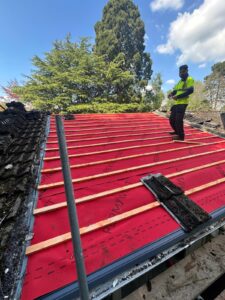
Roofing contractor standing on red breathable membrane and timber battens during roof renovation in the West Midlands
Birmingham's Housing Complexity: Back-to-Backs, Right-to-Buy, and the City's Extraordinary Internal Diversity
Birmingham is England’s second largest city and its housing stock is among the most complex and varied of any English metropolitan area. The city’s inner suburbs — Handsworth, Aston, Saltley, Small Heath, Sparkbrook, Moseley, Balsall Heath, Selly Oak, and Erdington — contain dense Victorian terraced housing that in some streets has been continuously occupied since the 1880s. The National Trust’s preserved back-to-back court in Hockley is the last remaining example of what was once the dominant housing type in a large part of inner Birmingham — but the terrace forms that replaced the courts through the late Victorian and Edwardian periods are still abundant across the city’s inner ring.
Birmingham’s extensive social housing programme of the 1950s–1970s — which produced the council estates of Chelmsley Wood, Castle Vale, Druids Heath, Frankley, and the tower block developments of Newtown and Nechells — was followed by systematic right-to-buy activity from the 1980s that transferred large portions of this stock into private ownership. The energy improvement schemes that targeted this stock in the 2000s produced spray foam concentrations in the council-era housing that are comparable to the Nottinghamshire coalfield and similar housing association-managed areas.
North and south Birmingham tell different stories. Sutton Coldfield’s affluent leafy suburbs — large 1930s detached and semi-detached properties — have spray foam from private installations rather than improvement schemes, and nil valuations here carry significant financial consequences given the property values involved. South Birmingham’s Moseley, Kings Heath, and Stirchley have a growing young professional population where Victorian terraces are rapidly gentrifying and spray foam discovered at first purchase or remortgage creates acute time pressure.
The West Midlands' Housing Stock: Where Spray Foam Is Most Commonly Found
The West Midlands metropolitan county encompasses five metropolitan boroughs alongside Birmingham and Coventry, each with distinct housing characters and spray foam patterns:
- Birmingham inner suburbs (Handsworth, Aston, Saltley, Small Heath, Sparkbrook, Balsall Heath, Selly Oak, Moseley, Erdington): Victorian and Edwardian terraced streets with both energy scheme foam and private installations. Right-to-buy council estate housing from the 1970s–1980s with systematic scheme foam. High transaction volumes and an active young professional gentrification market make mid-sale discoveries time-critical.
- Sutton Coldfield and north Birmingham: Large 1930s–1960s detached and semi-detached suburban properties where private spray foam installations are more common than scheme-based foam. High property values make nil valuations here financially significant. Equity release from long-term owners is a consistent trigger.
- The Black Country (Wolverhampton, Dudley, Walsall, West Bromwich, Sandwell): The highest spray foam concentration in the West Midlands. Victorian terraced streets from the industrial era, housing association stock from the coal and metal industries, right-to-buy properties where improvement-scheme foam pre-dates the sale. Equity release refusals from long-term owners and remortgage declines from second-generation purchasers are the dominant discovery triggers.
- Solihull and the prosperous south-east: Solihull's leafy character — large 1930s–1960s semi-detached and detached properties — creates high property values where nil valuations carry significant financial consequences. Private spray foam installations from the 2000s are found here. Solihull's position adjacent to the NEC, the airport, and the HS2 development zone has driven sustained property value growth.
- Coventry: Coventry was extensively bombed in the Second World War and rebuilt systematically in the 1950s–1970s with a high proportion of post-war housing. This post-war stock was widely targeted by energy improvement schemes. Coventry's two universities also create a rental market with landlord-era foam patterns similar to Oxford and Bristol. The Cheylesmore, Earlsdon, and Tile Hill areas have a mix of pre-war period housing and post-war family stock.
- Stourbridge, Halesowen, and south-west: The southern fringe of the Black Country transitioning towards the Worcestershire border. Victorian and inter-war housing with energy scheme foam concentrations. Stourbridge's glass-industry heritage produced specific working-community housing stock that is now changing hands as first-generation right-to-buy owners reach equity release.
What West Midlands Lenders Require After a Spray Foam Nil Valuation
The RICS guidance applies uniformly across the West Midlands — Halifax, Nationwide, Barclays, Santander, and NatWest all require professional removal confirmed in writing, an independent completion report, and evidence of any remedial works. For Black Country Victorian terraces and Birmingham inner suburb properties where improvement scheme foam is the norm, the standard survey and completion report process is efficient and well-understood. For Sutton Coldfield and Solihull larger properties where private installations are more common, the foam type and installation history need to be documented specifically. For Coventry’s post-war housing stock, the construction characteristics are assessed and confirmed at survey stage.
Our West Midlands Services: Survey, Removal, and the Completion Report
- Stage One: Independent Spray Foam Survey
Every project begins with a thorough independent inspection by one of our vetted specialist contractors. We identify foam type, assess extent, and examine timber condition. For Black Country Victorian terraces and Birmingham inner city properties, we document the improvement scheme context where identifiable. For Sutton Coldfield and Solihull larger properties, private installation characteristics are noted. For Coventry post-war stock, construction type is confirmed. The survey report is written to address the specific questions your lender or equity release provider will ask.
- Stage Two: Professional Spray Foam Removal
Our removal teams use specialist equipment to detach spray foam from roof timbers with minimum structural disruption. For standard West Midlands Victorian terraced properties — the largest part of our workload in the conurbation — removal of typical foam coverage is usually achievable within one to two working days on site. On completion, all debris is cleared, the structure is inspected, and the completion report is issued the same day.
- Stage Three: Remedial Works & Roof Replacement Where Needed
Where removal reveals underlying damage, we provide honest, itemised guidance on the remedial works needed. The West Midlands’ sheltered inland position means structural decay from foam is less common than in coastal counties, but it does occur in older properties and those with particularly aged installations. All qualifying works are supported by a 10-Year Insurance-Backed Guarantee.
📍 Areas We Cover Across the West Midlands
We provide spray foam surveys and removal across the whole of the West Midlands metropolitan county. Our teams regularly work across:
- Birmingham
- Coventry
- Wolverhampton
- Dudley
- Walsall
- Solihull
- West Bromwich
- Sutton Coldfield
- Stourbridge
- Halesowen
- Smethwick
- Oldbury
- Tipton
- Kingswinford
If your area is not listed, please contact us — our service covers all West Midlands metropolitan boroughs and surrounding areas.
Why West Midlands Homeowners Choose Spray Foam Removal UK
The West Midlands is the most complex metropolitan area in our coverage — densest Victorian industrial workers’ housing in England, the highest improvement-scheme foam prevalence of any metropolitan conurbation, and the greatest internal diversity of any area we serve outside London. Our survey-first process ensures every property is individually assessed, and our completion reports are structured to address the specific lender requirements raised by the Black Country’s scheme-foam history, Birmingham’s diverse housing stock, Coventry’s post-war character, and Solihull’s private-installation patterns.
- Specialist focus — spray foam surveys and removal is our entire operation
- Vetted contractors — all field teams are Checkatrade-approved
- CORC members — contractors hold membership of the Confederation of Roofing Contractors
- Lender-aware documentation — every survey and completion report is structured around the specific requirements of mainstream lenders and equity release providers
- West Midlands conurbation experience — our teams understand the Black Country's improvement-scheme foam history, Birmingham's right-to-buy housing stock, Coventry's post-war construction, and Solihull's private-installation patterns
- Equity release experience — Black Country and inner Birmingham equity release refusals are among our most frequent West Midlands cases and we understand the documentation these applications require
- 10-Year Insurance-Backed Guarantee — available on qualifying removal and roof replacement projects
- Free online estimate — understand indicative costs before committing to a survey
Get a Free Online Estimate for Your West Midlands Property
Whether you are a Wolverhampton right-to-buy homeowner whose equity release has been refused, a Birmingham inner suburb seller whose mid-conveyancing sale has been halted, a Coventry homeowner whose remortgage has been declined, or a Solihull equity release applicant dealing with a nil valuation — the starting point is always the same: an independent survey and a clear, honest picture of what you are dealing with.
Use our free online estimate tool for an early indication of costs and timescales, or contact us directly to arrange a survey. We cover the whole of the West Midlands metropolitan county and understand both the Black Country’s industrial heritage housing and the full range of property types across this extraordinary conurbation.
TESTIMONIAL
Client Feedback & Reviews
See what our customers say about us.
We were genuinely impressed with the level of service. Removing the spray foam from our property in Solihull was something we'd been putting off, but the team made it very simple. They were polite, worked incredibly hard, and left the loft in a fantastic state. It's rare to find a company that actually delivers high-quality work at a sensible price. No mess left behind at all.

Massive weight off my shoulders. A surveyor had flagged the insulation in our Wolverhampton semi, and it was threatening to hold up our move. These guys came in and just got the job done. They were efficient, sorted all the bagging and disposal, and the paperwork was in my inbox the same evening. If you need a reliable crew who don't mess about, this is the one.

FAQ's
Questions West Midlands Homeowners Ask Us Most
Yes — spray foam is disproportionately common in former council and housing association properties across the Black Country that were purchased through right-to-buy. Energy improvement programmes in the 2000s applied foam to many of these properties before the right-to-buy sale, sometimes in the period immediately preceding transfer when the managing authority was completing a programme of improvement works. If your Black Country property was a former council or housing association home built before 1985 and you have not inspected the loft recently, a check before any equity release application is very strongly advisable. Our free online estimate gives you an early indication of likely removal costs with no commitment.
Contact us the same day you receive the nil valuation notice. Birmingham's inner suburb property market — particularly the gentrifying Victorian terrace streets of Moseley, Kings Heath, Stirchley, and Selly Oak — moves quickly and buyers have alternatives. For a standard Birmingham Victorian terrace with typical foam coverage, our expectation is: survey within four to five working days, removal within one to two weeks of survey confirmation, completion report issued on the day removal finishes. We treat every mid-conveyancing Birmingham case as time-critical from the first call.
Post-war Coventry housing — built systematically in the 1950s–1970s following the wartime bombing — was managed by Coventry City Council and subsequently housing associations before significant right-to-buy transfer. These properties were widely targeted by energy improvement schemes and spray foam prevalence in Coventry's post-war estates is comparable to similar housing stock in Birmingham and the Black Country. Coventry also has two universities whose rental market creates landlord-era foam patterns similar to Bristol and Oxford. If your Coventry property is post-war and pre-1985, a loft inspection before any mortgage application is advisable.
Solihull's larger 1930s–1960s detached and semi-detached suburban housing is less likely to have energy improvement scheme foam than Black Country or inner Birmingham terraces — these were generally privately owned and not targeted by the same systematic programmes. However, private spray foam installations by individual homeowners seeking to improve thermal efficiency are found in Solihull properties, sometimes installed by private contractors during the 2000s energy improvement marketing push. If your Solihull property is pre-1980 and you are planning any significant transaction, a loft inspection before applying is straightforward to arrange.
Costs vary across the West Midlands. Black Country Victorian terraces and Birmingham inner suburb terraces with standard closed-cell or open-cell scheme foam usually fall towards the lower-to-mid range of our estimate tool — these are typically smaller loft spaces with straightforward access. Coventry post-war semis are similarly priced. Sutton Coldfield and Solihull larger detached properties will be costed higher given the loft volume. Our free online estimate gives you a realistic early indication before you commit to a survey. Full itemised pricing is confirmed following the survey with no hidden charges.
Start with a Free Online Estimate for Your West Midlands Property
If spray foam insulation is affecting your West Midlands property — whether you are in Birmingham, Wolverhampton, Coventry, Dudley, Walsall, Solihull, or anywhere across the conurbation — the quickest way to understand your options and likely costs is through our free online estimate tool. You can also call or email us directly to arrange an independent spray foam survey anywhere across the West Midlands.