
Spray Foam Removal in Dorset
Specialist Spray Foam Surveys & Removal Across Dorset
JURASSIC COAST & RETIREMENT PROPERTY SPECIALISTS
Spray Foam Surveys & Removal Across Dorset
We provide independent spray foam surveys, professional removal, and full
remedial solutions across Dorset — from Bournemouth and Poole to Weymouth,
Dorchester, Bridport, and the Jurassic Coast. If spray foam is affecting your
mortgage, equity release, or property sale, we are here to help.
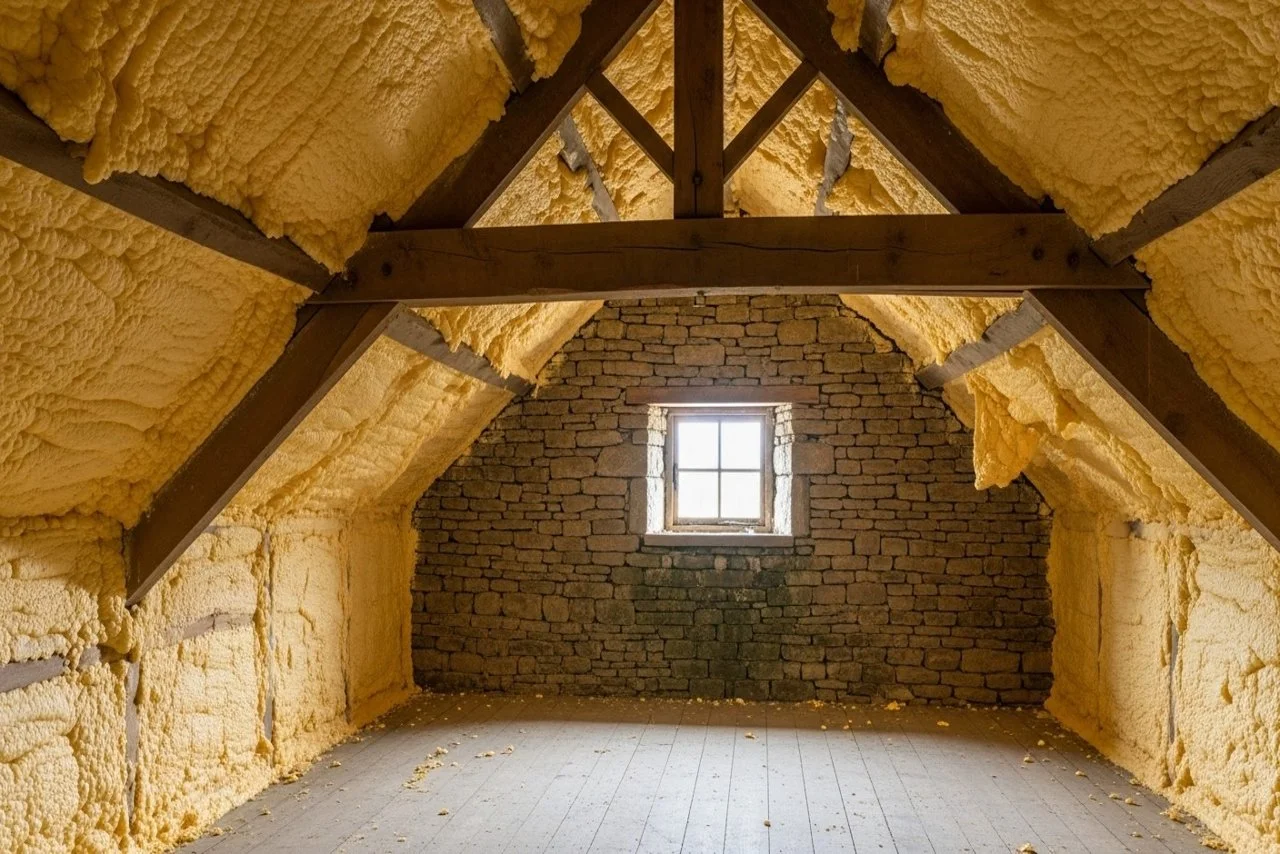
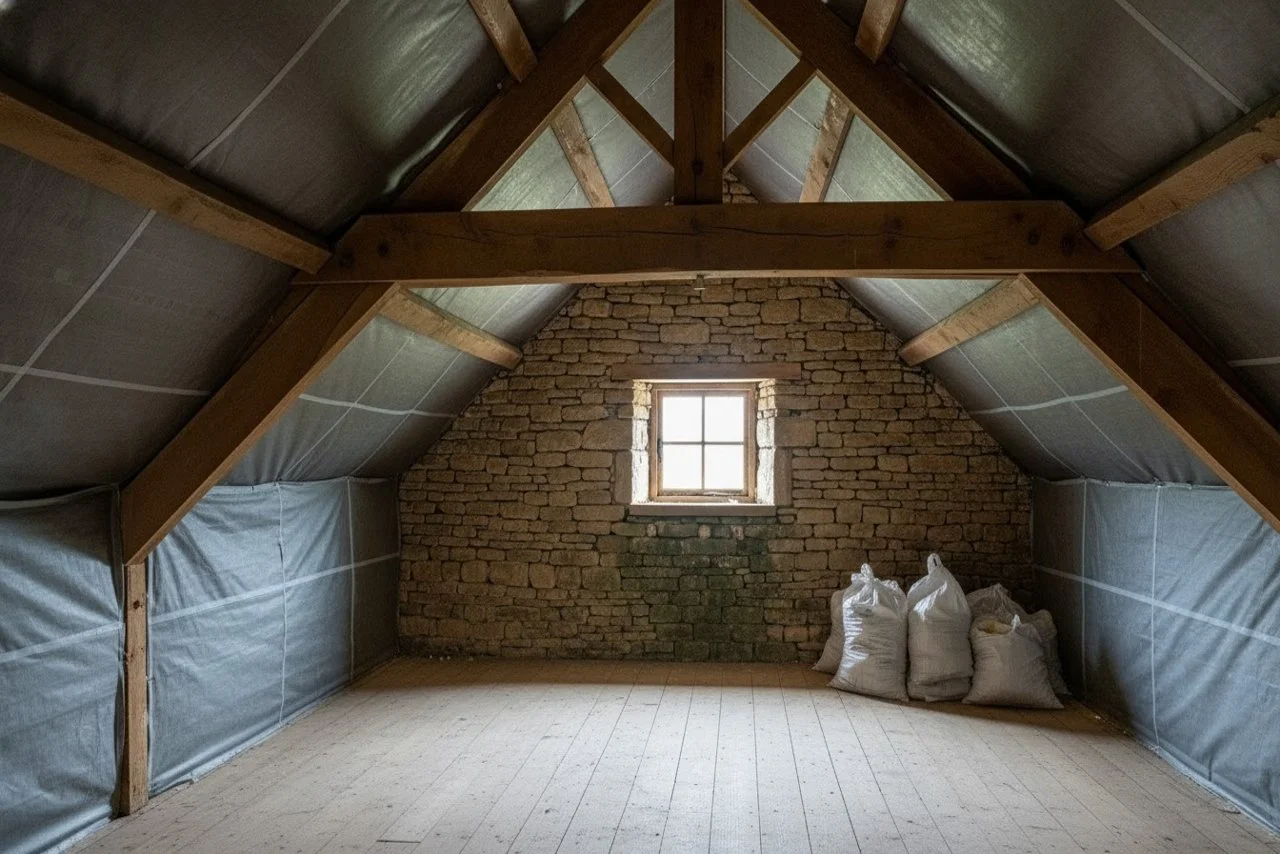
Spray Foam Removal in Dorset — Independent Surveys & Professional Removal
What Mortgage Lenders and Equity Release Providers Are Seeing in Dorset Properties
Across Dorset, mortgage lenders and equity release providers are increasingly refusing to proceed on properties where spray foam insulation is present. This is not a new problem — but it is becoming more visible as properties insulated during the government-backed energy efficiency push of the 2000s and early 2010s now come to market, remortgage, or reach the stage where owners are looking to release equity.
Since RICS updated its guidance on spray foam insulation, mainstream lenders — including Halifax, Nationwide, Barclays, Santander, and NatWest — have adopted formal positions treating spray foam as a material valuation risk. The three specific concerns that consistently drive lender refusals are:
- Inspection access: A lender's valuer must be able to physically inspect the roof structure before lending against a property. Spray foam — particularly rigid closed-cell foam bonded to rafters — makes this impossible. Without inspection, the lender cannot assess the structural risk they are being asked to lend against, and they will not proceed.
- Hidden structural damage: Spray foam conceals the condition of roof timbers. In Dorset's coastal and south-westerly facing properties — where moisture levels are elevated — timber decay behind spray foam can be significant. Lenders cannot accept a nil-access valuation where major structural elements may be failing unseen.
- Future maintenance liability: A roof with closed-cell foam bonded to its timbers is significantly more expensive to maintain, repair, or replace. This affects the long-term value and security of the lender's asset — particularly relevant for equity release products, which are long-term agreements.
Professional removal by a specialist contractor, followed by an independent completion report confirming the roof structure is accessible and in acceptable condition, directly addresses all three concerns. This is why the completion report — not just the physical act of removal — is the most important deliverable in the whole process.
A Recent Dorset Case: Poole Homeowner, Equity Release Refused — Reinstated After Removal
Last year, a homeowner in Poole contacted us after their equity release application was refused by their provider. The property — a 1950s semi-detached in a popular residential area between Poole town centre and Canford Heath — had open-cell spray foam applied across the full loft floor and lower rafter sections during a council energy efficiency scheme in 2009. The equity release provider’s surveyor flagged the foam immediately, citing inability to inspect the roof timbers and concerns about moisture retention in the foam body at this age. A nil valuation was issued.
We surveyed the property within six days of the homeowner’s initial call. The report made for mixed but important reading: the open-cell foam had absorbed significant moisture over its sixteen-year life — not unexpected for a south-coast property in a coastal area. The timbers beneath were, however, in structurally acceptable condition. The moisture in the foam itself was the primary concern — and the honest recommendation was that removal should not be delayed further.
Removal was completed over three days by our vetted contractors. All foam material and debris was cleared, the loft was inspected, and a detailed completion report was produced that same afternoon — covering the scope of works, the post-removal timber condition, and the moisture readings taken before and after removal.
The equity release provider reinstated the application on receipt of the full survey and completion reports. The application completed seven weeks later. The homeowner — who had been planning to use the equity for essential home adaptations — described the resolution as a significant relief after months of uncertainty.
This case is representative of what we see regularly across Dorset. The county’s retirement population means equity release applications are more common here than almost anywhere else in England — and spray foam is one of the most frequent reasons they are refused.
New timber rafters installed over the existing insulation layer. Essential structural preparation for the next stage of the roof renovation in Dorset.
Why Dorset's Retirement Character Makes Spray Foam Problems More Acute
Dorset consistently ranks among England’s top retirement destinations. Bournemouth, Poole, and Weymouth attract significant numbers of homeowners relocating from other parts of England — and those already retired in Dorset are among the most likely to be exploring equity release as part of their financial planning. This creates a county where the intersection of older properties, older homeowners, and older spray foam installations converges with particular frequency.
The problem is compounded by two factors specific to Dorset:
- Coastal moisture exposure: Dorset's coast faces south-westerly Atlantic weather — wind-driven rain, salt air, and elevated humidity that are present across Bournemouth, Poole Harbour, Weymouth Bay, and the Jurassic Coast. Properties within a few miles of the sea face moisture conditions that accelerate the damage spray foam causes to roof timbers. The longer foam has been in place in a coastal Dorset property, the higher the likelihood of underlying deterioration.
- Long foam dwell times: Many Dorset homeowners have lived in their properties for decades. Spray foam applied in 2008 or 2009 may have been in place for seventeen or eighteen years before the equity release application that brings it to light. This extended dwell time — particularly in a coastal environment — means the moisture-related consequences are often more advanced than in counties where properties turn over more frequently.
Inland Dorset — the Blackmore Vale, the chalk downland around Dorchester and Blandford Forum, and the rural villages of north Dorset — is generally drier and the moisture risk is lower. But the lender concern about spray foam is consistent regardless of location within the county.
Spray Foam Across Dorset's Housing Stock: Which Properties Are Most Affected?
Dorset’s varied housing stock means spray foam turns up across a wide range of property types — but the most commonly affected are those built between the 1940s and 1980s, which represent a significant proportion of the county’s residential housing:
- Post-war and 1950s–1960s retirement and family homes in Bournemouth and Poole: This is the dominant property type in the Bournemouth conurbation and the most commonly affected by historical insulation schemes. Many of these properties have been owner-occupied for decades, meaning the foam has been in place for a long time.
- Purbeck stone and traditional Dorset brick properties in Wareham, Swanage, and Bere Regis: Older construction with specific moisture management characteristics. Spray foam disrupts the natural breathability of these buildings, and its removal sometimes requires more specialist care due to irregular rafter configurations.
- Weymouth and West Dorset coastal properties: Exposed to south-westerly weather from the English Channel and the West Country coast. Spray foam in these properties carries the highest moisture risk in the county.
- Rural Dorset AONB farmhouses and character properties: Period properties across the Cranborne Chase, the Marshwood Vale, and the North Dorset Downs where complex or historic roof structures require specialist assessment before any removal work is agreed.
- Dorset bungalows: Dorset has a high proportion of bungalows relative to most English counties — a legacy of retirement migration. Bungalow loft spaces are often larger relative to living space, and spray foam is common in this property type. Equity release providers are particularly attuned to bungalow valuations and apply the same spray foam criteria.
TESTIMONIAL
Client Feedback & Reviews
See what our customers say about us.
Had spray foam removed from our loft in Bournemouth after our mortgage provider raised concerns. The team knew exactly what was required and handled everything smoothly. The survey passed without any issues afterwards.


Our Dorset Services: From First Survey to Final Completion Report
- Independent Spray Foam Survey
Every project begins with a thorough independent inspection of your loft space, carried out by one of our vetted specialist contractors. We identify the type of spray foam present — open-cell or closed-cell — assess the full extent of its application, and carefully examine the condition of the underlying roof timbers. For Dorset coastal properties, we take particular care to document moisture readings and any signs of timber deterioration that the foam may be concealing.
You receive a detailed written survey report structured specifically to address the questions mortgage lenders, equity release providers, and conveyancers need answered. This is not a standard building survey — it is a specialist document produced to support your lender reassessment, written in terms that surveyors and lenders recognise.
- Professional Spray Foam Removal
Where removal is required — and in most cases it will be, once a survey confirms the foam type and extent — our specialist removal teams use appropriate equipment to detach spray foam from roof timbers with minimum disruption to the structure. The method we use depends on the foam type, its adhesion characteristics, and the age and condition of the roof structure — all factors identified at survey stage, so there are no unexpected complications when work begins on site.
On completion, all foam debris is cleared from the loft space, the structure is inspected, and a formal completion report is issued the same day. This document — confirming the foam has been professionally removed and the roof structure is accessible and in acceptable condition — is what your mortgage lender or equity release provider will require before they will reassess your application.
- Remedial Works & Roof Replacement Where Needed
In some Dorset properties — particularly older coastal homes where south-westerly weather has had years to work on moisture levels behind sealed foam — removal reveals underlying damage that needs addressing before a lender will accept the property. This might mean repairs to individual rafter sections, replacement of deteriorated felt, or in some cases a partial or full roof replacement.
We provide honest guidance on what is needed — with no pressure to proceed with works beyond what your situation genuinely requires. We will give you a clear, itemised picture of the remedial options and their costs before any additional work is agreed. Qualifying projects are eligible for a 10-Year Insurance-Backed Guarantee.
📍 Areas We Cover in Dorset
We provide spray foam surveys and removal across the whole of Dorset. Our teams regularly work across:
- Abbotsbury
- Beaminster
- Blandford Forum
- Bere Regis
- Bournemouth
- Bridport
- Cerne Abbas
- Charmouth
- Christchurch
- Cranborne
- Dorchester
- Swanage
- Sturminster Newton
- Gillingham
- Lulworth (East & West)
- Milton Abbas
- Poole
- Shaftesbury
- Sherborne
- Verwood
- Wareham
- Weymouth
- Wimborne Minster
- Lyme Regis
- Portland
If your town, village, or postcode is not listed above, please contact us — our service covers the full county of Dorset.
Why Dorset Homeowners Choose Spray Foam Removal UK
There are roofing contractors in Dorset who will remove spray foam — but the physical removal is only part of the solution. What resolves the problem with your lender or equity release provider is the completion report that follows: a structured, specialist document that addresses the specific concerns raised at valuation and gives the surveyor what they need to reinstate your application. This is what separates a specialist spray foam removal company from a general roofing contractor.
- Specialist focus — spray foam surveys and removal is all we do. We are not a general roofing company with foam removal as a side service
- Vetted contractors — all field teams are Checkatrade-approved before carrying out work on behalf of our customers
- CORC members — contractors hold membership of the Confederation of Roofing Contractors
- Lender-aware reporting — our survey and completion reports are structured around what mainstream mortgage lenders and equity release providers need to see, not just around what was done on site
- Coastal property experience — our Dorset teams understand the specific challenges of south-facing coastal and Purbeck stone properties
- 10-Year Insurance-Backed Guarantee — available on qualifying removal and roof replacement projects
- Free online estimate — understand indicative costs before you commit to a survey
- No obligation and no pressure — if removal is not the right course of action for your situation, we will tell you honestly
All works are carried out by vetted specialist contractors who are members of the Confederation of Roofing Contractors and approved by Checkatrade.
Where qualifying works are undertaken, projects may be supported by a 10-Year Insurance-Backed Guarantee.
FAQ's
Questions Surrey Homeowners
Ask Us Most
Yes — it is one of the most common reasons equity release applications are refused in Dorset, and we help Dorset homeowners in exactly this situation on a regular basis. Equity release providers apply the same RICS-based criteria as mortgage lenders: if spray foam prevents their surveyor from inspecting the roof structure, the application cannot proceed. Removal — followed by a completion report confirming the roof is accessible and in acceptable condition — resolves the refusal in most cases. Contact us as soon as you receive the refusal notice, as we can typically survey and complete removal within two to three weeks.
Bungalows are very common in Dorset, and the loft space in a bungalow is typically larger relative to its footprint than in a two-storey house — meaning spray foam coverage is often more extensive. This can affect the time required for removal and the overall cost, though both will be clearly confirmed following the survey. The completion report process and lender documentation requirements are the same as for any other property type.
Unfortunately, responsibility for spray foam sits with the current owner of the property regardless of who installed it. This is a situation many Dorset homeowners find themselves in — they purchased the property without the foam being identified or disclosed, and they now face the cost of resolution. If you believe the foam was not properly disclosed at purchase, there may be a legal route to explore with your conveyancer — but practically, removal is still the step that needs to happen to unblock your transaction. Our survey gives you the independent documentation that any legal discussions may also need.
AONB designation does not restrict the removal of spray foam from inside the loft space. If external remedial works are needed following removal — such as replacing roof tiles, repointing, or structural repairs — permitted development rights within the Cranborne Chase, Blackmore Vale, or Dorset AONB areas can be more restrictive than elsewhere, and planning consent may be required for certain works. Our survey will identify whether any external remedial works are likely, and our contractors are experienced with the planning context in Dorset's protected landscapes.
Costs vary depending on the property size, foam type, extent of coverage, and the complexity of the roof structure. Bungalows in Dorset often have larger loft volumes than standard two-storey semis, which can affect pricing. Older Purbeck stone properties and rural AONB farmhouses sometimes carry slightly higher costs due to construction complexity. Our free online estimate tool gives you a realistic early indication of costs before you commit to a survey. Full, itemised pricing is confirmed following the survey — there are no hidden charges and no obligation to proceed.
Start with a Free Online Estimate for Your Dorset Property
Whether you are trying to release equity from your Dorset retirement home, have received a nil valuation on a property you are selling, or have just had a remortgage application blocked — the right first step is always the same: understand clearly what you are dealing with and what it will realistically cost to resolve.
Use our free online estimate tool for an early indication of costs and likely next steps, or contact us directly to arrange an independent spray foam survey. We cover the whole of Dorset and are experienced in working around the specific pressures of retirement finance timelines and live property transactions.
Start with a Free Online Estimate for Your Dorset Property
If spray foam insulation is affecting your Dorset property — whether you are selling, remortgaging, or trying to release equity — the quickest way to understand your options and likely costs is through our free online estimate tool. You can also call or email us directly to arrange an independent survey anywhere across Dorset.