
Spray Foam Removal in Cumbria
Spray Foam Removal in Cumbria — Independent Surveys & Professional Removal
LAKE DISTRICT, WEST CUMBRIAN COAST & BORDER CITY SPECIALISTS
Spray Foam Surveys & Removal Across Cumbria
We provide independent spray foam surveys, professional removal, and full remedial solutions across Cumbria — from Carlisle and Kendal to Windermere, Keswick, Ambleside, Barrow-in-Furness, Workington, Whitehaven, and the Lake District valleys. If spray foam is blocking your mortgage, remortgage, or equity release, our specialist teams can help.
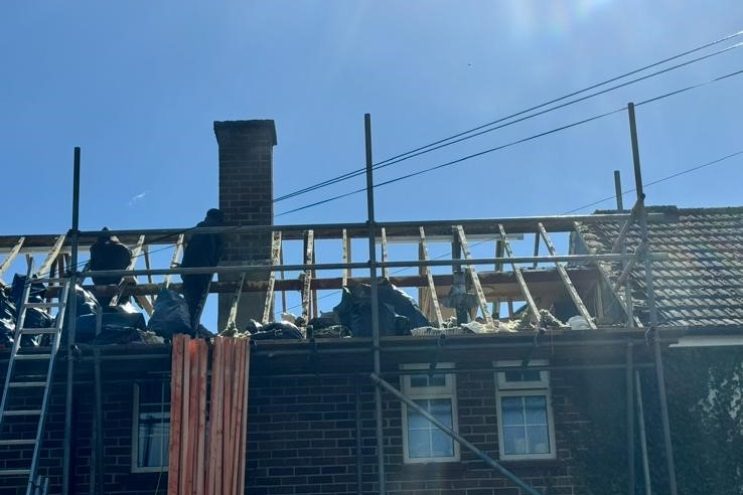
England's Wettest County, Lakeland Slate Construction, and Why Spray Foam Is More Urgent in Cumbria Than Almost Anywhere Else in England
Cumbria receives more rainfall than any other county in England — and by a considerable margin. Seathwaite in Borrowdale holds the record for England’s highest annual rainfall, regularly exceeding 3,500 millimetres per year against a national average below 900 millimetres. The persistent westerly weather systems that arrive off the Irish Sea and funnel up the Cumbrian fells deposit moisture at rates that create a building environment fundamentally different from any other English county, and one that we have not encountered in this form anywhere else in the 44 counties we cover.
The traditional buildings of the Lake District are constructed of Lakeland slate — the hard, dark blue-grey Ordovician and Silurian slate that was quarried at Coniston, Honister, Burlington, and Elterwater and that defines the visual character of every Cumbrian dale and lakeside town. Lakeland slate construction breathes as a system, managing the extraordinary moisture loads of the Lake District’s weather through the building fabric in ways calibrated over centuries of occupation. Spray foam in the roof void of a Lakeland slate building seals this system at its most critical junction — the roof — trapping moisture at precisely the point where the mountain weather drives it hardest.
The consequence is that spray foam in a Lake District property deteriorates structural timber faster than the same installation in any other inland English county. After ten to fifteen years, the combination of Cumbria’s extraordinary rainfall, the Lakeland slate construction’s specific moisture dynamics, and the sealed roof void can produce timber decay findings behind the foam that would not be present in a comparable Midlands or southern English property. Lenders applying RICS guidance to Cumbrian properties are applying it in the context where its concerns are most fully realised.
A Recent Cumbria Case: Windermere Second Home Owner, Sale Blocked by Halifax — Holiday Cottage, Foam Unknown for Twelve Years
Last year, a second home owner from the South East contacted us after their Windermere holiday cottage sale was blocked by Halifax. The property — a traditional Lakeland slate cottage in a village near the eastern shore of Lake Windermere — had open-cell spray foam applied to the full loft floor and lower rafter sections in 2011 by a local contractor engaged by the owner’s letting agent during a period of occupancy improvement works. The owner had not visited the loft since. Halifax’s valuer, assessing the property on behalf of the buyer’s mortgage application, identified the foam and issued a nil valuation specifically referencing the combination of spray foam and the Lake District’s elevated moisture environment.
We surveyed within five days. The findings were more significant than the owner had anticipated: the open-cell foam, after twelve years in a Lakeland slate building in Windermere’s direct rainfall zone, had absorbed moisture extensively and was holding it against the lower rafter ends. Surface timber staining was present on several rafter feet — not structural failure, but early-stage deterioration that needed to be documented honestly and addressed. Halifax’s nil valuation concern about the moisture environment was not theoretical; it was visible in the survey findings.
Removal was completed over two days, with careful attention to the affected rafter foot sections during clearance. Minor remedial treatment was applied to the affected timber. The completion report documented the pre-removal findings, the removal scope, the remedial works, and the post-treatment condition comprehensively — addressing Halifax’s combined foam-and-moisture-environment concerns with the specific technical evidence they needed.
Halifax accepted the comprehensive report and the Windermere cottage sale completed four weeks later. This case illustrates why Cumbria’s rainfall environment makes spray foam a genuinely more urgent concern here than in drier inland counties — and why honest survey findings, even when they reveal more than expected, allow the resolution to be planned and executed completely.
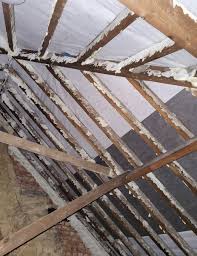
Spray foam insulation sealing the roof rafters to prevent heat loss. Energy-efficient loft upgrade for this Cumbria property.
The Lake District National Park and the West Cumbrian Coast: Two Completely Different Worlds in the Same County
- The Lake District National Park — UNESCO World Heritage Site
The Lake District was designated a UNESCO World Heritage Site in 2017 — England’s most recently inscribed, and the only National Park in England with World Heritage status. The designation adds a further layer of heritage planning significance to a National Park planning framework that is already among the strictest in England. For spray foam removal in the Lake District, the removal itself does not require any consent — but any external remedial works following removal are assessed within a planning context where the Lake District National Park Authority applies the most exacting landscape and heritage protection criteria of any planning body we work with.
The second home and holiday let concentration in the Lake District is among England’s highest — comparable to Cornwall and the Suffolk coast. Bowness-on-Windermere, Ambleside, Grasmere, Coniston, Hawkshead, and the lakeside villages have been major second home markets for decades. Absentee owners who had foam applied during letting agent-coordinated improvement works in the 2000s — and who may not have visited the loft since — are a consistent source of Cumbria discoveries at the point of sale or equity release.
- The West Cumbrian Coast — Post-Industrial Communities and Barrow-in-Furness
The west Cumbrian coast — Workington, Whitehaven, Maryport, and Barrow-in-Furness — is the antithesis of the Lake District tourism economy. These were the iron, steel, coal, and shipbuilding communities of Cumberland: industries that have substantially contracted or disappeared, leaving some of the most economically deprived communities in England in their wake. The housing stock reflects this: Victorian and Edwardian terraces for industry workers, post-war council housing, and housing association estates that were targeted by energy improvement schemes in the 2000s. Spray foam prevalence in Workington, Whitehaven, and Maryport is among the highest in Cumbria.
Barrow-in-Furness is a special case. The town’s BAE Systems shipyard — where Britain’s nuclear submarines are built and maintained — is one of the largest defence manufacturing facilities in Europe, and the MOD-adjacent and private housing stock built for BAE Systems’ workforce creates specific housing patterns similar to those we see around the RAF bases in Wiltshire and the US Air Force stations in Suffolk. High turnover of defence industry personnel and contractor workers means some properties have had multiple owners who may not have been aware of improvement works carried out during previous occupancy.
Cumbria's Housing Stock: Where Spray Foam Creates the Most Problems
- Lake District villages and lakeside towns (Windermere, Bowness, Ambleside, Grasmere, Coniston, Hawkshead, Keswick): Lakeland slate cottages, converted farmhouses, Victorian and Edwardian holiday villas, and tourism-era residential properties. The combination of England's highest rainfall, Lakeland slate construction, and high second home / holiday let absentee ownership creates the highest spray foam urgency of any inland location in our coverage. Surveys for Lake District properties routinely find more significant moisture consequences than comparable inland properties in drier counties.
- Carlisle and the Eden Valley (Carlisle, Penrith, Appleby): Carlisle's Victorian and Georgian housing stock — the border city has a significant period residential heritage alongside post-war suburban expansion. The Eden Valley's rural character creates agricultural estate and tied cottage patterns similar to Lincolnshire's and Herefordshire's rural stock. Energy improvement scheme foam is found in Carlisle's Victorian inner suburbs.
- Kendal and south Cumbria (Kendal, Ulverston, Grange-over-Sands, Kirkby Lonsdale): Kendal — the gateway to the Lake District — has significant Victorian stone terrace housing where improvement scheme foam is found regularly. Grange-over-Sands and Ulverston have a retirement and second home character similar to the Lincolnshire coast. The Furness peninsula south of Barrow has its own distinct rural and coastal character.
- West Cumbrian coast (Workington, Whitehaven, Maryport, Cleator Moor): Former iron, steel, and coal communities with post-war and former housing association stock where improvement scheme foam is found at higher rates than in the county's rural areas. Some of England's most economically deprived communities. The Irish Sea-facing coastal position adds a marine moisture dimension to the already challenging Cumbrian weather environment.
- Barrow-in-Furness and the Furness peninsula: BAE Systems nuclear submarine workforce housing with specific MOD-adjacent and private sector housing patterns. High turnover of defence industry personnel. Victorian and Edwardian terraces from the town's shipbuilding heritage era alongside post-war suburban expansion. Irish Sea coastal exposure.
- Copeland and west Lakes (Egremont, Whitehaven suburbs, Sellafield area): The nuclear industry community around Sellafield creates specific housing patterns — significant numbers of workers have been housed in private and former public sector properties around the plant over decades. The coastal and upland character of the landscape creates elevated moisture conditions for any properties with spray foam.
What Cumbria Lenders Require — and Why Honesty About Moisture Findings Matters More Here Than Almost Anywhere
The RICS guidance applies uniformly across Cumbria. For west Cumbrian coastal and Carlisle improvement scheme properties, the standard survey and completion report process is efficient. For Lake District National Park properties where moisture findings may be more significant, and where National Park planning authority constraints apply to any external works, our surveys and completion reports address both the structural findings and the planning context explicitly. As the Windermere case above illustrates, Cumbria is the county in our national coverage where we most frequently find structural findings behind foam that match the severity of the rainfall and building environment — and honest, complete documentation of those findings, alongside the remedial works carried out, is more important here than in any other inland county.
Our Cumbria Services: Survey, Removal, and the Completion Report
- Stage One: Independent Spray Foam Survey
Every project begins with a thorough independent inspection by one of our vetted specialist contractors. For Lake District Lakeland slate properties, the construction type and rainfall environment are specifically documented. For National Park properties, any likely external works and their Lake District National Park Authority planning implications are flagged. For west Cumbrian coastal properties, the Irish Sea exposure is noted. Remote access logistics for fell-side and valley-bottom properties are confirmed at survey stage. The survey report is written for your specific lender.
- Stage Two: Professional Spray Foam Removal
Our removal teams use specialist equipment appropriate to the foam type and Lakeland construction. For Lakeland slate properties with traditional roof structures, the removal approach is confirmed at survey stage. For standard Cumbrian market town and suburban properties, removal of typical foam coverage is achievable within one to two working days. Given Cumbria’s size and the remoteness of some Lake District locations, scheduling logistics are confirmed at survey stage for all projects.
- Stage Three: Remedial Works & Roof Replacement Where Needed
In Cumbria — and particularly in the Lake District — remedial works following removal are more commonly needed than in most English counties outside Cornwall. England’s highest rainfall creates the conditions. When remedial works are needed, we provide honest guidance and our contractors carry out the works with specific awareness of the Lake District National Park Authority’s planning requirements for external works in the designated landscape. All qualifying works are supported by a 10-Year Insurance-Backed Guarantee.
📍 Areas We Cover Across Cumbria
We provide spray foam surveys and removal across the whole of Cumbria, including Lake District National Park properties. Our teams regularly work across:
- Carlisle
- Barrow-in-Furness
- Workington
- Whitehaven
- Kendal
- Penrith
- Windermere
- Keswick
- Ulverston
- Cockermouth
- Ambleside
- Grange-over-Sands
If your town, village, or rural location is not listed, please contact us — our service covers the full county of Cumbria including National Park properties and remote rural locations.
Why Cumbria Homeowners Choose Spray Foam Removal UK
Cumbria demands more from a spray foam specialist than any inland English county. England’s highest rainfall, Lakeland slate construction, Lake District National Park UNESCO planning authority, second home and holiday let absentee ownership, Barrow’s defence industry housing, and the post-industrial west Cumbrian coast all require a survey-first approach that individually assesses each property’s specific environmental, construction, and planning context. Our honest reporting — including when surveys find significant moisture consequences — gives lenders the complete picture they need.
- Specialist focus — spray foam surveys and removal is our entire operation
- Vetted contractors — all field teams are Checkatrade-approved
- CORC members — contractors hold membership of the Confederation of Roofing Contractors
- Lender-aware documentation — every survey and completion report is structured around the specific requirements of mainstream lenders and equity release providers
- Lakeland slate and Lake District construction expertise — England's highest rainfall environment and Lakeland slate construction specifically documented in the survey process
- Lake District National Park UNESCO planning awareness — National Park Authority planning requirements for external works identified at survey stage
- Second home and holiday let experience — absentee ownership and letting agent-coordinated installation history assessed at survey stage
- Honest structural reporting — where Cumbria's extraordinary rainfall has caused structural findings behind foam, we document them completely and address them
- Barrow-in-Furness BAE Systems workforce housing knowledge — defence industry housing turnover patterns understood
- Remote access capability — dall and fell-side property access logistics confirmed at survey stage
- 10-Year Insurance-Backed Guarantee — available on qualifying removal and roof replacement projects
- Free online estimate — understand indicative costs before committing to a survey
Get a Free Online Estimate for Your Cumbria Property
Whether you have a Lake District holiday cottage where foam has been discovered and a sale is at risk, a Lakeland slate farmhouse where an equity release has been refused, a Carlisle or Kendal Victorian terrace where a remortgage has been declined, a Barrow-in-Furness property where a sale has stalled, or a west Cumbrian coastal home where a nil valuation has arrived — the starting point is always the same: an independent survey and a clear, honest picture of what you are dealing with.
Use our free online estimate tool for an early indication of costs and timescales, or contact us directly to arrange a survey. We cover the whole of Cumbria — from the Lake District’s UNESCO fells to the Irish Sea coast — and our survey process is built around England’s most extreme rainfall environment.
TESTIMONIAL
Client Feedback & Reviews
See what our customers say about us.
Living in Kendal, we’ve always struggled with damp, but the spray foam in our loft was making things ten times worse by trapping moisture against the beams. This team was fantastic—they understood the local climate issues and did a thorough job stripping the foam out. The roof can finally breathe again. If you're in the Lake District or South Lakes and worried about your timber health

Spot on service. It's hard to get good trades to travel out to us in Barrow-in-Furness sometimes, but the team arrived exactly when they said they would. They handled the extraction at our place near Workington with zero fuss and left the loft spotless. Very knowledgeable about the different types of foam and the safest way to remove them. Great to see a reliable outfit covering West Cumbria.

FAQ's
Questions Cumbria Homeowners Ask Us Most
Yes — and not marginally. England's highest rainfall creates a moisture loading on roof structures that simply does not exist in drier inland counties. Open-cell foam absorbs this moisture continuously; closed-cell foam traps it against the timbers at the base of the rafter feet where the slate and the roof void meet. In a Lakeland slate building, where the whole building fabric is calibrated to manage extraordinary moisture loads through natural breathability, sealing the roof with foam disrupts a system that has more moisture to manage than almost anywhere else in England. Ten to fifteen years of foam in a wet Lake District valley can produce findings that would take twenty-five or thirty years to develop in a dry Midlands location. Act promptly.
Contact us as soon as possible — ideally before you have a buyer or equity release application in progress. For a Lake District Lakeland slate property, we would recommend surveying before marketing rather than after a lender has flagged both foam and the moisture environment in a nil valuation. Our survey will give you an accurate picture of the current timber condition and the scope of any remedial works needed. If the survey findings are significant — as in the Windermere case above — that information is better in your hands early, so the resolution can be planned and executed completely before the property goes to market.
Spray foam removal itself — internal works within the loft — does not require consent from the Lake District National Park Authority. Where the UNESCO and National Park designations become relevant is if any external works are needed following removal: replacing Lakeland slate roofing, repairing ridges, renewing lead flashings, or altering roof details in the protected landscape. The Lake District National Park Authority applies the strictest landscape and heritage protection criteria of any planning body in our coverage area. Our survey identifies whether any external works are likely and flags the specific National Park planning requirements before any works are agreed.
It is found more frequently than in comparable-sized towns without the defence industry character. The combination of high workforce turnover — contractors and engineers rotating through on fixed-term deployments — and the improvement works carried out during previous occupancies means some Barrow properties have foam that subsequent owners know nothing about. We also see more private installations in Barrow from the 2000s energy improvement marketing push, applied by homeowners in the town's suburban areas seeking to reduce heating costs in what is one of England's cooler coastal locations. If your Barrow property was built before 1985, a loft inspection before any transaction is sensible.
Costs vary significantly across Cumbria. A standard Carlisle or Workington Victorian terrace with typical improvement scheme foam will generally fall towards the lower-to-mid range. A Lake District Lakeland slate cottage requiring specialist construction assessment and potentially moisture remedial treatment alongside removal will be costed to reflect the additional work involved — and for a Lake District property where the alternative is an unmortgageable holiday asset, the investment is almost always straightforward to justify. Remote access logistics for fell-side or isolated valley properties are confirmed at survey stage and reflected transparently in the pricing. Our free online estimate gives you a realistic early indication.
Start with a Free Online Estimate for Your Cumbria Property
If spray foam insulation is affecting your Cumbria property — whether you are in Carlisle, Windermere, Keswick, Barrow-in-Furness, Kendal, Workington, or anywhere across the county including the Lake District — the quickest way to understand your options and likely costs is through our free online estimate tool. You can also call or email us directly to arrange an independent spray foam survey anywhere across Cumbria.