
Spray Foam Removal in Kent
Spray Foam Removal in Kent — Independent Surveys & Professional Removal
GARDEN OF ENGLAND — COAST, WEALD & CATHEDRAL CITY SPECIALISTS
Spray Foam Surveys & Removal Across Kent
Kent’s exceptional range of housing — from Channel-facing coastal terraces to Canterbury’s medieval suburbs, Medway’s naval heritage streets, and the Weald’s oast houses and farmhouses — creates a more varied spray foam challenge than almost any other English county. Our vetted contractors produce the lender-aware documentation that resolves it.
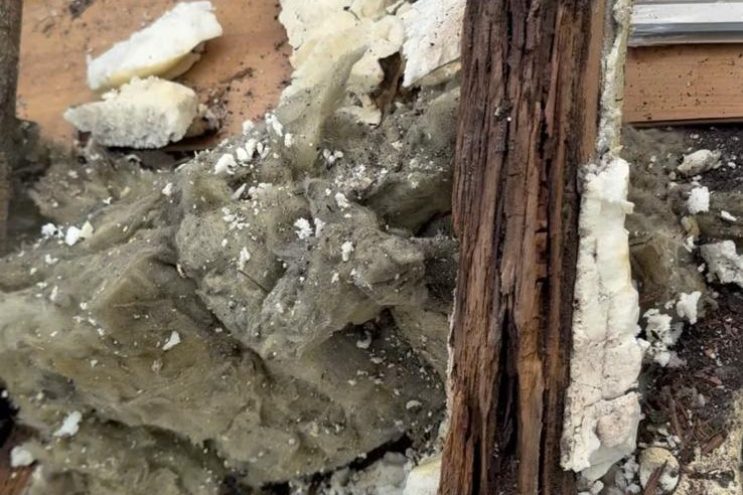
Kent's Exceptional Housing Variety and Why Spray Foam Presents Different Challenges Across the County
Kent is one of England’s largest and most geographically diverse counties. From the North Sea-facing shores of Thanet in the north-east to the Channel-facing cliffs of Folkestone and Dover in the south, from the medieval magnificence of Canterbury’s cathedral city to the naval heritage of Chatham and Rochester, from the affluent commuter villages of the Sevenoaks greenbelt to the oast house landscapes of the Weald — Kent contains more distinct housing contexts within its borders than almost any other English county.
This geographic breadth matters when it comes to spray foam, because the risks and challenges it presents are not uniform across the county. Thanet’s coastal terraces face North Sea exposure; Folkestone and Dover face the English Channel from the south; Canterbury’s Edwardian suburbs have different construction characteristics to the Medway towns’ Victorian dockyard terraces; the Weald’s oast houses and farmhouses present removal challenges that suburban semis simply do not. Our Kent service is built to handle this variety — not as a standard operation, but with genuine knowledge of what spray foam does differently in each part of the county.
A Recent Kent Case: Canterbury Homeowner, Sale Halted Mid-Conveyancing by NatWest
Last summer, a homeowner in Canterbury’s St Dunstan’s area contacted us after their property sale was halted mid-conveyancing. The buyer’s lender — NatWest — had instructed a survey on the Edwardian semi-detached and identified open-cell spray foam applied across the full loft floor and lower rafter sections. The foam had been applied in 2010 during a Canterbury City Council energy efficiency scheme that covered a number of streets in the area. NatWest issued a nil valuation and declined to lend pending independent specialist removal and a written completion report. The buyer had set a deadline of three weeks before they would consider withdrawing.
We surveyed within four days of the homeowner’s call. The report confirmed open-cell foam throughout, with some moisture absorption in the upper foam layer consistent with fifteen years of installation — but no structural timber decay beneath. The survey gave the homeowner a clear, documented picture of the situation and confirmed that removal was straightforward and achievable within the buyer’s deadline.
Removal was completed over two days. The completion report was issued the same afternoon and transmitted to NatWest’s valuer via the homeowner’s solicitor immediately. NatWest accepted the report, conveyancing resumed, and the Canterbury sale completed within seventeen days of our initial survey — three days inside the buyer’s deadline.
Canterbury’s significant stock of Edwardian housing — particularly in the St Dunstan’s, Wincheap, and Hales Place areas — was widely targeted by local energy schemes in the late 2000s. Spray foam discovery during sales in these parts of the city is a consistent feature of our Kent workload. Acting as quickly as the homeowner did in this case — instructing us the same day the lender issued the nil valuation — is what made the difference between a saved sale and a collapsed one.
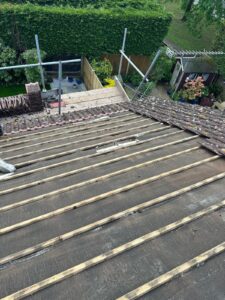
Roof battens fixed and ready for tiling in Kent. Proper spacing and secure installation ensuring a solid foundation for the new roof covering.
Kent's Four Distinct Spray Foam Zones
Understanding Kent’s spray foam problem requires understanding that the county is effectively four different housing markets — each with its own spray foam risk profile, its own coastal or inland moisture context, and its own lender scrutiny characteristics:
- Zone 1: The Canterbury and East Kent Corridor
Canterbury is Kent’s most historically significant city, with a property market strongly influenced by the university, tourism, and London commuter demand. Its inner suburbs — St Dunstan’s, Wincheap, St Stephen’s, Hales Place — contain dense Edwardian terraced housing where spray foam from local authority energy schemes is particularly common. East Kent beyond Canterbury — Whitstable, Faversham, Herne Bay, and the rural villages of the Blean — has a mix of period and post-war housing where spray foam survey discoveries are routine.
- Zone 2: The Medway Towns (Rochester, Chatham, Gillingham, Rainham)
The Medway towns have a distinct housing character rooted in the area’s Royal Navy dockyard heritage. Victorian and Edwardian terraced streets were built densely for dockyard workers and their families — similar in character to Portsmouth’s naval terraces but with the specific Medway microclimate of the river estuary. These terraces were built for natural ventilation and are particularly vulnerable to moisture damage when spray foam restricts airflow. The Medway towns also have significant post-war estate housing from the 1950s–1970s that was frequently targeted by insulation schemes. Survey discoveries in the Medway area are among the most consistent in our Kent workload.
- Zone 3: The Thanet Coast and East Kent Seaside Towns (Margate, Ramsgate, Broadstairs, Deal, Folkestone, Hythe)
Kent’s coastal towns sit on two different sea frontages with distinctly different weather profiles. Thanet — Margate, Ramsgate, and Broadstairs — faces the North Sea and Thames Estuary, with persistent north-easterly exposure and a significant salt air environment. Folkestone, Hythe, and Deal face south and south-west across the English Channel, with Channel weather patterns and their own moisture characteristics. In both cases, spray foam in a directly coastal property creates elevated moisture risk that develops significantly faster than in sheltered inland properties. These are some of the highest-risk properties in the county from a structural perspective — and often properties where equity release and remortgage applications are most common given the older average age of coastal property owners.
- Zone 4: The Weald, Sevenoaks, and Tunbridge Wells
The High Weald and the western fringe of Kent — Sevenoaks, Tonbridge, Tunbridge Wells, Edenbridge, and the surrounding Wealden villages — represents the county’s most affluent residential belt. High-value detached and period properties, significant greenbelt constraints on supply, and strong London commuter demand create a market where spray foam-related nil valuations carry the most severe financial consequences in the county. The area also contains oast houses and other agricultural conversions — properties with non-standard roof structures that require specialist assessment before any removal approach is agreed.
TESTIMONIAL
Client Feedback & Reviews
See what our customers say about us.
To be honest, I was panicking after our mortgage was declined because of the loft insulation. Called Spray Foam Removal UK and they were out to Sevenoaks the next day. No nonsense, just hard work. They cleared the lot and were very respectful of the carpets too. If you’re stuck in the same boat with lenders, just give these guys a shout. Life savers.

I was looking for a reliable team to handle the loft clearing at our property in Sevenoaks, and Spray Foam Removal UK exceeded expectations. They were extremely punctual, handled the extraction with great care, and the site was left immaculate. It’s rare to find such high standards of professionalism these days. An absolute pleasure to deal with.

Why Coastal Exposure Makes Spray Foam More Urgent in Kent Than in Most Inland Counties
Inland counties — Northamptonshire, Buckinghamshire, Nottinghamshire — have relatively low moisture environments, and spray foam in a typical property can remain in place for many years before significant timber deterioration develops. Kent’s coastlines are a different matter.
Properties within two to three miles of the Kent coast — whether North Sea-facing Thanet or Channel-facing Folkestone and Dover — are exposed to:
- Salt-laden air that accelerates the degradation of timber, felt, and roofing materials at a rate significantly higher than inland properties
- Wind-driven rain that forces moisture into roof structures under pressure from both North Sea north-easterlies and Channel south-westerlies, depending on location
- Above-average ambient humidity that prevents the natural drying cycles that prevent moisture accumulation in roof voids
- For Thanet properties specifically: the combination of North Sea exposure and the Thames Estuary creates a particularly challenging moisture environment that we treat as high-priority at survey stage
RICS guidance and lender policies apply to Kent coastal properties exactly as they apply elsewhere — but the urgency of acting on spray foam is genuinely higher in these locations than in most of the rest of our coverage area. Timber decay that might take twenty years to develop in inland Northamptonshire can develop meaningfully in eight to twelve years in a directly coastal Kent property. Our survey will give you an accurate assessment of current timber condition and the urgency of resolution for your specific property’s location.
What Kent Lenders Require After a Spray Foam Flag
Whether the lender is Halifax, Nationwide, Barclays, Santander, or NatWest, and whether the property is in Canterbury or Margate, the requirements following a spray foam nil valuation are consistent with RICS guidance. The lender needs to see:
- Confirmation of professional removal: Not partial clearance or covering with boarding — full professional removal by a specialist contractor using appropriate equipment, with all foam debris cleared and the loft left fully accessible.
- An independent completion report: A specialist document produced by the removing contractor confirming the foam type and extent removed, post-removal moisture readings, timber condition findings, and the contractor's specialist credentials. This report is the primary evidence that moves the lender from nil valuation back to a standard mortgage or equity release approval.
- Evidence of any remedial works: If structural damage is found during or after removal — as is more common in Kent's coastal properties than in sheltered inland counties — evidence that remedial works have been carried out and documented to an acceptable standard.
- Guidance on remedial works or roof replacement if necessary
Our Kent Services: Survey, Removal, and the Completion Report That Resolves the Problem
- Independent Spray Foam Survey
Every project begins with a thorough independent inspection of the loft space by one of our vetted specialist contractors. We identify the foam type — open-cell or closed-cell — assess the full extent and method of application, and examine the condition of the underlying roof timbers. For Kent’s coastal properties, moisture readings and signs of salt-air accelerated deterioration are specifically documented. For Canterbury and Medway terraces, we assess the foam’s interaction with Victorian and Edwardian rafter configurations. For Weald farmhouses and oast houses, we document any non-standard construction characteristics before a removal approach is agreed. The survey report is written specifically to address the questions your lender will ask — not a general building inspection.
- Professional Spray Foam Removal
Our removal teams use specialist equipment to detach spray foam from roof timbers with minimum structural disruption. The approach depends on foam type, adhesion, and construction — all confirmed at survey stage. On completion, all debris is cleared, the structure is inspected, and the formal completion report is issued the same day. For standard Kent terraced and semi-detached properties, removal of typical foam coverage is usually achievable within one to two working days on site.
- Remedial Works and Roof Replacement
Where removal reveals underlying damage — decayed rafters, deteriorated felt, or structural issues — we provide honest, itemised guidance on the remedial works needed before the lender will reinstate the valuation. For Kent’s coastal properties this stage is more commonly needed than in inland counties. For Weald period properties, structural complications from foam removal occasionally require additional specialist handling. All qualifying works are supported by a 10-Year Insurance-Backed Guarantee.
📍 Areas We Cover Across Kent
We provide spray foam surveys and removal across the whole of Kent. Our teams regularly work across:
- Canterbury
- Maidstone
- Tunbridge Wells
- Ashford
- Dartford
- Gravesend
- Sevenoaks
- Tonbridge
- Rochester
- Chatham
- Gillingham
- Sittingbourne
- Faversham
- Whitstable
- Herne Bay
- Margate
- Ramsgate
- Broadstairs
- Folkestone
- Hythe
- Deal
- Dover
If your town or village is not listed, please contact us — our service covers the full county of Kent.
Why Kent Homeowners Choose Spray Foam Removal UK
Kent’s housing variety means that a single standard removal approach does not serve the county well. A Margate North Sea-facing terrace requires different moisture assessment to a Sevenoaks period detached. A Canterbury Edwardian semi has different rafter characteristics to a Weald oast house conversion. Our survey-first approach ensures every Kent property is assessed for its specific characteristics before any removal scope or cost is confirmed — and the completion report that follows is written specifically around what your particular lender needs to see.
- Specialist focus — spray foam surveys and removal is our entire operation
- Vetted contractors — all field teams are Checkatrade-approved
- CORC members — contractors hold membership of the Confederation of Roofing Contractors
- Lender-aware documentation — every survey and completion report addresses the specific requirements of mainstream lenders and equity release providers
- Kent-wide experience — our teams understand coastal North Sea and Channel exposure, Canterbury's Edwardian heritage, Medway's dockyard-era terraces, and Weald period construction
- 10-Year Insurance-Backed Guarantee — available on qualifying removal and roof replacement projects
- Free online estimate — understand indicative costs before committing to a survey
- Transaction-aware scheduling — we discuss your conveyancing or mortgage deadline at the outset and plan accordingly
All works are carried out by vetted specialist contractors who are members of the Confederation of Roofing Contractors and approved by Checkatrade.
Where qualifying works are undertaken, projects may be supported by a 10-Year Insurance-Backed Guarantee.
Get a Free Online Estimate for Your Kent Property
Whether you are in Canterbury, on the Thanet coast, in the Medway towns, in the Weald commuter belt, or anywhere across the Garden of England — if spray foam insulation is blocking your mortgage, remortgage, equity release, or property sale, the starting point is always the same: an independent survey and a clear, honest picture of what you are dealing with.
Use our free online estimate tool for an early indication of costs and timescales, or contact us directly to arrange a survey. We cover the whole of Kent and understand the specific construction characteristics, coastal moisture profiles, and planning contexts that affect different parts of this remarkable and varied county.
FAQ's
Questions Kent Homeowners Ask Us Most
Strongly recommended. Spray foam in a coastal Kent property carries a higher moisture risk than in most inland locations, and if you purchase without identifying it, the problem becomes yours to resolve. Before exchange, you can request a loft inspection or commission an independent survey. If foam is found, you have options: negotiate a price reduction to reflect the removal cost, require the seller to resolve it before exchange, or walk away. Once you have exchanged, those options are gone. For a Thanet North Sea-facing property or a Channel-coast property in Folkestone or Deal, we would recommend making the loft condition a specific point of investigation before exchange — particularly if the property is a period or inter-war build.
Yes, more common than many Medway homeowners expect. The Medway towns have a high concentration of Victorian and Edwardian terraced housing — originally built for dockyard workers and their families — and a significant proportion of post-war estate housing. Both property types were widely targeted by energy improvement schemes during the 2000s, and spray foam is a routine survey discovery in Rochester, Chatham, Gillingham, and Rainham. If your Medway property is a Victorian terrace or a 1960s–1970s semi-detached, and you have not inspected the loft recently, it is worth checking before any mortgage application or property transaction goes live.
Yes — but oast house roof structures require individual specialist assessment before any removal approach is agreed. Oast houses have highly non-standard configurations, particularly in the conical kiln sections, and spray foam applied within these spaces presents unique adhesion and access challenges. Our survey would assess the specific construction, document the foam's presence and adhesion characteristics, and recommend the appropriate removal approach for your particular building. We have experience with oast house and agricultural conversion properties across the Kent Weald.
Contact us immediately — the Canterbury case above shows what is achievable when you act on the same day as the nil valuation. For a standard Kent terrace or semi-detached with typical open-cell foam coverage, our realistic expectation is: survey within four to five working days, removal within one to two weeks of survey confirmation, completion report issued on the day removal finishes. For coastal properties where additional moisture assessment is needed, or Weald properties with complex construction, we will give you an honest timeline at survey stage. We do not give optimistic timelines to win instructions — we give accurate ones because the transaction timeline depends on it.
Costs vary considerably across Kent depending on property type, location, and foam type. A standard Medway Victorian terrace with typical open-cell coverage will generally be costed towards the lower end of our range — these are smaller loft volumes and straightforward access. A Sevenoaks or Tunbridge Wells larger period detached, a Thanet coastal property where additional moisture assessment is needed, or a Weald oast house conversion requiring specialist handling will be costed differently. Our free online estimate gives you a realistic early indication before you commit to a survey. Full, itemised pricing is confirmed following the survey with no hidden charges.
Start with a Free Online Estimate for Your Kent Property
If spray foam insulation is affecting your Kent property — whether you are in Canterbury, the Medway towns, on the Thanet coast, in Tunbridge Wells, or anywhere across the county — the quickest way to understand your options and likely costs is through our free online estimate tool. You can also call or email us directly to arrange an independent spray foam survey anywhere across Kent.