
Spray Foam Removal in Lincolnshire
Spray Foam Removal in Lincolnshire — Independent Surveys & Professional Removal
LINCOLN CITY, THE WOLDS & NORTH SEA COAST SPECIALISTS
Spray Foam Surveys & Removal Across Lincolnshire
We provide independent spray foam surveys, professional removal, and full remedial solutions across Lincolnshire — from Lincoln and Grantham to Boston, Skegness, Spalding, Grimsby, Louth, and the Wolds market towns. If spray foam is blocking your mortgage, remortgage, or equity release, our specialist teams can help.
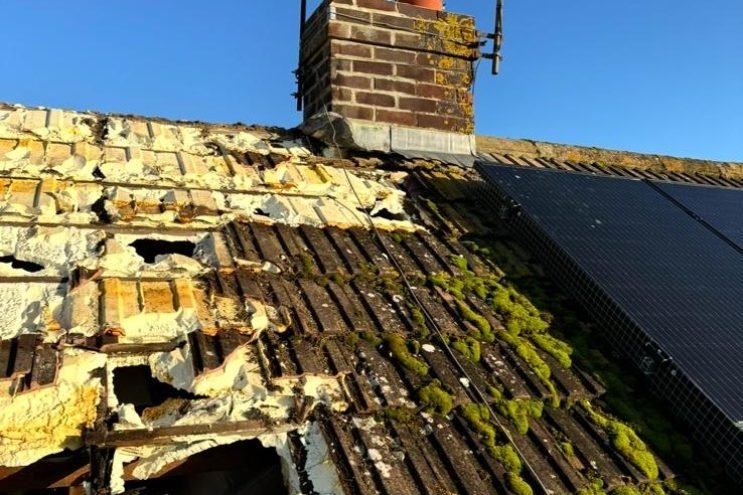
Lincolnshire's Agricultural Heritage and Why Farm Estate Housing Is the County's Hidden Spray Foam Concentration
Lincolnshire is England’s second largest county by area and one of its most intensively agricultural. The great farming estates that shaped the county’s landscape over centuries also shaped its housing stock: farm workers’ cottages, tied houses, and small estate properties were built across the county in large numbers through the Victorian and Edwardian periods, managed as tied accommodation for generations, and then progressively passed into private ownership — through right-to-buy, estate sales, and the gradual dissolution of agricultural tied tenancies — from the 1980s onwards.
It was precisely this category of property — estate cottages, farm workers’ terraces, and former tied houses across Lincolnshire’s rural parishes — that received spray foam insulation most systematically during the energy improvement programmes of the 2000s. Rural energy improvement schemes in Lincolnshire targeted isolated and hard-to-heat properties, and the county’s large number of former agricultural workers’ dwellings were disproportionately represented. The new private owners who acquired these properties, often through right-to-buy from agricultural estates or from local authorities who had taken them on, frequently had no record of what improvements had been made during the tied tenancy period.
This is a pattern specific to Lincolnshire and a small number of similarly agricultural counties. In most English counties, spray foam is predominantly a suburban phenomenon — council estates, post-war semis, terraced housing in market towns. In Lincolnshire, a significant proportion of our survey workload comes from former agricultural estate properties in rural parishes where the foam is discovered only when the property is eventually sold or when the owner reaches the equity release stage.
A Recent Lincolnshire Case: Louth Homeowner, Sale Blocked by Halifax — Former Farm Cottage, Foam Unknown
Last year, a homeowner in the Louth area contacted us after their property sale was halted by a nil valuation from Halifax. The property — a former farm worker’s cottage purchased from a private agricultural estate twelve years earlier — had closed-cell spray foam applied to the full rafter span at some point during the previous tied tenancy, most likely during a 2007–2009 rural insulation initiative. The homeowner had not been informed of the foam at purchase, and neither they nor the estate’s agent had checked the loft prior to marketing. Halifax’s valuer identified it at the buyer’s inspection and issued a nil valuation.
We surveyed within five days. The report confirmed rigid closed-cell foam across all rafter sections. The cottage’s rural inland Lincolnshire location had protected the timbers from significant moisture consequences — despite the foam’s age, the underlying structure was in acceptable condition. The survey gave Halifax’s valuer clear documented evidence of the current structural state.
Removal was completed over two days. The completion report was issued the same afternoon and submitted to Halifax’s mortgage team via the homeowner’s solicitor. Halifax accepted the report and the sale completed three weeks later.
The Louth area and the Lincolnshire Wolds corridor has a particularly high concentration of former agricultural estate properties where spray foam was applied during tied tenancies without disclosure to subsequent purchasers. This is a recurring pattern in our Lincolnshire workload — the discovery is almost always a surprise, and the resolution pathway is the same each time.
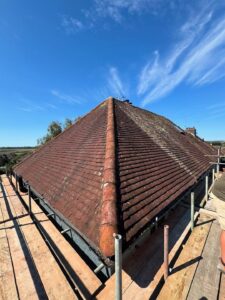
Fresh roof installation complete in Lincolnshire. Quality tiling and secure scaffolding ensuring a weatherproof finish built to last.
The Lincolnshire Coast: North Sea Exposure, Retirement Communities, and the Equity Release Dimension
Lincolnshire’s coastline — Skegness, Mablethorpe, Cleethorpes, Sutton-on-Sea, and the flat North Sea shore between them — faces the North Sea directly. It is a coastline with a distinct demographic character: a significant proportion of the permanent residential population in these coastal towns is retired, many having relocated from the East Midlands and West Yorkshire for lower property prices and a different pace of life. This creates a specific spray foam trigger: equity release. Long-term retired homeowners in Skegness and Mablethorpe who purchased modestly priced properties a decade or more ago are reaching the point of equity release applications — and it is at this point that spray foam installed during a local authority or energy company scheme is being discovered.
The North Sea facing environment also creates elevated moisture risk compared to Lincolnshire’s sheltered inland areas. Properties within two to three miles of the Lincolnshire coast — particularly north-facing properties in Skegness, Mablethorpe, and Sutton-on-Sea — face persistent North Sea exposure: salt-laden air, wind-driven rain, and above-average ambient humidity. Spray foam in a directly coastal Lincolnshire property carries a higher urgency than the same foam in a sheltered inland Lincolnshire village. Our survey process specifically documents the coastal exposure context for properties on or near the Lincolnshire shore.
TESTIMONIAL
Client Feedback & Reviews
See what our customers say about us.
After discovering the spray foam in our loft was causing issues with our damp survey in Lincoln, we knew it had to go. The team was exceptionally professional throughout the entire extraction. They systematically removed every scrap of foam, ensured the area was vacuumed thoroughly, and didn't leave a single bag of waste for us to deal with. It’s a massive relief to see the roof timbers again and know they are in good condition.

A very straightforward and honest experience from start to finish. We had the spray foam cleared from our cottage in Stamford and I couldn't be more satisfied with the result. The workers were polite, respected our property, and stuck exactly to the price they quoted without any hidden extras. They even took the time to tidy up the landing and driveway before they left. Excellent service.

Lincolnshire's Housing Stock: Where Spray Foam Is Most Commonly Found
Lincolnshire’s geography — one of England’s largest and most varied counties — means spray foam affects different areas in meaningfully different ways:
- Lincoln city (St Giles, Bracebridge, Boultham, Birchwood, North Hykeham): Lincoln's Victorian and post-war suburban housing stock, particularly in the west and south of the city, was targeted by energy improvement schemes in the 2000s. Remortgage and sale-related discoveries are the most common trigger in Lincoln city. The city's Cathedral Quarter and Bailgate area have extensive conservation area coverage — external remedial works following removal in these areas may require consent.
- Former agricultural estate cottages and rural villages across the county: As described above — the highest spray foam prevalence relative to the local housing stock of any property type in Lincolnshire. Tied house histories, energy scheme applications during tenancies, and the absence of disclosure at subsequent private sales create the county's most distinctive spray foam pattern.
- Lincolnshire Wolds market towns (Louth, Horncastle, Market Rasen, Alford): The Lincolnshire Wolds AONB covers a broad swathe of the county's higher ground, and the market towns within and adjacent to the AONB have significant stocks of chalk and limestone construction with period properties. The AONB designation creates planning considerations for external remedial works. Louth's well-preserved Georgian and Victorian character makes it one of the most heritage-sensitive planning environments in the county.
- North Sea coast (Skegness, Mablethorpe, Cleethorpes, Sutton-on-Sea): Retirement communities with high equity release rates. North Sea exposure creates elevated moisture urgency for longer-standing foam installations. Holiday and seasonal property ownership adds a second-home absentee dimension similar to Cornwall but smaller in scale.
- South Lincolnshire fenland (Boston, Spalding, Holbeach): The fenland south of the county shares moisture characteristics with Cambridgeshire's fens: peat and alluvial soils, high groundwater, and elevated ambient humidity. Boston and Spalding both have Victorian and post-war housing stock where local authority energy scheme foam is regularly found. The fenland moisture environment means spray foam urgency is higher here than in sheltered inland Lincolnshire.
- Grimsby, Cleethorpes, and the Humber bank: Grimsby's former fishing and processing industry heritage has shaped a distinct housing stock — Victorian terraces and 1930s–1970s family homes built for fishing community workers and dock employees. This housing stock has its own spray foam prevalence from insulation schemes, and Grimsby's proximity to the Humber creates a specific tidal estuary moisture environment distinct from the open North Sea coast.
What Lincolnshire Lenders and Equity Release Providers Require
The RICS guidance applies uniformly across Lincolnshire — whether the property is a former agricultural cottage in a Wolds village, a Lincoln city Victorian terrace, or a Skegness retirement bungalow. Halifax, Nationwide, Barclays, Santander, and NatWest all require professional removal confirmed in writing, an independent completion report, and evidence of any remedial works. For coastal Lincolnshire properties where moisture documentation is particularly relevant, our reports address the North Sea exposure context specifically. For Wolds AONB and Lincoln Cathedral Quarter properties, any external follow-on works are planned with the relevant planning constraints identified at survey stage.
Our Lincolnshire Services: Survey, Removal, and the Completion Report
- Stage One: Independent Spray Foam Survey
Every project begins with a thorough independent inspection of the loft space by one of our vetted specialist contractors. We identify the foam type, assess extent and coverage, and examine the condition of the underlying roof timbers. For former agricultural estate properties where the foam’s installation history may be poorly documented, we assess characteristics and age markers as part of the survey. For coastal Lincolnshire properties, we take specific moisture readings and document the North Sea exposure context. For Wolds AONB and Lincoln conservation area properties, we identify any likely external follow-on works and their planning implications. The survey report addresses the specific questions your lender or equity release provider will ask.
- Stage Two: Professional Spray Foam Removal
Our removal teams use specialist equipment to detach spray foam from roof timbers with minimum structural disruption. For standard Lincolnshire market town and suburban properties, removal of typical foam coverage is usually achievable within one to two working days on site. For former agricultural cottages with irregular construction or remote access, the logistics are confirmed at survey stage. On completion, all debris is cleared, the structure is inspected, and the formal completion report is issued the same day.
- Stage Three: Remedial Works & Roof Replacement Where Needed
Where removal reveals underlying damage — more likely in coastal Lincolnshire and in older agricultural properties with longer foam histories — we provide honest, itemised guidance on the remedial works needed. For Wolds AONB and Lincoln Cathedral Quarter properties, external works are planned with the relevant planning context in mind. All qualifying works are supported by a 10-Year Insurance-Backed Guarantee.
📍Areas We Cover Across Lincolnshire
We provide spray foam surveys and removal across the whole of Lincolnshire. Our teams regularly work across:
- Lincoln
- Grantham
- Boston
- Skegness
- Spalding
- Sleaford
- Gainsborough
- Louth
- Market Rasen
- Horncastle
- Stamford
- Bourne
- Mablethorpe
- Cleethorpes
- Grimsby
If your town or village is not listed, please contact us — our service covers the full county of East Sussex.
Why Lincolnshire Homeowners Choose Spray Foam Removal UK
Lincolnshire’s internal diversity — from former agricultural estate cottages in remote parishes to North Sea coastal retirement communities to Wolds market towns to Lincoln city’s conservation area — requires a genuinely survey-first approach where each property is assessed on its specific characteristics. Our completion reports are written for your lender’s requirements, addressing the specific concerns that Lincolnshire’s varied housing contexts raise.
- Specialist focus — spray foam surveys and removal is our entire operation
- Vetted contractors — all field teams are Checkatrade-approved
- CORC members — contractors hold membership of the Confederation of Roofing Contractors
- Lender-aware documentation — every survey and completion report is structured around the specific requirements of mainstream lenders and equity release providers
- Agricultural estate housing experience — our teams understand the tied house history, energy scheme context, and disclosure patterns specific to Lincolnshire's former agricultural cottage stock
- Coastal survey expertise — North Sea exposure is specifically documented for coastal Lincolnshire properties
- Lincolnshire Wolds AONB and Lincoln Cathedral Quarter planning awareness — external remedial works constraints identified at survey stage
- Fenland moisture experience — southern Lincolnshire's fen soil moisture environment addressed in survey documentation
- 10-Year Insurance-Backed Guarantee — available on qualifying removal and roof replacement projects
- Free online estimate — understand indicative costs before committing to a survey
Get a Free Online Estimate for Your Lincolnshire Property
Whether you are dealing with a former agricultural cottage in a Lincolnshire Wolds village where foam was installed without your knowledge, a Skegness equity release refused by the lender, a Lincoln city remortgage declined, or a Grimsby sale halted mid-conveyancing — the starting point is the same: an independent survey and a clear, honest picture of what you are dealing with.
Use our free online estimate tool for an early indication of costs and timescales, or contact us directly to arrange a survey. We cover the whole of Lincolnshire and understand the county’s unique combination of agricultural heritage housing, coastal North Sea exposure, fenland south moisture, and Wolds AONB construction.
FAQ's
Questions Lincolnshire Homeowners Ask Us Most
If the foam was present at the time of your purchase and was not disclosed in the property information forms, there may be a legal avenue to explore with your conveyancer. This is a pattern we see regularly with former tied agricultural properties in Lincolnshire — improvements made during the tenancy period were sometimes not formally recorded or passed on to subsequent purchasers. As a practical priority, our survey documents the foam's characteristics, type, and estimated installation period in a way that can support any discussions with your conveyancer alongside resolving the lender issue. Contact your solicitor about the non-disclosure question in parallel with arranging the survey.
It is more likely than many coastal Lincolnshire homeowners expect. Skegness and Mablethorpe's housing stock includes a significant proportion of 1950s–1980s properties that were targeted by local authority and energy company insulation schemes during the 2000s. If your property was built before 1985 and you have not inspected the loft recently, arranging a loft check before you apply for equity release is strongly advisable — discovering foam after the application has been submitted is significantly more disruptive than discovering it before. Our free online estimate gives you an early cost indication with no commitment required.
The Lincolnshire Wolds AONB designation does not restrict spray foam removal from inside the loft — that is internal work requiring no planning consent. Where it becomes relevant is if external remedial works are needed following removal: replacing roof slates or pantiles (the traditional Lincolnshire roofing material in much of the Wolds), repairing ridges, or altering roof coverings. Within the AONB, permitted development rights for some of these works are more restricted than elsewhere in Lincolnshire. Our survey identifies whether any external works are likely and flags the planning implications for your property's specific location. Our contractors are experienced working within the Wolds AONB planning framework.
Yes. We cover the full county of Lincolnshire including its most remote rural parishes. Lincolnshire's size does mean that scheduling logistics for some properties — particularly in the far north of the county around the Humber, or in isolated agricultural communities in the Wolds or fenland — require advance planning. We confirm access and logistics at the survey stage and build them into the project timeline. Travel logistics for very remote properties may be factored into costs and will be confirmed transparently at survey stage.
Costs vary across Lincolnshire's diverse housing stock. A standard Lincoln city semi-detached or Boston market town terrace with typical foam coverage will usually fall in the lower-to-mid range of our estimate tool. A former agricultural cottage with irregular construction, a coastal property requiring enhanced moisture assessment, or a Wolds AONB period property may be costed differently. Remote rural properties where additional travel is required will have this reflected in the survey-stage confirmation. Our free online estimate gives you a realistic early indication before you commit. Full itemised pricing is confirmed following the survey with no hidden charges.
Start with a Free Online Estimate for Your Lincolnshire Property
If spray foam insulation is affecting your Lincolnshire property — whether you are in Lincoln, Grantham, Boston, Skegness, Grimsby, Louth, or anywhere across the county — the quickest way to understand your options and likely costs is through our free online estimate tool. You can also call or email us directly to arrange an independent spray foam survey anywhere across Lincolnshire.