
Spray Foam Removal in Somerset
Spray Foam Removal in Somerset — Independent Surveys & Professional Removal
TAUNTON, YEOVIL, BRIDGWATER & ALL SOMERSET POSTCODES
Spray Foam Surveys & Removal Across Somerset
We provide independent spray foam surveys, professional removal, and full remedial solutions across Somerset — from Taunton and Yeovil to Bridgwater, Frome, Wells, Glastonbury, Minehead, and all TA, BA, and BS postcode areas. If spray foam is blocking your mortgage, remortgage, or equity release, our specialist teams can help.
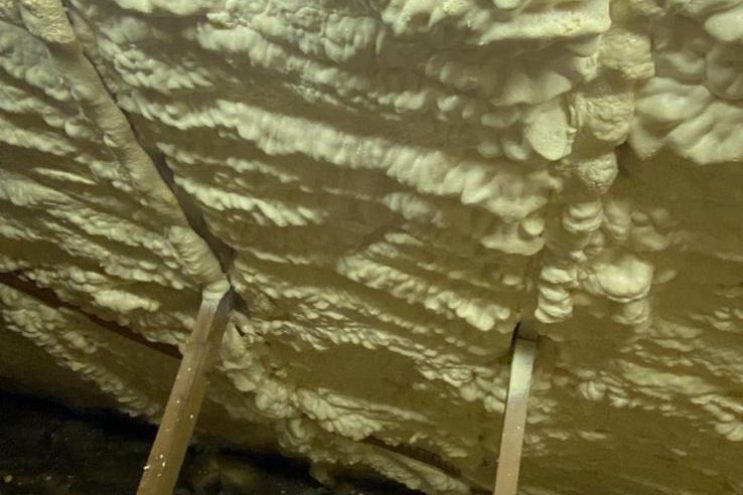
Somerset's Rural Character, Market Towns, and a County-Wide Spray Foam Challenge
Somerset is unlike any other English county in which we operate. It is not a commuter county organised around a dominant city, nor a densely urbanised region where housing stock clusters predictably by era and type. Somerset is a patchwork: a sequence of distinct market towns — Taunton, Yeovil, Bridgwater, Frome, Wells, Glastonbury, Minehead, Shepton Mallet, Chard, Ilminster — each with its own character and property market, connected by a rural landscape of villages, hamlets, and isolated farmsteads that extend across the Somerset Levels, the Mendip Hills, the Quantocks, and the Blackdown Hills.
This dispersed settlement pattern creates spray foam challenges that differ materially from those we encounter in compact urban markets. In Somerset, a nil valuation from a lender can affect not just a Victorian terrace in Taunton town centre but a grade II listed farmhouse near Somerton, a 1960s semi in a Bridgwater housing estate, a thatched cottage outside Dunster, or a housing association property in a Yeovil suburb. The foam itself is the same — but the property context, the lender requirements, and the removal logistics vary considerably across Somerset’s diverse housing stock.
The Somerset Levels — the low-lying floodplain that stretches across the centre of the county between the Mendips and the Quantocks — add a further dimension. Properties on or near the Levels have historically attracted energy improvement grant activity: the combination of older housing stock, lower household incomes, and the particular dampness challenges of low-lying flood-prone ground made them a consistent target for insulation improvement schemes through the 2000s. The overlap between Levels geography, older housing stock, and historical energy scheme activity creates a spray foam prevalence pattern that requires specific knowledge to navigate.
A Recent Somerset Case: Taunton Homeowner, Remortgage Declined by Halifax — 1970s Semi, Energy Scheme Foam
Earlier this year, a homeowner in Taunton contacted us after their remortgage application was declined by Halifax. The property was a 1970s semi-detached house in a residential area to the east of Taunton town centre — a typical example of the post-war family housing that expanded Taunton significantly from the 1960s onwards. A valuation surveyor had identified spray foam insulation across the full loft space. The foam had been installed in 2011 through a local authority-coordinated energy efficiency scheme that operated across several TA postcodes during that period. The homeowner had purchased the property from the original occupier in 2017, with no mention of the foam in the property information forms.
Halifax issued a retained valuation, declining to confirm the mortgage value until the foam was professionally removed and evidenced. The homeowner had a remortgage offer expiry date six weeks away.
We surveyed within four days. The report identified closed-cell spray foam applied at rafter level with incomplete coverage to the gable ends. The timbers were structurally sound with no moisture-related deterioration beneath the foam. The survey report was structured to address Halifax’s specific retained valuation conditions directly.
Removal was completed over two days. The completion report was issued the same afternoon. Halifax accepted the report and the remortgage completed within the offer period — with ten days to spare.
Post-war semi-detached housing from the 1960s, 1970s, and 1980s expanded every Somerset market town substantially. Energy efficiency schemes from the 2000s and early 2010s targeted this housing stock intensively. The combination of original occupiers reaching retirement age and selling — or owner-occupiers reaching their first remortgage — is bringing a significant volume of scheme-foam properties to light across TA and BA postcodes.
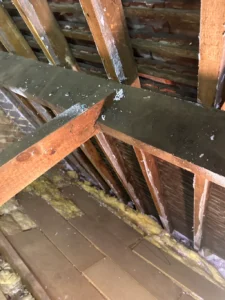
Taking a look at the existing structure before we start. The rafters need some attention and the old insulation needs clearing out. Getting everything ready for a proper upgrade here in Somerset.
Somerset's Housing Diversity: Market Towns, Rural Stock, and the Thatched and Listed Property Challenge
No English county presents a more varied housing stock than Somerset. Within a thirty-mile radius of Taunton — the county town — you will find Georgian townhouses in the centre of Frome, Victorian railway terraces in Bridgwater, 1930s semis in suburban Yeovil, post-war council housing in Minehead, medieval listed farmhouses in the Vale of Taunton Deane, thatched cottages across the Quantock foothills, and 1970s–1980s family housing estates in virtually every market town. Each of these property types has a different relationship with spray foam insulation — and a different set of challenges when it comes to removal and lender documentation.
Thatched and listed rural properties represent the most complex category. Internal spray foam removal from a listed building’s loft does not typically require listed building consent, but where removal reveals underlying structural issues with ancient timbers — common in properties of this age and construction — any external roof works that follow may require both listed building consent and conservation area consent depending on location. Somerset has a high density of conservation areas: the historic centres of Wells, Glastonbury, Frome, Bruton, Shepton Mallet, Ilminster, and Somerton are all designated, and many village settlements within them carry additional protection. Our survey process identifies these constraints from the outset and factors them into the removal plan.
The Somerset Levels present a distinct subset of challenges. Properties across the Levels — the villages of Burrowbridge, Othery, Middlezoy, Westonzoyland, Langport, and the surrounding parishes — have consistently attracted energy improvement grant activity due to the combination of older housing, lower income levels, and the inherent dampness challenges of living on low-lying ground prone to flooding. The interaction between spray foam installed in this environment and the elevated moisture conditions characteristic of Levels properties is a pattern we understand and document specifically.
Somerset's Energy Scheme Legacy: Why Spray Foam Is So Prevalent Across the County
Somerset was one of the most active counties in England for home energy improvement schemes during the 2000s and early 2010s. A combination of factors drove this: an older-than-average housing stock in rural areas, a significant proportion of households in fuel poverty due to the limitations of rural energy supply infrastructure (many Somerset rural properties are off the gas grid and rely on oil, LPG, or electric heating), and active local authority and housing association engagement with central government improvement funding.
The consequence is a spray foam legacy that is distributed across Somerset’s housing stock in a pattern unlike the concentrated landlord-era foam we encounter in Bristol’s student belt, or the post-war council estate foam of the South Wales valleys. In Somerset, spray foam appears in rural farmhouses, in 1960s village bungalows, in 1970s suburban semis, and in housing association terraces — often installed through schemes that the homeowner participated in willingly, with a genuine expectation that it would improve their home. Many Somerset homeowners are therefore surprised, and sometimes upset, to discover that the foam they accepted in good faith is now preventing a remortgage, a sale, or an equity release application.
Somerset's Housing Stock: Where Spray Foam Is Most Commonly Found
- Taunton and the Vale of Taunton Deane (TA1, TA2, TA3): Somerset's county town and largest urban area. Post-war and 1970s–1980s semi-detached housing expanded Taunton substantially, and energy scheme foam is found across this stock at a high rate. The town centre and inner suburbs contain Victorian and Edwardian terraces. Taunton is the most active property market in the county and the area where transaction pressure from nil valuations is most acute.
- Yeovil and South Somerset (BA20, BA21, BA22): Somerset's second town, with a substantial post-war and 1960s–1980s housing stock reflecting its role as a centre for aerospace and defence employment. Former council and housing association housing is common in the suburban areas. Energy scheme foam from the 2000s and 2010s is found at high rates in the post-war semi-detached stock.
- Bridgwater and the Somerset Levels fringe (TA5, TA6, TA7): Bridgwater's mixed housing stock includes Victorian terraces in the town centre and substantial post-war housing in the surrounding areas. The Levels fringe villages — Pawlett, Puriton, Woolavington — have older rural housing stock with high energy scheme foam prevalence. The proximity to the Somerset Levels and its dampness conditions makes specific assessment of foam-timber interaction particularly important here.
- Frome and Mendip (BA11, BA3, BA4): Frome has experienced significant in-migration of younger buyers and creative economy workers over the past decade, driving an active property market in the town's Georgian and Victorian terraces. The Mendip villages — Shepton Mallet, Wells, Glastonbury, Cheddar, Axbridge — contain a mix of listed and older rural housing where spray foam from energy schemes or previous owner decisions is increasingly coming to light at point of sale.
- Rural Somerset (village and farmhouse stock, all postcodes): Isolated and semi-isolated rural properties — farmhouses, converted barns, older village cottages — represent a specific Somerset challenge. Many are listed; some have thatched roofs; almost all are off the gas grid. Energy improvement scheme activity was targeted at this stock. Removal from listed rural properties requires particular care with planning implications and timber assessment.
- Minehead, Watchet, and the West Somerset coast (TA24, TA23): West Somerset's coastal and inland housing stock includes a significant proportion of older rural properties and former holiday and second homes transitioning to primary residence use. The area's relative isolation and older housing stock created high energy scheme engagement. Equity release applications from long-term West Somerset homeowners are a consistent source of enquiries.
What Somerset Lenders Require — and Why the Rural Property Context Matters
The RICS requirements are consistent nationwide — Halifax, Nationwide, Barclays, Santander, and NatWest all require professional removal confirmed in writing, an independent completion report, and evidence of any remedial works required. What is different in Somerset is the property context in which these requirements must be met. A completion report for a Taunton 1970s semi is a straightforward document. A completion report for a listed Mendip farmhouse — where removal has revealed deteriorated ancient timbers, where external roof repairs require conservation area consent, and where the surveyor must address a lender’s specific concerns about structural integrity — is a fundamentally more complex piece of work. We understand both ends of this spectrum and everything between.
For rural Somerset properties that are off the gas grid and where heating systems may be oil, LPG, or heat pump, there are also survey considerations around insulation adequacy following foam removal — lenders occasionally ask whether adequate alternative insulation has been confirmed. We address these questions directly in our survey and completion reports for properties where they are relevant.
Our Somerset Services: Survey, Removal, and the Completion Report
- Independent Spray Foam Survey
Every project begins with a thorough independent inspection by one of our vetted specialist contractors. We identify the foam type, assess its extent and coverage, and examine the condition of the underlying roof timbers. For Somerset’s rural listed properties, we document the construction type, assess the likely age of the timbers, and identify any planning constraints that would affect external works following removal. For Somerset Levels properties, we specifically assess whether moisture conditions beneath the foam have caused timber deterioration. The survey report is structured to address the specific questions your lender will ask.
- Professional Spray Foam Removal
Our removal teams use specialist equipment to detach spray foam from roof timbers with minimum structural disruption. For Somerset’s diverse housing stock, the removal approach is confirmed at survey stage and reflects the property’s specific construction. Post-war semis in Taunton and Yeovil with standard foam coverage are typically completed within one to two working days on site. Rural properties with non-standard or ancient timber structures require a more considered approach, confirmed with the homeowner before works begin. On completion, all debris is cleared, the structure is inspected, and the completion report is issued the same day.
- Remedial Works and Roof Replacement
Where removal reveals underlying damage, we provide honest, itemised guidance on the remedial works needed. For Somerset’s listed and conservation area properties, external works are planned with relevant planning constraints identified at survey stage. For thatched properties, we can advise on the interaction between internal removal works and the thatched covering — including whether thatching contractors should be engaged as part of the remedial plan. All qualifying works are supported by a 10-Year Insurance-Backed Guarantee.
📍 Areas We Cover Across Somerset
We provide spray foam surveys and removal across all Somerset postcodes. Our teams regularly work across:
- Taunton
- Yeovil
- Frome
- Bridgwater
- Wells
- Glastonbury
- Burnham-on-Sea
- Weston-super-Mare
- Chard
- Street
- Minehead
- Crewkerne
If your Somerset village, town, or postcode is not listed, please contact us — our service covers all Somerset TA and BA postcodes.
Why Somerset Homeowners Choose Spray Foam Removal UK
Somerset’s diverse housing stock, its widespread energy scheme foam legacy, its rural listed and thatched property challenges, and its dispersed market town geography all require an approach that begins with a thorough, property-specific survey and delivers a completion report that gives the lender the evidence it needs to proceed. We understand Somerset’s property context and we have the experience to navigate it — from a standard Taunton semi to a listed Mendip farmhouse.
- Specialist focus — spray foam surveys and removal is our entire operation
- Vetted contractors — all field teams are Checkatrade-approved
- CORC members — contractors hold membership of the Confederation of Roofing Contractors
- Lender-aware documentation — survey and completion reports structured to meet the specific requirements of mainstream lenders across Somerset's varied property types
- Rural and listed property experience — Somerset's diverse stock from thatched cottages to Levels farmhouses requires specific assessment, and we deliver it
- Somerset Levels moisture awareness — foam-timber interaction in Levels properties is assessed specifically at survey stage
- Planning awareness for listed and conservation area properties — external works constraints identified at survey stage across Somerset's many designated areas
- Energy scheme foam knowledge — scheme-installed foam from the 2000s and 2010s is a pattern we recognise and document effectively across all Somerset postcodes
- 10-Year Insurance-Backed Guarantee — available on qualifying removal and roof replacement projects
- Free online estimate — understand indicative costs before committing to a survey
Get a Free Online Estimate for Your Somerset Property
Whether you are in Taunton with a mid-sale nil valuation, in Frome with an equity release refused, in Bridgwater with a remortgage declined, in a Mendip village with a listed farmhouse and a lender who needs answers, or anywhere else in Somerset where spray foam has become a problem — the starting point is always the same: an independent survey, a completion report, and a lender who can be given the evidence they need to proceed.
Use our free online estimate tool for an early indication of costs and timescales, or contact us directly to arrange a survey. We cover all Somerset postcodes and understand both the diversity of the county’s housing stock and the specific challenges of its rural, listed, and Levels-area properties.
TESTIMONIAL
Client Feedback & Reviews
See what our customers say about us.
Properly impressed with the lads. They came out to our place in Barnsley to strip out the old spray foam that was causing moisture concerns. They were very thorough, checked every rafter, and left the loft in a much healthier state. It’s a relief to have the original timbers visible and breathing again. Highly recommend for any South Yorkshire homeowner.

Excellent service near Doncaster. We were worried about the long-term impact of the spray foam on our period cottage rafters. The crew removed it all without any damage to the structure and explained the whole process. Cleaned up everything before they left. If you need honest advice in South Yorkshire, give these guys a shout.

FAQ's
Questions Somerset Homeowners Ask Us Most
Contact us on the day you receive the retained valuation or declined application — the sooner we hear from you, the more scheduling flexibility we have. For straightforward post-war semis in Taunton, Yeovil, or Bridgwater with standard foam coverage, our target from first call to completion report is typically under three weeks. For rural listed properties where planning considerations or timber condition require more careful handling, we will give you an honest timescale at survey stage. The Taunton case above went from first call to completion report in under three weeks inside a six-week remortgage deadline.
Scheme-installed foam is the most common pattern we encounter in Somerset, and it does not affect the removal process or the completion report. The survey documents the foam type, extent, and estimated installation date — which, in scheme cases, is often traceable through local authority records or the scheme administrator's documentation. If you have any paperwork from the original scheme, it is worth keeping it: it can sometimes help establish the installation date and original product specification, which may be relevant to discussions with your solicitor about non-disclosure.
Internal spray foam removal from a listed building's loft does not typically require listed building consent. The consent question arises if external works to the roof are needed following removal — replacing tiles, repairing ridges, or altering roof coverings in a listed building or conservation area may require consent that would not be needed elsewhere. Somerset has a high density of conservation areas and listed buildings — Wells, Glastonbury, Frome, Bruton, Shepton Mallet, Ilminster, and hundreds of village settlements carry these designations. Our survey identifies whether any external works are likely and flags the specific planning considerations before any works are agreed.
The Somerset Levels' characteristic moisture conditions are relevant to spray foam assessment in a specific way. Open-cell foam in particular can absorb moisture from humid loft environments, and in Levels properties where the ambient moisture levels are elevated, this absorption is sometimes more pronounced than in dryer inland locations. Our survey specifically assesses whether moisture absorption has caused timber deterioration beneath the foam — this is a standard element of our Levels-area survey reports and is addressed directly in the completion report for the lender.
Costs vary across Somerset's diverse stock. A standard Taunton or Yeovil post-war semi with typical closed-cell foam coverage will generally fall towards the lower end of our estimate range. A Bridgwater 1970s semi with full rafter-level open-cell foam will be similarly priced. A listed Mendip farmhouse or a Levels-area rural property where access or timber condition requires additional consideration may be costed differently. Our free online estimate gives you an early realistic indication before you commit to a survey, and full itemised pricing is confirmed following the survey with no hidden charges.
Start with a Free Online Estimate for Your Somerset Property
If spray foam insulation is affecting your Somerset property — whether you are in Taunton, Yeovil, Bridgwater, Frome, Wells, Glastonbury, or anywhere across the county — the quickest way to understand your options and likely costs is through our free online estimate tool. You can also call or email us directly to arrange an independent spray foam survey anywhere across Somerset.