
Spray Foam Removal in Staffordshire
Spray Foam Removal in Staffordshire — Independent Surveys & Professional Removal
THE POTTERIES, LICHFIELD, CANNOCK CHASE & STAFFORDSHIRE MOORLANDS SPECIALISTS
Spray Foam Surveys & Removal Across Staffordshire
We provide independent spray foam surveys, professional removal, and full remedial solutions across Staffordshire — from Stoke-on-Trent and Stafford to Lichfield, Burton-upon-Trent, Cannock, Tamworth, Leek, and the Staffordshire Moorlands. If spray foam is blocking your mortgage, remortgage, or equity release, our specialist teams can help.
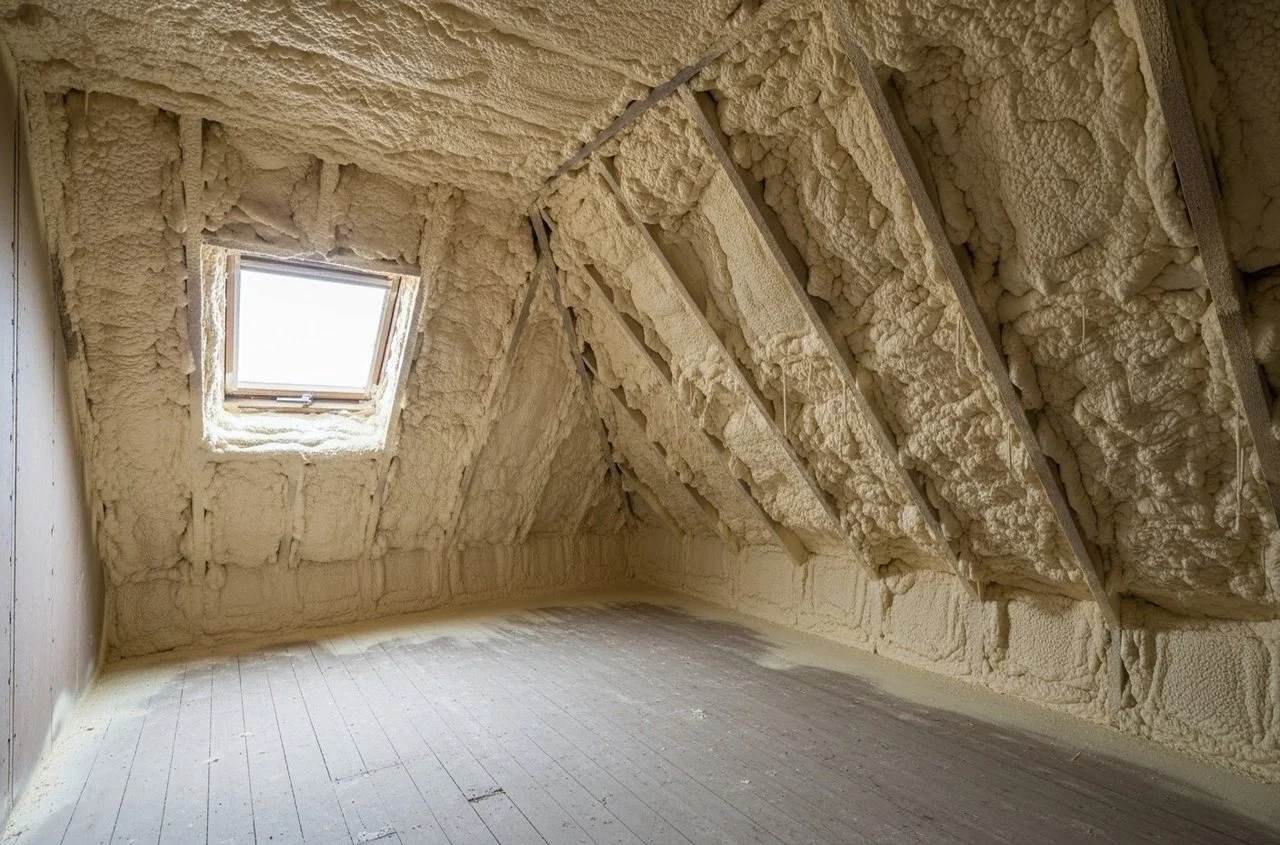
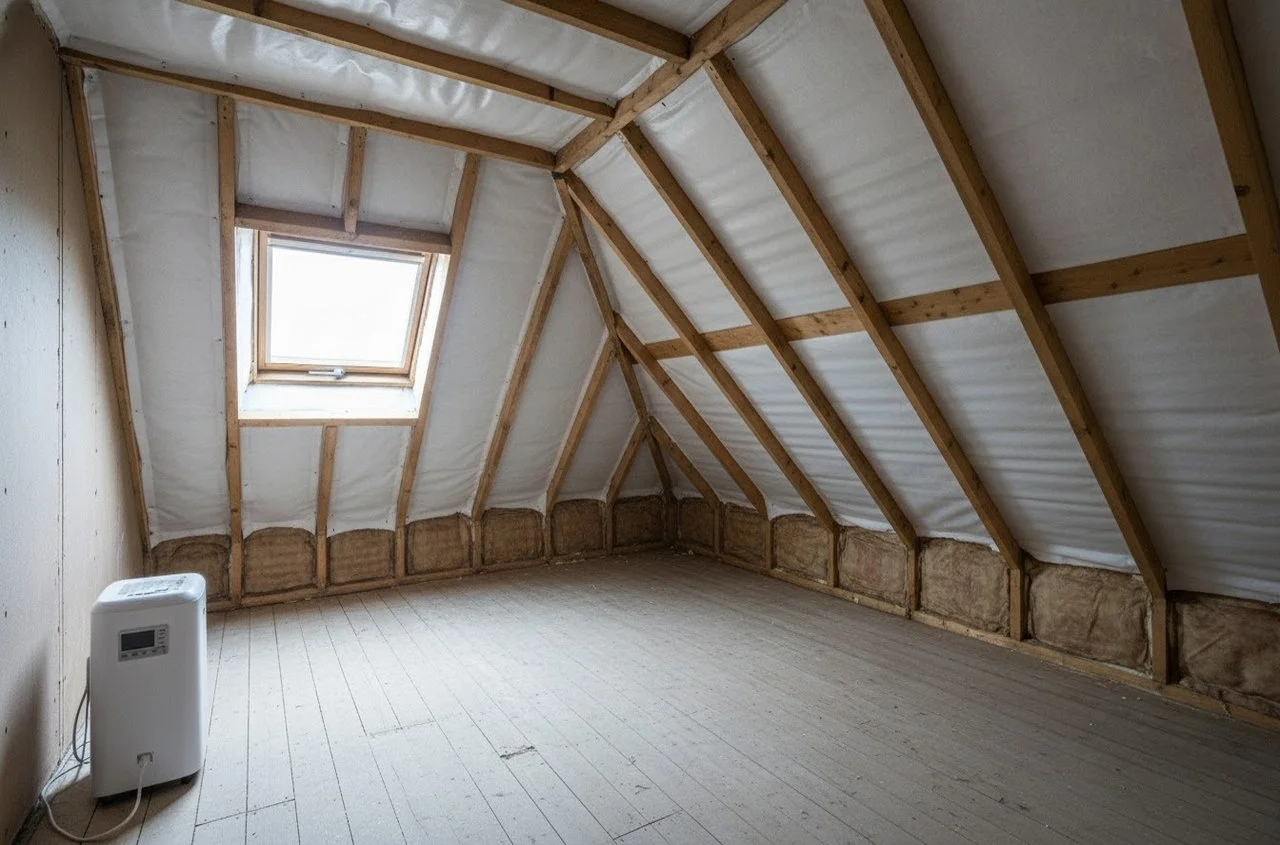
The Potteries: Stoke-on-Trent's Five Towns and the Most Concentrated Ceramics Industry Housing Stock in England
Stoke-on-Trent — the confederation of the Six Towns that Arnold Bennett immortalised as the Five Towns — was the global capital of the ceramics and pottery industry for over two centuries. Josiah Wedgwood, Spode, Royal Doulton, Minton, and hundreds of smaller potbanks employed generations of Staffordshire families in the bottle-kiln landscape of Burslem, Hanley, Longton, Fenton, Tunstall, and Stoke. The housing that grew up around these works — dense terraces of potbank workers’ cottages, Victorian and Edwardian streets built to accommodate the city’s industrial population — represents one of the most distinct and specifically local housing stocks of any industrial English city.
This Potteries housing stock was managed extensively by Stoke-on-Trent City Council and housing associations through the post-war decades, and the energy improvement schemes of the 2000s applied spray foam to it systematically. The pattern is one of the most consistent in the Midlands: terraced streets where foam was applied row by row during improvement programmes, subsequent right-to-buy transfers, and now a steady stream of sale and remortgage discoveries as properties change hands and foam surfaces at valuation.
The significance for lenders is straightforward. Stoke’s Potteries terraces are standard cold-roof Victorian construction — designed for natural ventilation, which spray foam seals. But the sheer scale and systematic nature of the foam application means that in many Potteries streets, multiple properties on the same row have foam, and lenders’ valuers are as familiar with it here as in any part of the country.
A Recent Staffordshire Case: Lichfield Homeowner, Sale Blocked by NatWest — Cathedral City Conservation Area, Foam from Previous Owner
Last year, a homeowner in Lichfield contacted us after their property sale was blocked by a nil valuation from NatWest. The property — a Victorian semi-detached in the Beacon Street area within Lichfield’s conservation area — had open-cell spray foam applied to the full loft floor and lower rafter sections in 2008 by the previous owner, a fact not disclosed in the property information forms at the time of the current homeowner’s purchase in 2014. NatWest’s valuer identified the foam, noted the conservation area designation, and issued a nil valuation that specifically queried whether any external works arising from removal might require consent.
We surveyed within five days. The report confirmed open-cell foam throughout with moderate moisture absorption. The timber structure was in sound condition. Critically, the survey confirmed that no external works appeared necessary — the removal process would be entirely internal. The completion report addressed NatWest’s conservation area queries directly, confirming internal-only removal and providing the specific assurance they needed.
Removal was completed over two days. The completion report was accepted by NatWest and the Lichfield sale completed within three weeks.
Lichfield is England’s only three-spired cathedral city, and its conservation area covers an exceptional extent of the historic town. The Beacon Street, Lombard Street, and cathedral close areas have a concentration of period buildings where lender heritage planning queries in nil valuations are more common than in standard Staffordshire market towns. Non-disclosure of foam by previous owners is a recurring pattern we see across Lichfield’s historically desirable residential streets.
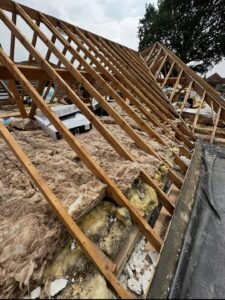
Mid-renovation progress in Staffordshire: Managing old insulation and prepping the exposed timber structure for the next phase of the roofing project.
Cannock Chase AONB: England's Only Area of Outstanding Natural Beauty on a Former Coalfield — and What It Means for Spray Foam
Cannock Chase is one of England’s most unusual landscapes — an AONB designation applied to a heathland that grew up on and around the sites of former collieries. The South Staffordshire coalfield communities of Cannock, Rugeley, Hednesford, Heath Hayes, and Norton Canes developed alongside the coal industry in the nineteenth and early twentieth centuries, producing dense terraced streets and workers’ housing estates that were managed by local authorities and housing associations for generations.
These communities were systematically targeted by energy improvement schemes in the 2000s. Spray foam prevalence in Cannock, Rugeley, and Hednesford is among the highest in Staffordshire — comparable to the patterns in Nottinghamshire’s coalfield communities, in the Black Country, and in the Forest of Dean. The AONB designation adds an additional planning layer to any external remedial works following removal within its boundary, but the foam itself and its consequences for lenders follow the same pattern as any coalfield community.
Staffordshire's Housing Stock: Where Spray Foam Is Most Commonly Found
- Stoke-on-Trent and the Potteries (Hanley, Burslem, Longton, Fenton, Tunstall, Stoke, Newcastle-under-Lyme): As described above — the highest spray foam concentration in Staffordshire, comparable to the Black Country and Nottinghamshire coalfield. Improvement scheme foam in Victorian and Edwardian Potteries terraces is the dominant pattern. Remortgage and sale discoveries are high volume. Newcastle-under-Lyme's Victorian streets adjacent to the Potteries share similar improvement scheme histories.
- Lichfield — cathedral city and conservation areas: England's only three-spired cathedral city with one of the most significant conservation areas in the Midlands. Period housing throughout the historic core where non-disclosed private and improvement scheme foam is found. High property values for the county make nil valuations here financially significant. Heritage planning queries in nil valuations are more common here than in standard Staffordshire market towns.
- Cannock Chase and the South Staffordshire coalfield (Cannock, Rugeley, Hednesford, Norton Canes, Burntwood): Former coalfield communities with housing association improvement scheme foam prevalence comparable to Nottinghamshire's coalfield. AONB planning constraints for external works within the Cannock Chase boundary. High equity release rates in long-term owner-occupied former council properties.
- Burton-upon-Trent and east Staffordshire: Burton is England's historic brewing capital — Bass, Marston's, and Worthington built the Victorian worker terraces that still define much of the town's housing stock. Improvement scheme foam is found throughout Burton's Victorian streets. The town's position on the Derbyshire border means it shares some characteristics with that county's housing stock.
- Stafford — county town (Stafford, Stone, Uttoxeter): Stafford's county town character produces a mix of Victorian and post-war housing. Castle town and riverside conservation area housing in Stafford's historic core. Stone and Uttoxeter are rural market towns with period and post-war stock where improvement scheme foam is found regularly.
- Tamworth and the south-east (Tamworth, Fazeley, Atherstone fringe): Tamworth's position on the Warwickshire border and its commuter role for Birmingham creates a housing market with higher transaction volumes than most of Staffordshire. The former Mercian capital has significant Victorian and post-war housing stock. Energy improvement scheme foam is found in both former council stock and privately owned period terraces.
- Staffordshire Moorlands (Leek, Biddulph, Cheadle, Kingsley): The southern flank of the Pennines, where Staffordshire meets the Peak District. Stone construction — local Millstone Grit and sandstone — creates similar specialist survey requirements to the Derbyshire and North Yorkshire National Park fringes. Rural remoteness in the Churnet Valley and upper moorland villages adds access considerations.
What Staffordshire Lenders Require After a Spray Foam Nil Valuation
The RICS guidance applies uniformly across Staffordshire. For Stoke-on-Trent Potteries terraces, Cannock Chase coalfield housing, and Burton-upon-Trent Victorian streets — the straightforward majority of our Staffordshire workload — the standard survey and completion report process is efficient. For Lichfield conservation area properties where heritage planning queries feature in the nil valuation, the completion report addresses those questions alongside the structural evidence. For Staffordshire Moorlands stone construction properties, the building type is documented specifically. The report is always written for what your specific lender needs to see.
Our Staffordshire Services: Survey, Removal, and the Completion Report
- Independent Spray Foam Survey
Every project begins with a thorough independent inspection by one of our vetted specialist contractors. We identify foam type, assess extent, and examine timber condition. For Lichfield conservation area properties, heritage planning implications for external works are addressed. For Cannock Chase AONB properties, the AONB planning context is flagged. For Staffordshire Moorlands stone properties, the construction type is specifically assessed. The survey report is written for your lender’s requirements.
- Professional Spray Foam Removal
Our removal teams use specialist equipment appropriate to the foam type and construction. For standard Staffordshire Victorian and post-war properties — the majority of our county workload — removal of typical foam coverage is achievable within one to two working days. For Staffordshire Moorlands stone properties, the approach is confirmed at survey stage. On completion, all debris is cleared and the completion report is issued the same day.
- Remedial Works and Roof Replacement
Where removal reveals underlying damage, we provide honest guidance on the remedial works needed. For Lichfield conservation area, Cannock Chase AONB, and Staffordshire Moorlands properties, external works are planned with the relevant planning constraints confirmed. All qualifying works are supported by a 10-Year Insurance-Backed Guarantee.
📍 Areas We Cover Across Staffordshire
We provide spray foam surveys and removal across the whole of Staffordshire. Our teams regularly work across:
- Stafford
- Stoke-on-Trent
- Lichfield
- Burton-upon-Trent
- Cannock
- Rugeley
- Tamworth
- Newcastle-under-Lyme
- Uttoxeter
- Stone
- Leek
- Biddulph
- Cheadle
- Burntwood
If your town or village is not listed, please contact us — our service covers the full county of Staffordshire.
Why Staffordshire Homeowners Choose Spray Foam Removal UK
Staffordshire’s internal variety — Potteries ceramics industry terraces, Lichfield’s three-spired cathedral heritage, Cannock Chase’s unusual AONB-on-coalfield character, Burton’s brewing community housing, and the Staffordshire Moorlands’ Pennine-fringe stone construction — demands a survey-first approach where every property is individually assessed. Our completion reports address the specific lender requirements and planning considerations that each Staffordshire context raises.
- Specialist focus — spray foam surveys and removal is our entire operation
- Vetted contractors — all field teams are Checkatrade-approved
- CORC members — contractors hold membership of the Confederation of Roofing Contractors
- Lender-aware documentation — every survey and completion report is structured around the specific requirements of mainstream lenders and equity release providers
- Potteries housing knowledge — our teams understand the systematic improvement scheme history of Stoke-on-Trent's Five Towns terrace stock
- Lichfield conservation area expertise — cathedral city heritage planning implications for external works identified at survey stage and addressed in completion reports
- Cannock Chase AONB and coalfield community experience — AONB planning constraints and improvement scheme documentation for the South Staffordshire coalfield towns
- Staffordshire Moorlands stone construction awareness — local sandstone and gritstone assessed specifically in the survey process
- 10-Year Insurance-Backed Guarantee — available on qualifying removal and roof replacement projects
- Free online estimate — understand indicative costs before committing to a survey
Get a Free Online Estimate for Your Staffordshire Property
Whether you have a Stoke-on-Trent Potteries terrace where a remortgage has been declined, a Lichfield conservation area sale blocked by a heritage planning nil valuation query, a Cannock estate home where equity release has been refused, a Burton Victorian terrace where a sale has stalled, or a Staffordshire Moorlands rural property where foam has been discovered for the first time — the starting point is always the same: an independent survey and a clear, honest picture of what you are dealing with.
Use our free online estimate tool for an early indication of costs and timescales, or contact us directly to arrange a survey. We cover the whole of Staffordshire and understand the county’s full range — from the Five Towns to the cathedral close.
TESTIMONIAL
Client Feedback & Reviews
See what our customers say about us.
We were in the middle of selling our house in Stoke-on-Trent when the buyer's surveyor flagged the spray foam. It was a nightmare scenario, but this team stepped in and saved the sale. They worked tirelessly to clear the loft and ensured the roof timbers were in perfect condition. Professional, honest, and local lads who know their stuff. If you're in North Staffs and facing insulation issues, these are the people to call.

Absolutely top-class service from start to finish. I was worried about the mess, but they were incredibly tidy while removing the foam from our property in Stafford. They even took the time to explain why the ventilation was being blocked and how the removal would help the house breathe. It’s rare to find such expertise in the Lichfield area. Worth every penny for the peace of mind they've given us.

FAQ's
Questions Staffordshire Homeowners Ask Us Most
Yes — among the highest prevalence of any area in Staffordshire. The improvement scheme application of foam in Stoke-on-Trent's Victorian and Edwardian Potteries terraces was systematic and large-scale during the 2000s, and the subsequent right-to-buy transfers mean many properties have changed hands once or twice since the foam was installed without full disclosure. If you own or are buying a Stoke-on-Trent Potteries terrace built before 1985 that was previously social housing, a loft inspection before any mortgage application or significant transaction is very strongly advisable.
Internal spray foam removal does not require conservation area consent — it is internal work with no external impact. Where the designation matters is if any external remedial works are needed following removal: replacing Lichfield's characteristic red brick or stone roofing details, repairing ridges, or altering roof coverings in the conservation area. Our survey identifies whether any external works appear likely and flags the Lichfield District Council planning requirements before any works are agreed. As the case above shows, a nil valuation that queries conservation area external works can be resolved completely by a survey and completion report that confirms internal-only removal.
Yes — Cannock and Rugeley have a higher spray foam prevalence than most Staffordshire market towns, reflecting the South Staffordshire coalfield's housing association improvement scheme history. If your property was formerly social housing built before 1985 in Cannock, Hednesford, Norton Canes, or Rugeley, a loft inspection before any mortgage application is strongly advisable. The Cannock Chase AONB designation does not increase the foam risk — it only affects planning for any external works if remedial work is needed after removal, which we identify at survey stage.
Burton's historic identity as England's brewing capital shaped its housing stock in a specific way: the brewery companies — Bass, Worthington, Marston's — built and owned extensive worker housing in the Victorian and Edwardian period, then transferred much of it to local authority management after the Second World War. This managed housing stock received energy improvement foam in the same systematic way as comparable community housing across the Midlands. Burton's terrace streets in the Horninglow, Winshill, and Stapenhill areas have above-average spray foam prevalence reflecting this managed housing history.
Costs vary across Staffordshire's diverse housing stock. A standard Stoke-on-Trent Potteries terrace or Cannock semi-detached with typical improvement scheme foam coverage will generally fall towards the lower-to-mid range of our estimate tool — these are typically smaller loft spaces with straightforward access. A Lichfield conservation area Victorian semi, a Burton period terrace, or a Staffordshire Moorlands stone property requiring specialist construction assessment may be costed differently. Our free online estimate gives you a realistic early indication. Full itemised pricing is confirmed following the survey with no hidden charges.
Start with a Free Online Estimate for Your Staffordshire Property
If spray foam insulation is affecting your Staffordshire property — whether you are in Stoke-on-Trent, Stafford, Lichfield, Burton-upon-Trent, Cannock, Tamworth, or anywhere across the county — the quickest way to understand your options and likely costs is through our free online estimate tool. You can also call or email us directly to arrange an independent spray foam survey anywhere across Staffordshire.