
Spray Foam Removal in Warwickshire
Spray Foam Removal in Warwickshire — Independent Surveys & Professional Removal
SHAKESPEARE'S COUNTY — LEAMINGTON, WARWICK & ARDEN SPECIALISTS
Spray Foam Surveys & Removal Across Warwickshire
We provide independent spray foam surveys, professional removal, and full remedial solutions across Warwickshire — from Royal Leamington Spa and Warwick to Stratford-upon-Avon, Rugby, Nuneaton, Kenilworth, and the rural Forest of Arden. If spray foam is blocking your mortgage, remortgage, or equity release, our specialist teams can help.
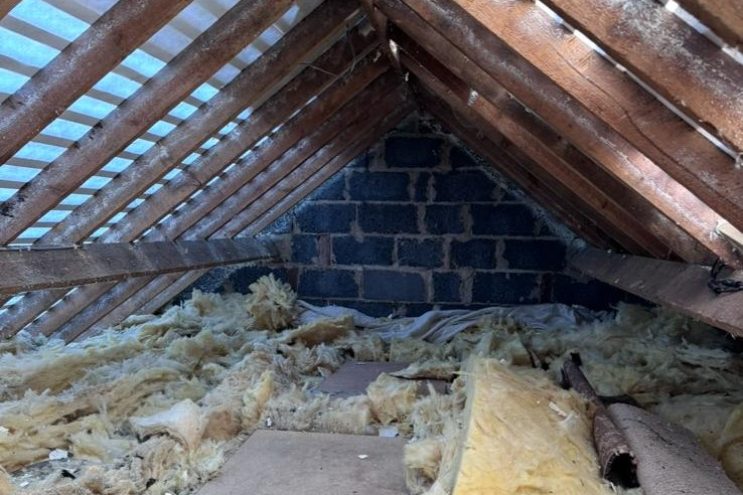
Stratford-upon-Avon, Listed Buildings, and Why Heritage Planning Makes Spray Foam Resolution More Complex in Parts of Warwickshire
Warwickshire is Shakespeare’s county, and Stratford-upon-Avon is one of England’s most visited towns — a place where heritage protection is taken more seriously than almost anywhere outside London or Bath. The town centre and its immediate surroundings contain an extraordinary density of listed buildings: Tudor timber-framed structures, Georgian townhouses, Victorian commercial buildings, and the Shakespeare birthplace and associated properties that the Shakespeare Birthplace Trust has managed for over 150 years. The planning environment in Stratford is among the most sensitive in England for any property work, including the external remedial works that sometimes follow spray foam removal.
Spray foam removal itself — internal works within the loft — does not require listed building consent in Stratford any more than it does anywhere else. But if removal reveals the need for external works — replacing roof tiles, repairing ridges, renewing felt under historic roof coverings — the planning context in Stratford’s designated areas is more demanding than in a standard Midlands market town. Our survey process for Stratford properties identifies any likely external works and flags the relevant planning considerations before any works are agreed, so there are no surprises.
The wider county carries similar, if less acute, heritage planning considerations across Warwick’s castle town centre, Kenilworth’s historic core, and the many listed buildings in the rural Arden parishes. Understanding the planning context is as much part of our Warwickshire survey process as understanding the foam itself.
A Recent Warwickshire Case: Leamington Spa Homeowner, Sale Blocked by Barclays — Regency Terrace, Foam from Landlord Era
Earlier this year, a homeowner in Royal Leamington Spa contacted us after their property sale was blocked by a nil valuation from Barclays. The property — a Regency terrace in the Lansdowne conservation area — had closed-cell spray foam applied to the full rafter span in 2012, during a period when it was let as a student rental property associated with the town’s significant University of Warwick commuter demand. The homeowner had purchased the property from the landlord four years earlier. Barclays’ valuer identified the foam and, noting the conservation area designation, flagged both the standard spray foam concerns and specific questions about any external works that might be needed. A nil valuation was issued.
We surveyed within five days. The report confirmed rigid closed-cell foam throughout, with no evidence of structural timber decay — Leamington’s sheltered inland Midlands location had protected the timbers over twelve years. The survey specifically addressed the conservation area context, confirming that the removal process would be conducted internally without any external impact, and that no external remedial works appeared necessary based on the post-removal structural findings.
Removal was completed over two days. The completion report specifically addressed both Barclays’ standard spray foam concerns and their conservation area queries, confirming internal removal only, sound post-removal timber condition, and specialist contractor credentials. Barclays accepted the comprehensive report and the Leamington sale completed within three weeks.
Leamington Spa’s Lansdowne, Newbold Comyn, and Clarendon Street conservation areas contain a high concentration of Regency and early Victorian terraces that were widely rented to student and professional tenants during the 2000s. Landlord-installed foam unknown to subsequent purchasers is a consistent pattern in our Leamington workload — and the conservation area context means the completion report needs to address planning questions as well as structural ones.
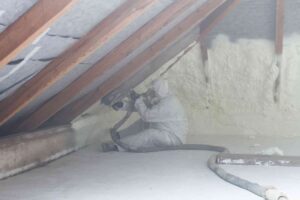
Mid-application today in Warwickshire. Getting the spray foam into every gap between the rafters to lock in the heat and cut out drafts. Thorough coverage now means a warmer loft and lower energy bills once it’s all cured.
Royal Leamington Spa: Regency Architecture, University Town Rental Market, and a High Spray Foam Discovery Rate
Royal Leamington Spa is Warwickshire’s most distinctive town — a planned Regency spa resort that grew rapidly in the 1810s–1840s, creating the elegant terraces, crescents, and villas of the Lansdowne, Newbold Comyn, and Clarendon conservation areas. These properties are among the finest Regency domestic architecture in England outside Bath, and they sit at the higher end of Warwickshire’s property market, with correspondingly significant financial stakes when a spray foam nil valuation arrives.
Leamington’s proximity to the University of Warwick — three miles away in Coventry — has shaped its property market for decades. The town’s elegant Victorian and Edwardian inner suburbs, as well as its outer post-war residential areas, were widely bought as student and professional rental investments through the 1990s and 2000s. The same landlord-to-owner-occupier foam transition pattern we see in Bristol’s BS6 and BS7 terraces and in Oxford’s Headington plays out consistently in Leamington: foam installed during a tenancy, unknown to the owner-occupier who subsequently purchased.
The Regency conservation area context adds a layer that Bristol and Oxford do not have in the same form: lenders applying heritage scrutiny to Leamington properties ask additional questions about what external works might be needed, and completion reports for Leamington conservation area properties need to address those questions explicitly. Our process is built around this.
TESTIMONIAL
Client Feedback & Reviews
See what our customers say about us.
We were concerned about the long-term impact on the timber frame of our property in Royal Leamington Spa, so we decided to have the spray foam removed. The service was impeccable from the first contact. The team arrived on time, worked with great care to minimize dust, and left the loft space completely clear. It is a relief to see the original structure again and know it’s breathing properly. A very thorough and professional job.

A very straightforward and honest experience. We had the spray foam cleared from our bungalow in Stratford-upon-Avon and I couldn't be more satisfied with the outcome. The workers were polite, respectful of our garden, and finished the task exactly within the timeframe they quoted. No hidden costs or surprises at the end. It's rare to find such reliable tradespeople these days.

Warwickshire's Housing Stock: Where Spray Foam Is Most Commonly Found
Warwickshire’s internal variety — from Regency spa town to Shakespeare heritage town to industrial north to rural Arden — means spray foam presents differently across the county:
- Royal Leamington Spa Regency and Victorian conservation areas: As described above — the highest planning scrutiny context in the county for spray foam removal. Landlord-era foam from the University of Warwick rental market is the dominant discovery pattern in the Lansdowne, Newbold Comyn, and Clarendon conservation area streets. High property values make nil valuations here financially acute.
- Warwick town and castle environs: Warwick's historic town centre contains some of the most significant medieval and Tudor architecture in the Midlands, with a dense conservation area and listed building coverage extending into the surrounding residential streets. Victorian and Edwardian inner suburbs beyond the historic core where spray foam is found regularly. The castle town planning environment creates similar heritage considerations to Stratford for external works.
- Stratford-upon-Avon and south Warwickshire: The county's most heritage-sensitive planning environment as described above. Post-war and 1960s–1980s family housing beyond the historic core where standard suburban spray foam patterns apply. The rural south Warwickshire villages of the Feldon and Cotswold fringe have period cottage and farmhouse stock where traditional construction considerations apply.
- Rugby and north Warwickshire: Rugby's manufacturing heritage and public school character produced a mix of Victorian and post-war housing. The town's significant Rugby school influence created specific residential development patterns around the school. Post-war council and housing association estate housing in the wider Rugby and Bedworth areas where energy improvement scheme foam is found at higher rates than in the county's more affluent southern towns.
- Nuneaton and the north-east (Atherstone, Bedworth): Former coal and textile industry communities with post-war and council-era housing stock. The pattern here shares characteristics with Derbyshire's and Nottinghamshire's former coalfield communities — housing association improvement scheme foam, systematic installation, and discovery at the point of remortgage or sale. Nuneaton's industrial heritage produced housing designed for working families that is now changing hands as first-generation owners reach equity release.
- Rural Warwickshire and the Forest of Arden: The ancient Forest of Arden landscape north of Warwick and south of Birmingham contains period farmhouses, estate cottages, and village housing where traditional construction and rural remoteness create the same specialist survey considerations as rural Herefordshire or Lincolnshire's agricultural parishes.
What Warwickshire Lenders Require — and Why Heritage Context Matters in the Completion Report
The RICS guidance applies uniformly across Warwickshire — Halifax, Nationwide, Barclays, Santander, and NatWest all require professional removal confirmed in writing, an independent completion report, and evidence of any remedial works. For standard Warwickshire suburban and market town properties, this process is identical to anywhere else in the Midlands.
For Leamington Spa conservation area properties, Warwick castle environs, and Stratford’s heritage core, lenders applying heritage scrutiny ask additional questions — specifically about whether any external works are required and whether planning consent would be needed for them. A completion report that simply confirms removal without addressing these heritage planning questions will not fully satisfy a lender whose nil valuation notice referenced conservation area concerns. Our reports for Warwickshire’s designated properties are structured to address both the standard structural evidence and the heritage planning questions explicitly.
Our Warwickshire Services: Survey, Removal, and the Completion Report
- Independent Spray Foam Survey
Every project begins with a thorough independent inspection by one of our vetted specialist contractors. We identify foam type, assess extent, and examine timber condition. For Leamington Spa and Warwick conservation area properties, we specifically address whether any likely external works would require planning or listed building consent. For Stratford heritage properties, the planning context is assessed and documented. For Nuneaton and Rugby post-war housing, the standard suburban assessment process applies. The survey report addresses the specific questions your lender will ask.
- Professional Spray Foam Removal
Our removal teams use specialist equipment to detach spray foam from roof timbers with minimum structural disruption. For standard Warwickshire market town and suburban properties, removal of typical foam coverage is usually achievable within one to two working days. For heritage properties where any external access or works require additional planning considerations, the approach is confirmed at survey stage. On completion, all debris is cleared, the structure is inspected, and the completion report — addressing both structural and any heritage planning questions — is issued the same day.
- Remedial Works and Roof Replacement
Where removal reveals underlying damage, we provide honest, itemised guidance on the remedial works needed. For Leamington Spa, Warwick, and Stratford conservation area and listed properties, external works are planned with the relevant planning constraints identified and communicated clearly before any works are agreed. All qualifying works are supported by a 10-Year Insurance-Backed Guarantee.
📍 Areas We Cover Across Warwickshire
We provide spray foam surveys and removal across the whole of Warwickshire. Our teams regularly work across:
- Warwick
- Royal Leamington Spa
- Stratford-upon-Avon
- Rugby
- Nuneaton
- Bedworth
- Kenilworth
- Alcester
- Atherstone
- Southam
- Shipston-on-Stour
- Studley
If your town or village is not listed, please contact us — our service covers the full county of Warwickshire.
Why Warwickshire Homeowners Choose Spray Foam Removal UK
Warwickshire’s internal diversity — from Leamington Spa’s Regency conservation areas to Stratford’s Shakespearean heritage planning environment to Rugby’s manufacturing legacy to Nuneaton’s former industrial communities to the Forest of Arden’s rural character — demands a survey-first approach where each property is assessed individually. Our completion reports address both the standard lender requirements and any heritage planning questions that the property’s designation may raise.
- Specialist focus — spray foam surveys and removal is our entire operation
- Vetted contractors — all field teams are Checkatrade-approved
- CORC members — contractors hold membership of the Confederation of Roofing Contractors
- Lender-aware documentation — every survey and completion report is structured around the specific requirements of mainstream lenders and equity release providers
- Heritage planning expertise — Leamington Spa, Warwick, and Stratford conservation area planning implications for external works identified at survey stage and addressed in completion reports
- Warwickshire-wide experience — our teams understand the Regency spa town character, Shakespeare heritage environment, University of Warwick rental market foam history, and Nuneaton and Rugby post-war housing stock
- 10-Year Insurance-Backed Guarantee — available on qualifying removal and roof replacement projects
- Free online estimate — understand indicative costs before committing to a survey
Get a Free Online Estimate for Your Warwickshire Property
Whether you are dealing with a Leamington Spa conservation area sale blocked by a nil valuation, a Stratford listed building where spray foam has been flagged, a Nuneaton remortgage declined, a Rugby sale halted mid-conveyancing, or a rural Arden property where foam has been discovered for the first time — the starting point is always the same: an independent survey and a clear, honest picture of what you are dealing with.
Use our free online estimate tool for an early indication of costs and timescales, or contact us directly to arrange a survey. We cover the whole of Warwickshire and understand the county’s distinctive combination of heritage planning environments, Regency spa town character, Shakespeare tourism economy, and Midlands industrial housing legacy.
FAQ's
Questions Warwickshire Homeowners Ask Us Most
Internal spray foam removal from within the loft does not require conservation area consent — it is internal work with no external impact. Where the designation becomes relevant is if external remedial works are needed following removal: replacing roof slates or tiles, repairing ridges, or altering roof coverings. In the Lansdowne, Newbold Comyn, and Clarendon conservation areas, some of these works may require conservation area consent that would not be required in undesignated parts of Leamington. Our survey identifies whether any external works are likely and flags the specific planning considerations before any works are agreed. We have experience of working within Leamington Spa's conservation area framework.
Yes — Nuneaton and Bedworth have a higher spray foam prevalence than the county's more affluent southern towns. The former coal and textile industry communities produced significant housing association and council housing stock that was targeted by energy improvement schemes during the 2000s. If you own or are buying a former council or housing association property in Nuneaton, Bedworth, or Atherstone built before 1985, a loft inspection before any mortgage application or transaction is strongly advisable.
Listed building consent is not required for spray foam removal from inside the loft — it is internal works that do not affect the listed fabric. Where it becomes relevant is if external works are required following removal. In a listed Stratford property — particularly within the conservation area — external works such as replacing roof coverings, repairing ridges, or altering roof configurations may require listed building consent and potentially conservation area consent. Stratford-upon-Avon District Council's heritage team applies the planning requirements that flow from the town's exceptional designated status. Our survey identifies all likely external works and their planning implications before any works are agreed.
This is the most common pattern we see in Leamington Spa — foam installed by a landlord during the University of Warwick rental era, not disclosed in the property information forms at the subsequent owner-occupier sale. Our survey report documents the foam's characteristics, type, and estimated installation period in a way that can support any discussions with your conveyancer about non-disclosure alongside resolving the lender issue. Both can run in parallel — the practical removal and completion report process resolves the transaction immediately, and the non-disclosure legal question can proceed separately with your solicitor.
Costs vary across Warwickshire's diverse housing stock. A standard Nuneaton or Rugby post-war semi with typical foam coverage will generally fall towards the lower-to-mid range of our estimate tool. A Leamington Spa Regency terrace or Warwick Victorian property, where the conservation area context may require additional documentation in the completion report, will be costed similarly for the physical removal but the report's heritage planning content adds value. A Stratford listed building or Forest of Arden period rural property requiring specialist assessment may be costed differently. Our free online estimate gives you a realistic early indication. Full itemised pricing is confirmed following the survey with no hidden charges.
Start with a Free Online Estimate for Your Warwickshire Property
If spray foam insulation is affecting your Warwickshire property — whether you are in Royal Leamington Spa, Warwick, Stratford-upon-Avon, Rugby, Nuneaton, Kenilworth, or anywhere across the county — the quickest way to understand your options and likely costs is through our free online estimate tool. You can also call or email us directly to arrange an independent spray foam survey anywhere across Warwickshire.