
Spray Foam Removal in Northamptonshire
Spray Foam Removal in Northamptonshire — Independent Surveys & Professional Removal
NENE VALLEY & EAST MIDLANDS PROPERTY SPECIALISTS
Spray Foam Surveys & Removal Across Northamptonshire
Northamptonshire is one of England’s fastest-growing counties — which means its older housing stock is changing hands at an increasing rate, and spray foam installed a decade ago is now being discovered at an increasing rate too. Our vetted contractors produce the lender-aware documentation that resolves these problems efficiently.
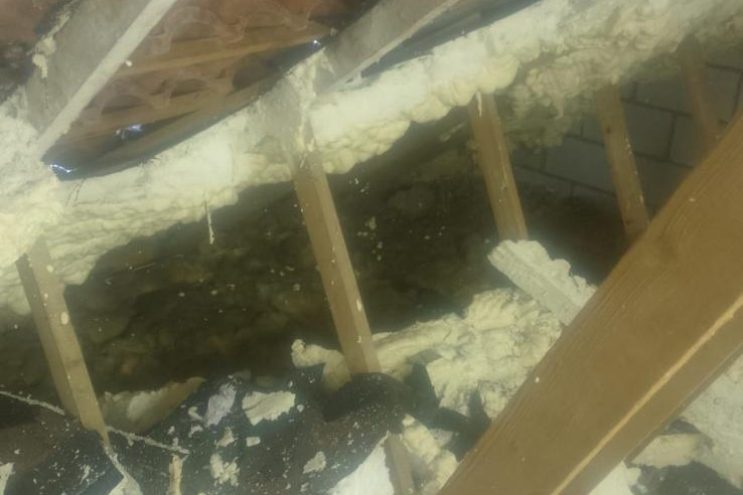
Why Northamptonshire's Rapid Growth Is Bringing a Spray Foam Problem to the Surface
Northamptonshire is one of the fastest-growing counties in England by population. The combination of strong London-to-Birmingham rail links, expanding employment in logistics and distribution along the M1 corridor, and significantly lower property prices than neighbouring Buckinghamshire and Bedfordshire has driven sustained inward migration and housing demand over the past two decades. Northampton, Kettering, Corby, Wellingborough, and Daventry are all growing — and growing fast.
This growth matters for spray foam in a specific way. The older housing stock that predates Northamptonshire’s recent expansion — Victorian and Edwardian terraces in Northampton, Kettering, and Wellingborough; post-war family homes across Corby and Daventry; 1970s and 1980s semis across the Nene Valley towns — received spray foam insulation during the energy efficiency programmes of the 2000s and early 2010s. That stock is now changing hands at an accelerating rate, and spray foam installed a decade ago is being discovered at valuation at an increasing rate.
For first-time buyers stretching to purchase in Northamptonshire, first-time movers remortgaging to fund growing families, and long-term residents reaching the equity release stage — the consequences of spray foam discovered mid-transaction are the same as anywhere: the application stops until the issue is professionally resolved and formally documented.
A Recent Northamptonshire Case: Kettering Homeowner, Remortgage Blocked by Santander
Earlier this year, a homeowner in Kettering contacted us after their remortgage application was declined by Santander. The property — a 1960s semi-detached in the Barton Seagrave area — had closed-cell spray foam applied to the full rafter span in 2013 as part of a Kettering Borough Council-coordinated energy efficiency initiative covering a number of streets in the area. The homeowner had purchased the property five years earlier, unaware that the foam had been installed during the previous tenancy. Santander’s valuer identified it at the inspection and issued a nil valuation.
We surveyed within four days. The report confirmed rigid closed-cell foam throughout, with no evidence of structural timber decay beneath — Northamptonshire’s sheltered inland position and the foam’s 2013 installation date meant the timbers had remained in good condition. The scope for removal was clear and the report gave the homeowner an honest, documented picture of what the process would involve and what timescale to expect.
Removal was completed over two days. The completion report was issued the same afternoon and submitted to Santander’s mortgage team via the homeowner’s broker the following morning.
Santander accepted the completion report and reinstated the valuation. The remortgage was approved within three weeks. The homeowner secured a significantly better interest rate than the standard variable rate they had been paying since the initial decline.
Kettering’s significant stock of 1960s semi-detached housing — built during the town’s post-war expansion and often managed by the borough council before right-to-buy transfers — means spray foam from local authority energy schemes is more common here than many homeowners expect. Our Northamptonshire enquiries from the Kettering, Wellingborough, and Rushden areas reflect this consistently.
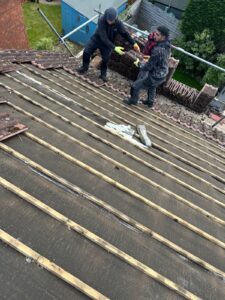
Fixing new timber battens over the underlay to prepare for tiling. Quality roof preparation work underway in Northamptonshire.
Corby: A New-Town Heritage and a Specific Spray Foam Challenge
Among Northamptonshire’s towns, Corby has a particularly distinctive housing history. Developed in the 1930s, 1940s, and 1950s to house Scottish steelworkers brought south to work in the town’s steel tube works, Corby’s original housing stock was built and managed as company and local authority housing for a workforce that had little say in how it was maintained or improved. When the steel industry contracted in the early 1980s and the workforce dispersed or moved into private ownership through right-to-buy, this housing stock — concentrated in the older parts of Corby known as the ‘Scottish estates’ — entered private hands.
The subsequent decades of improvement schemes — including the energy efficiency programmes of the 2000s — targeted this older Corby stock systematically. Spray foam insulation was applied to many of these properties during that period, and it is now surfacing as a problem at remortgage, sale, and equity release at an increasing rate. Properties in Rowlett, Exeter, Gainsborough, and the surrounding Corby estates represent a consistent and significant proportion of our Northamptonshire survey and removal workload.
Corby’s housing values — generally at the more affordable end of the Northamptonshire spectrum — mean that the cost of spray foam removal can feel proportionally significant for homeowners in this part of the county. We are transparent about costs from the outset and structure our estimates to give Corby homeowners a realistic picture before they commit to a survey.
TESTIMONIAL
Client Feedback & Reviews
See what our customers say about us.
I was worried about the roof timbers breathing properly, so decided to get the spray foam taken out. Spray Foam Removal UK came over to Wellingborough and I’m glad I went with them. They explained the whole process, showed me the rafters once they were done, and the price was fair. Good, honest local service.


Northamptonshire's Housing Stock and Where Spray Foam Is Most Commonly Found
Northamptonshire’s housing stock spans several distinct eras, and the spray foam problem is distributed differently across each:
- Northampton Victorian and Edwardian terraces (St James, Far Cotton, Abington, Kingsthorpe): The county town's inner suburban terraces were built for natural ventilation and are particularly vulnerable to moisture damage when spray foam restricts airflow. Northampton's sizeable student and rental population means these properties have often passed through multiple ownerships, and foam installed by an earlier owner may be unknown to the current seller.
- Nene Valley post-war and 1960s–1980s housing in Kettering, Wellingborough, and Rushden: The shoe-making and leather industry towns of the Nene Valley have significant concentrations of post-war family housing built during each town's mid-twentieth century expansion. Council-coordinated energy schemes in the 2000s applied spray foam systematically across many of these properties. Survey discoveries during sales and remortgages are consistently common in this area.
- Corby former company and council housing: As described above, Corby's Scottish steelworker heritage housing — particularly in the original estates of the north and west of the town — was widely insulated during improvement programmes. Properties here generate a significant proportion of our Northamptonshire workload.
- Daventry, Towcester, and the rural market towns: Market town housing spanning Victorian to 1970s, with some rural village properties and period farmhouses in the surrounding parishes. Older construction is present throughout and lender scrutiny at valuation is consistent with the rest of the county.
- Northamptonshire's growing commuter villages (Brixworth, Moulton, Earls Barton, Roade): Villages on Northampton's expanding periphery where older housing sits alongside newer development. Properties in these locations are increasingly sought after by London commuters, and first-time remortgages and sales to commuter buyers are common triggers for spray foam discovery.
What Northamptonshire Lenders Need to Reinstate a Valuation or Application
Whether the lender is Halifax, Nationwide, Barclays, Santander, or NatWest, and whether the property is in Northampton city or a Corby estate, the requirements following a spray foam flag at valuation are the same. RICS guidance applies uniformly, and the evidence that lenders need to reinstate a nil valuation is consistent:
- Written confirmation that the spray foam has been professionally removed by a specialist contractor using appropriate equipment — not partially cleared or boarded over
- An independent completion report documenting the scope of works, foam type and extent removed, post-removal moisture readings and timber condition, and the removing contractor's specialist credentials
- If significant timber decay or structural issues were found during or after removal, evidence that remedial works have been carried out and documented to an acceptable standard
Our survey report and completion report are specifically structured to provide this evidence in the format that lenders and equity release providers require. The physical removal is only half the job — the documentation that follows is what actually resolves the lender’s concern.
Our Northamptonshire Services: Survey, Removal, and the Completion Report
- Independent Spray Foam Survey
Every project begins with a thorough independent inspection of the loft space by one of our vetted specialist contractors. We identify the foam type — open-cell or closed-cell — assess the full extent of coverage, document adhesion characteristics, and examine the condition of the underlying roof timbers. For the closed-cell foam commonly found in Kettering, Corby, and Wellingborough council-scheme properties, we assess the foam’s adhesion to the rafter structure and confirm the removal approach. The survey report is written specifically to address the questions your mortgage lender or equity release provider will ask — it is the foundation of the whole resolution process.
- Professional Spray Foam Removal
Our removal teams use specialist equipment to detach spray foam from roof timbers with minimum structural disruption. The method and duration depend on foam type, adhesion, and roof construction — all confirmed at survey stage so there are no complications when work starts on site. On completion, all foam debris is cleared, the structure is inspected, and the formal completion report is issued the same day. For standard Northamptonshire semi-detached properties with typical foam coverage, removal is usually achievable within one to two working days on site.
- Remedial Works and Roof Replacement
Where removal reveals underlying damage — decayed rafter sections, deteriorated felt, or structural issues the foam had been concealing — we provide honest, itemised guidance on the remedial works needed before the lender will reinstate the valuation. In Northamptonshire’s inland climate, structural decay is less commonly found than in coastal counties, but it does occur — particularly in older properties where foam has been in place for fifteen or more years. Qualifying projects are supported by a 10-Year Insurance-Backed Guarantee.
📍 Areas We Cover Across Northamptonshire
We provide spray foam surveys and removal across the whole of Northamptonshire. Our teams regularly work across:
- Brackley
- Burton Latimer
- Daventry
- Duston
- Kettering
- Long Buckby
- Raunds
- Rushden
- Thrapston
- Wellingborough
- Irthlingborough
- Earls Barton
- Weedon Bec
- Bugbrooke
- Corby
- Desborough
- Higham Ferrers
- Kinsley
- Northampton
- Rothwell
- Thornby
- Towcester
- Woodford
- Brixworth
- Silverstone
If your town or village is not listed, please contact us — our service covers the full county of Northamptonshire.
Why Northamptonshire Homeowners Choose Spray Foam Removal UK
Northamptonshire’s rapid growth means its housing market is active and its homeowners are often first-time buyers, young families, and long-term residents who have little experience of dealing with complex lender requirements. Our process is designed to be straightforward and transparent: you know what the survey will involve, you receive an honest report, you understand the removal scope and cost before any work starts, and the completion report is produced the same day removal finishes. There are no surprises and no hidden stages.
- Specialist focus — spray foam surveys and removal is our entire operation
- Vetted contractors — all field teams are Checkatrade-approved before working on customer properties
- CORC members — contractors hold membership of the Confederation of Roofing Contractors
- Lender-aware documentation — every survey and completion report is written to address the specific requirements of mainstream lenders and equity release providers
- Northamptonshire experience — our teams understand the county's housing history, from Corby's steelworker estates to Nene Valley shoe-town semis to Northampton's Victorian terraces
- Transparent pricing — full itemised costs confirmed after survey, no hidden charges, no obligation to proceed
- 10-Year Insurance-Backed Guarantee — available on qualifying removal and roof replacement projects
- Free online estimate — understand indicative costs before committing to a survey
Get a Free Online Estimate for Your Northamptonshire Property
Whether you are a first-time buyer whose purchase has been halted by a spray foam flag, a Kettering homeowner whose remortgage has been declined, a Corby seller dealing with a mid-conveyancing problem, or a Northampton Victorian terrace owner preparing to sell — the starting point is always the same: a clear, independent survey and an honest picture of what you are dealing with.
Use our free online estimate tool for an early indication of costs and timescales, or contact us directly to arrange a survey. We cover the whole of Northamptonshire and understand both the pace of the county’s growing property market and the specific housing histories that make spray foam such a common problem across different parts of the county.
FAQ's
Questions Northamptonshire Homeowners Ask Us Most
This is one of the most common situations we deal with across Northamptonshire, where first-time buyer activity is high. Your options at this point depend on how strongly you want the property and how the seller responds. The seller can resolve the foam before exchange — in which case we can survey and remove on a timeline that fits the transaction. Alternatively, you can negotiate a price reduction to reflect the removal cost and arrange it yourself after purchase. The third option — exchanging without resolving the foam — is not realistic if your lender has declined to proceed. Contact us for a free estimate so you understand the likely cost before deciding which route to take.
Yes, significantly so in the older parts of the town. Corby's former company and council housing — particularly in the original Scottish steelworker estates of the north and west — was the target of systematic energy improvement programmes during the 2000s. Many of these properties had spray foam applied during that period, often without the occupants having a full understanding of the implications. If you own a Corby property in the older estates and have not inspected the loft recently, it is worth checking before any mortgage application or property transaction goes live.
Contact us as soon as the foam is flagged. The key factor is lead time — the more notice we have, the more scheduling flexibility we can offer. For a standard Northamptonshire semi-detached with typical foam coverage, our expectation is: survey within four to six working days, removal within one to two weeks of survey confirmation, completion report issued on the day removal finishes. For more complex properties or where the survey reveals complications, we will give you a realistic revised timeline at survey stage. We do not give optimistic timelines to win business — we give accurate ones.
The spray foam problem in Northamptonshire is concentrated in properties built before the mid-1980s — it is not typically found in newer development. The issue in newer properties would more commonly be incorrect installation of other insulation types. Spray foam in Northamptonshire is a legacy problem: foam applied to older housing stock during energy schemes ten to fifteen years ago is now surfacing at the point of transaction. If your property is a newer build, spray foam is unlikely to be the issue — but if you have any doubt, a loft inspection before any mortgage application is straightforward to arrange.
Costs vary depending on property size, foam type, and extent of coverage. Standard Northamptonshire 1960s–1980s semis with typical closed-cell foam coverage usually fall in the lower-to-mid range of our estimate tool, reflecting these properties' relatively modest loft volumes. Northampton Victorian terraces are similarly priced. Larger detached properties or those with older construction and unusual roof access will be costed differently. Our free online estimate gives you a realistic early indication before you commit to a survey — and wherever in the county your property sits, the removal cost is almost always a small fraction of the transaction value at stake. Full itemised pricing is confirmed following the survey, with no hidden charges.
Start with a Free Online Estimate for Your Northamptonshire Property
If spray foam insulation is affecting your Northamptonshire property — whether you are in Northampton, Kettering, Corby, Wellingborough, Daventry, or anywhere across the county — the quickest way to understand your options and likely costs is through our free online estimate tool. You can also call or email us directly to arrange an independent spray foam survey across Northamptonshire.