
Spray Foam Removal in Cambridgeshire
Spray Foam Removal in Cambridgeshire — Independent Surveys & Professional Removal
CAMBRIDGE TECH CLUSTER, THE FENS & A14 CORRIDOR SPECIALISTS
Spray Foam Surveys & Removal Across Cambridgeshire
We provide independent spray foam surveys, professional removal, and full remedial solutions across Cambridgeshire — from Cambridge city and Huntingdon to Ely, St Neots, Newmarket, Wisbech, and the Fenland towns. If spray foam is blocking your mortgage, remortgage, or equity release, our specialist teams can help.
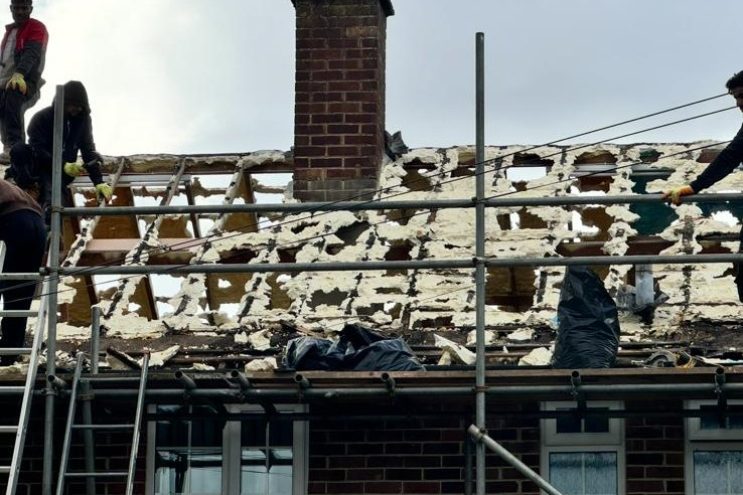
Cambridge's Tech Economy and Why Spray Foam Creates Particularly Acute Problems Here
Cambridge has the highest concentration of high-technology companies per square mile of any location in Europe outside Silicon Valley. The cluster of life sciences, software, semiconductor, and research organisations based around the university, the science parks, and the surrounding A14 corridor has made Cambridge one of England’s most economically dynamic cities — and one of its most expensive property markets. Properties within fifteen miles of the city centre regularly transact at prices that place them among the most valuable in England outside London.
This economic character creates a specific and largely unacknowledged spray foam risk. Cambridge’s tech cluster draws a highly mobile international workforce — researchers, engineers, and entrepreneurs from across Europe, North America, and Asia who are often purchasing UK property for the first time. International buyers purchasing in Cambridge may not have encountered UK lender requirements around spray foam insulation before, and a nil valuation mid-transaction can be genuinely bewildering: they were not warned about it by the selling agent, they had not heard of the issue, and they may not understand the resolution pathway.
Cambridge’s property values mean that a nil valuation here has significant financial consequences. A spray foam discovery that blocks a transaction on a property valued at several hundred thousand pounds — or, in the most sought-after parts of the city and its villages, considerably more — creates a financial urgency that is as acute as anything we encounter anywhere in the country.
A Recent Cambridgeshire Case: St Neots Homeowner, Remortgage Declined by Barclays — A14 Corridor Property
Earlier this year, a homeowner in St Neots contacted us after their remortgage application was declined by Barclays. The property — a 1970s semi-detached in a residential area south of the town centre — had open-cell spray foam applied to the full loft floor and lower rafter sections in 2011, during a Huntingdonshire District Council-coordinated energy improvement scheme targeting a number of streets in the area. The homeowner had purchased the property eight years earlier and had no knowledge of the foam. Barclays’ valuer identified it and issued a nil valuation.
We surveyed within four days. The report confirmed open-cell foam throughout, with moisture absorption in the upper foam layer consistent with thirteen years of installation. The timber structure beneath was in structurally sound condition. The survey gave Barclays’ valuer the specific evidence they needed: the structural risk was not borne out by the actual timber condition.
Removal was completed over two days. The completion report was issued the same afternoon. Barclays accepted the report and the remortgage was approved within three weeks.
St Neots and the A14 corridor — Huntingdon, St Ives, Godmanchester, and the villages between Cambridge and the Midlands — has a large concentration of 1960s–1980s family housing from the town’s and the region’s post-war expansion. Local authority energy scheme foam is consistently found in these areas, and remortgage and sale discoveries are a regular feature of our Cambridgeshire workload along this corridor.
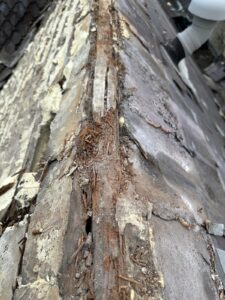
Exposed rotting timber and heavy weathering on the roof ridge in Cambridgeshire. Removing this damaged wood is the first step to a secure, leak-free roof.
The Fens: Why Cambridgeshire's Low-Lying North Creates a Different and More Urgent Spray Foam Risk
The northern half of Cambridgeshire is covered by the Fens — one of England’s most distinctive landscapes, a vast flat agricultural plain reclaimed from wetland over centuries of drainage. Wisbech, March, Chatteris, Whittlesey, Ely, Soham, and the network of fen villages and drains represent a housing and geographic environment unlike anywhere else in the county — and unlike most of England.
Fenland properties sit on peat and alluvial silt soils that retain moisture at significantly higher rates than the chalk and clay soils of south Cambridgeshire. Above-average groundwater levels, the agricultural irrigation that saturates the surrounding land, and the Fens’ characteristically damp air create an ambient moisture environment for fen properties that is markedly different to the sheltered inland conditions of, say, Northamptonshire or Bedfordshire. In this environment, spray foam applied to a fen property’s roof void — particularly open-cell foam, which absorbs moisture actively — can cause faster timber deterioration than the same installation would produce in a drier inland location.
Lenders are aware of this. Fen properties are already subject to additional scrutiny at valuation — flood risk considerations, soil subsidence risk, and the general moisture environment of the landscape all feature in how lenders assess fen properties. Spray foam adds a further concern on top of these existing risk factors, and our survey process for fenland properties specifically documents the moisture environment and its interaction with the foam.
TESTIMONIAL
Client Feedback & Reviews
See what our customers say about us.
Just had the loft insulation taken out of our bungalow in Huntingdon. The workers were very respectful and kept the dust down to a minimum, which I appreciated. It's a relief to have the roof timbers visible again for the surveyors. No hidden costs or dramas, they just did exactly what they promised on the phone. Very satisfied.

Massive weight off my mind getting that foam gone. We were stuck in a bit of a rut with our lender in Wisbech until it was cleared. The team who came over were efficient and didn't waste any time. They bagged up all the old material and cleared the site properly before heading off. If you're struggling with a mortgage survey because of insulation, I'd definitely give them a call.

Cambridgeshire's Housing Stock: Where Spray Foam Creates the Most Problems
Cambridgeshire’s considerable geographic and economic diversity means spray foam affects different parts of the county in quite different ways:
- Cambridge city and inner suburbs (Romsey, Coleridge, Petersfield, Mill Road corridor, Arbury, King's Hedges): Victorian and Edwardian terraces in very high demand from university staff, researchers, and tech workers. Extremely active transaction market with time-critical conveyancing. Spray foam discovered mid-transaction in Cambridge city carries acute consequences given the competitive buyer pool — a buyer who cannot get a mortgage will be replaced immediately, but the seller faces delay and cost. Cambridge conservation area coverage is extensive, and external remedial works following removal may require consent.
- Cambridge villages and commuter belt (Histon, Cottenham, Waterbeach, Sawston, Fulbourn, Girton): High-value villages within the Cambridge green belt with very active markets. Period and post-war housing where spray foam is found regularly. Transaction velocity is high and spray foam mid-sale discoveries require urgent response.
- A14 corridor towns (St Neots, Huntingdon, St Ives, Godmanchester): Post-war and 1960s–1980s family housing. High volume of local authority energy scheme foam. Remortgage and sale discoveries are the most common trigger. The A14's role as a major artery for logistics and tech sector commuters keeps transaction volumes high.
- Fenland towns (Wisbech, March, Chatteris, Whittlesey, Ramsey): Victorian and post-war housing on the fenland plain with the elevated moisture risk described above. The Fenland District has some of the most economically deprived communities in Cambridgeshire, and the financial consequences of an unresolved spray foam problem can be disproportionate for homeowners here.
- Ely and the eastern market towns (Ely, Soham, Newmarket, Bury St Edmunds fringe): Ely's cathedral city character and its significant concentration of period housing creates specific lender heritage scrutiny considerations. Newmarket's affluent racing industry community has higher-than-average property values with correspondingly significant financial consequences for spray foam nil valuations.
What Cambridgeshire Lenders Require After a Spray Foam Flag
Whether the lender is Halifax, Nationwide, Barclays, Santander, or NatWest, the requirements following a spray foam nil valuation in Cambridgeshire are consistent with RICS guidance. The lender requires professional removal by a specialist contractor confirmed in writing, an independent completion report documenting the scope of works and post-removal findings, and evidence of any remedial works where structural issues are found. For fenland properties where moisture documentation is particularly relevant, our completion reports specifically address the post-removal moisture readings in the context of the property’s fenland location.
For Cambridge city properties where conservation area or heritage planning considerations may be relevant to any external follow-on works, our survey identifies these at the outset. For properties being purchased by international buyers who are unfamiliar with the UK spray foam lender process, we provide clear, straightforward explanations of what is needed and why — the process is the same regardless of the buyer’s background, and our documentation is designed to satisfy UK lenders in all circumstances.
Our Cambridgeshire Services: Survey, Removal, and the Completion Report
- Independent Spray Foam Survey
Every project begins with a thorough independent inspection of the loft space by one of our vetted specialist contractors. We identify the foam type, assess extent and coverage, and examine the condition of the underlying roof timbers. For fenland properties, we take specific moisture readings and document the environmental context. For Cambridge city conservation area properties, we flag any likely external works and their planning implications. The survey report is written to address the specific questions your lender will ask.
- Professional Spray Foam Removal
Our removal teams use specialist equipment to detach spray foam from roof timbers with minimum structural disruption. The approach is confirmed at survey stage. For standard Cambridgeshire suburban properties, removal of typical foam coverage is usually achievable within one to two working days on site. On completion, all debris is cleared, the structure is inspected, and the formal completion report is issued the same day.
- Remedial Works and Roof Replacement
Where removal reveals underlying damage — as is more likely in fenland properties where elevated moisture has had extended time to act on timber — we provide honest, itemised guidance on remedial works needed before the lender will reinstate the valuation. For Cambridge city conservation area properties, any external works are planned with the relevant planning context considered. All qualifying works are supported by a 10-Year Insurance-Backed Guarantee.
📍 Areas We Cover Across Cambridgeshire
We provide spray foam surveys and removal across the whole of Cambridgeshire. Our teams regularly work across:
- Cambridge
- Ely
- Huntingdon
- St Neots
- St Ives
- Wisbech
- March
- Chatteris
- Soham
- Newmarket
- Histon
- Sawston
- Waterbeach
- Cottenham
- Whittlesey
- Ramsey
If your town or village is not listed, please contact us — our service covers the full county of Cambridgeshire.
Why Cambridgeshire Homeowners Choose Spray Foam Removal UK
Cambridgeshire’s internal diversity — from Cambridge city’s ultra-competitive tech-economy property market to the Fens’ elevated moisture environment to the A14 corridor’s post-war commuter housing to Newmarket’s affluent racing community — requires a survey-first approach that assesses each property individually. Our completion reports are written for your specific lender’s requirements and structured around what they need to see, not as generic documents.
- Specialist focus — spray foam surveys and removal is our entire operation
- Vetted contractors — all field teams are Checkatrade-approved
- CORC members — contractors hold membership of the Confederation of Roofing Contractors
- Lender-aware documentation — survey and completion reports structured around the specific requirements of mainstream lenders and equity release providers
- Fenland moisture expertise — our survey process for fenland properties specifically documents the moisture environment and its relevance to timber condition assessment
- Cambridge conservation area awareness — planning implications for external remedial works in Cambridge city are identified at survey stage
- International buyer support — we can provide clear guidance on the UK spray foam lender process for buyers unfamiliar with UK mortgage requirements
- 10-Year Insurance-Backed Guarantee — available on qualifying removal and roof replacement projects
- Free online estimate — understand indicative costs before committing to a survey
Get a Free Online Estimate for Your Cambridgeshire Property
Whether you are dealing with a mid-conveyancing nil valuation in Cambridge city, a Huntingdon or St Neots remortgage declined, a Wisbech equity release refused, or a Newmarket sale halted — the starting point is always the same: an independent survey and a clear, honest picture of what you are dealing with and what resolution looks like.
Use our free online estimate tool for an early indication of costs and timescales, or contact us directly to arrange a survey. We cover the whole of Cambridgeshire and understand both the pace of the county’s technology-economy property market and the specific moisture challenges of its fenland north.
FAQ's
Questions Cambridgeshire Homeowners Ask Us Most
UK mortgage lenders follow RICS guidance that treats spray foam insulation in loft spaces as a standard risk — if a surveyor identifies it at valuation, the lender will typically issue a nil valuation and decline to lend until the foam has been professionally removed and a specialist completion report produced. This applies regardless of when the foam was installed, who installed it, or how well the property has been maintained. If your survey has flagged spray foam, or if you are concerned a property you are looking at may have it, contact us — we can explain the process, give you an indication of costs, and help you understand whether to proceed with the purchase or negotiate a price adjustment. The resolution process is well-understood and manageable once you know what it involves.
In practical terms, yes — the elevated ambient moisture of the fenland environment means that open-cell foam in a fen property absorbs moisture faster and that moisture trapped by closed-cell foam against roof timbers acts more aggressively than in a drier inland location. This does not mean every fen property with spray foam has serious structural damage — our survey will give you an accurate assessment — but it does mean that acting promptly is more important in a Wisbech or March property than it would be in a south Cambridgeshire village with standard inland moisture conditions.
We understand Cambridge's property market moves faster than most. For a standard Cambridge city terrace or village semi with typical foam coverage, our expectation is: survey within four to five working days of instruction, removal within one to two weeks of survey confirmation, completion report issued on the day removal finishes. We discuss your specific timeline at the first call and plan scheduling around your conveyancing deadline. In Cambridge's market, where losing a buyer to another property is a genuine risk, speed of response from the point of nil valuation is critical.
Spray foam removal from inside the loft does not require planning consent in a conservation area — it is internal work with no external impact. Where conservation area designation becomes relevant is if external remedial works are needed following removal: replacing roof tiles or slates, repairing ridges, or altering roof coverings. Cambridge city has extensive conservation area coverage across its Victorian and Edwardian streets, and Ely's historic core is similarly designated. Our survey identifies whether any external works are likely and flags the relevant planning considerations for your specific property's location before any works are agreed.
Costs vary across Cambridgeshire. An A14 corridor semi-detached in St Neots or Huntingdon with standard foam coverage will typically fall in the lower-to-mid range of our estimate tool. A Cambridge city Victorian terrace or conservation area property may be costed differently depending on construction complexity. A fenland property requiring enhanced moisture assessment will also vary. Our free online estimate gives you a realistic early indication before you commit to a survey. Full itemised pricing is confirmed following the survey with no hidden charges — and in Cambridgeshire's high-value market, the removal cost is almost always a very small fraction of the property value at stake.
Start with a Free Online Estimate for Your Cambridgeshire Property
If spray foam insulation is affecting your Cambridgeshire property — whether you are in Cambridge city, Huntingdon, St Neots, Ely, Wisbech, or anywhere across the county — the quickest way to understand your options and likely costs is through our free online estimate tool. You can also call or email us directly to arrange an independent spray foam survey anywhere across Cambridgeshire.