
Spray Foam Removal in Suffolk
Spray Foam Removal in Suffolk — Independent Surveys & Professional Removal
SUFFOLK COAST AONB, STOUR VALLEY & IPSWICH SPECIALISTS
Spray Foam Surveys & Removal Across Suffolk
The Suffolk Coast AONB’s high-value arts heritage properties, Ipswich’s Victorian dock quarter, the county’s distinctive Suffolk Pink and timber-framed cottages, Lowestoft’s North Sea fishing port housing, and the Stour Valley’s affluent rural belt each create distinct spray foam challenges. Our vetted contractors understand all of them.
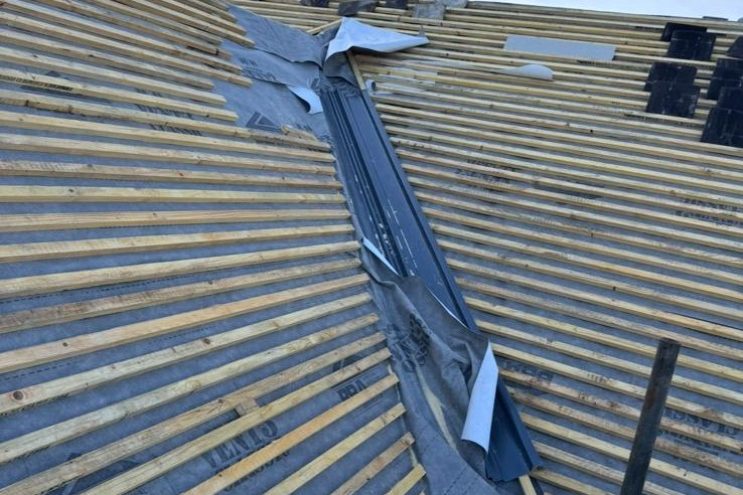
The Suffolk Coast AONB: England's Most Expensive Square Miles of Shingle and the Spray Foam Problem That Has Arrived With Them
The Suffolk Coast and Heaths Area of Outstanding Natural Beauty stretches from Kessingland in the north to Felixstowe in the south, taking in one of England’s most distinctive and sought-after coastal landscapes. Aldeburgh, Southwold, Walberswick, Orford, and Dunwich — the shingle shore towns and villages that have drawn artists, writers, and composers since the nineteenth century — now have property values that place them among the most expensive residential locations in the East of England, with Southwold in particular regularly cited as one of England’s priciest coastal towns.
The housing stock along the Suffolk Coast AONB is correspondingly distinctive: Victorian and Edwardian beach houses and fishermen’s cottages that have been substantially extended and improved over decades, Arts and Crafts-influenced properties from the early twentieth century, converted coastguard stations and former working buildings, and the traditional weather-boarded or Suffolk Pink rendered cottages that define the region’s vernacular architecture. A significant proportion of this stock is now held as second homes or holiday lets by owners whose primary residence is in London or elsewhere.
The spray foam problem arrived in the Suffolk coast towns in two ways: through energy improvement schemes targeting the permanent residential stock in the 2000s, and through private installations by owners attempting to improve the thermal performance of draughty Victorian and Edwardian properties. In both cases, the discovery pattern is now the same — foam applied a decade or more ago, unknown to the current owner or the absentee second home owner, surfacing at the point of sale or equity release. Given property values in Aldeburgh, Southwold, and Walberswick, the financial stakes when a nil valuation arrives are considerable.
A Recent Suffolk Case: Ipswich Homeowner, Remortgage Declined by Barclays — Victorian Dock Quarter Terrace
Earlier this year, a homeowner in Ipswich’s Waterfront quarter contacted us after their remortgage application was declined by Barclays. The property — a Victorian terrace in the Wherstead Road area close to the regenerated Ipswich Waterfront — had open-cell spray foam applied to the full loft floor and lower rafter sections in 2010, during an Ipswich Borough Council-coordinated energy improvement scheme targeting the dense Victorian terraced streets in the area. The homeowner had purchased the property seven years earlier, unaware of the foam. Barclays’ valuer identified it and issued a nil valuation.
We surveyed within four days. The report confirmed open-cell foam throughout, with moderate moisture absorption consistent with its fourteen-year age. The underlying timber structure was in sound condition — the property’s relatively sheltered inland position within Ipswich had protected it from significant deterioration. The report gave Barclays’ valuer the evidence they needed.
Removal was completed over two days. The completion report was issued the same afternoon. Barclays accepted the report and the remortgage was approved within three weeks, allowing the homeowner to secure a significantly better interest rate than the standard variable rate they had been on since the initial decline.
Ipswich’s Victorian dock quarter — the dense terraced streets between the Waterfront regeneration zone and the town’s historic core — was systematically targeted by energy improvement schemes in the 2000s. The Waterfront area’s rising property values following the regeneration programme mean that spray foam nil valuations here carry increasing financial consequences as equity in these properties grows.
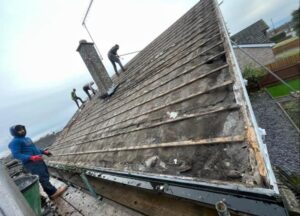
Stripping the old roof layers down to the timber battens. Our team preparing the structure for a complete roof renewal in Suffolk.
Suffolk Pink, Weather-Boarding, and Timber Framing: The County's Traditional Construction and Why It Matters for Spray Foam
Suffolk has one of the most recognisable vernacular building traditions in England. The Suffolk Pink — lime-rendered cottages in shades from ochre to rose — and weather-boarded barns and farmhouses define the rural Suffolk landscape as distinctively as any county in the country. Below the render and behind the boarding, the structures are often traditional lime mortar and timber construction that breathes as a system — managing moisture through the building fabric in ways that depend on natural ventilation through the roof void.
Suffolk also has a significant stock of timber-framed buildings — particularly in the wool towns of Lavenham, Long Melford, Clare, and Kersey — where the medieval and post-medieval tradition of oak-framed construction is still visible in occupied residential properties. While not as numerous as Herefordshire’s timber-framed stock, Suffolk’s timber-framed buildings create the same specialist spray foam removal considerations: the foam’s interaction with the historic frame must be assessed before any removal approach is agreed.
For Suffolk Pink rendered properties and weather-boarded traditional construction, spray foam in the roof void disrupts the moisture management of the whole building. Our survey process for traditional Suffolk construction specifically documents the building type and assesses the foam’s interaction with the traditional fabric — and identifies any conservation area or listed building planning implications for external remedial works, which are common across Suffolk’s historically designated town centres and villages.
Suffolk's Housing Stock: Where Spray Foam Is Most Commonly Found
Suffolk’s considerable geographic and economic variety means spray foam affects different parts of the county in different ways:
- Ipswich Victorian and Edwardian inner suburbs (Rope Walk, Wherstead Road, Nacton Road, Woodbridge Road, Rushmere): Dense Victorian and Edwardian terraced housing where energy improvement scheme foam is found regularly. Ipswich's active property market and the regeneration of the Waterfront area mean transaction volumes are high and mid-sale or mid-remortgage discoveries are common. The town's conservation area coverage creates planning considerations for external works in some streets.
- Suffolk Coast AONB (Aldeburgh, Southwold, Walberswick, Orford, Dunwich, Sizewell, Thorpeness): High-value coastal properties with significant second home and holiday let ownership. Arts and Crafts period construction, Victorian beach houses, and traditional coastal cottages create specialist removal considerations. Absentee ownership means foam installed a decade ago can be unknown to the current owner until it surfaces at sale or equity release.
- Bury St Edmunds and the west (Bury St Edmunds, Haverhill, Newmarket fringe): Bury St Edmunds' prosperous market town character — sometimes called the 'gem of Suffolk' — has a mix of Georgian, Victorian, and post-war housing. The town's proximity to RAF Mildenhall and RAF Lakenheath brings a military community housing dimension similar to Wiltshire, with some former service quarters and estates in the surrounding villages where improvement-scheme foam is found.
- Lowestoft and the North Sea coast: Lowestoft is England's most easterly town, with the most direct North Sea exposure of any Suffolk settlement. The town's Victorian fishing and processing industry heritage produced dense terraced housing similar in character to Grimsby on the other coast. North Sea-facing properties in Lowestoft carry elevated moisture urgency similar to the Norfolk coastal framing — salt air, wind-driven rain, and above-average ambient humidity.
- The Stour Valley and south Suffolk (Sudbury, Long Melford, Lavenham, Clare): The 'Constable country' Stour Valley has one of Suffolk's highest concentrations of high-value period properties — wool town architecture, timber-framed villages, and affluent rural commuter homes within reach of London via the A12 and Colchester rail link. High property values here mean nil valuations carry significant financial consequences.
- Central Suffolk market towns (Woodbridge, Framlingham, Saxmundham, Stowmarket, Eye): Historic market towns with Victorian and earlier property stock. Woodbridge's tidal Deben setting and proximity to the Suffolk Coast AONB makes it one of the most sought-after small towns in the county. Spray foam in Woodbridge period properties carries the same AONB-adjacent considerations as the coast itself.
What Suffolk Lenders Require After a Spray Foam Nil Valuation
The RICS guidance applies uniformly across Suffolk — Halifax, Nationwide, Barclays, Santander, and NatWest all require professional removal confirmed in writing, an independent completion report, and evidence of any remedial works. For Suffolk Coast AONB and heritage construction properties where the building fabric context is relevant to the lender’s structural assessment, our completion reports address this specifically. For coastal properties where North Sea or estuary moisture is documented, the coastal context is noted. For Ipswich and Bury St Edmunds conservation area properties, external work planning implications are identified at survey stage.
Our Suffolk Services: Survey, Removal, and the Completion Report
- Independent Spray Foam Survey
Every project begins with a thorough independent inspection by one of our vetted specialist contractors. We identify foam type, assess extent, and examine timber condition. For Suffolk Coast AONB properties, the coastal exposure profile is documented. For traditional Suffolk Pink, weather-boarded, or timber-framed properties, the construction type and moisture management characteristics are assessed specifically. For Lowestoft North Sea-facing properties, moisture readings reflect the coastal environment. The survey report is written for your specific lender’s requirements.
- Professional Spray Foam Removal
Our removal teams use specialist equipment appropriate to the foam type and Suffolk construction. For traditional timber-framed Suffolk properties, the removal approach is confirmed individually at survey stage. For standard Suffolk Victorian and post-war suburban properties, removal of typical foam coverage is achievable within one to two working days on site. On completion, all debris is cleared, the structure is inspected, and the completion report is issued the same day.
- Remedial Works and Roof Replacement
Where removal reveals underlying damage — more likely in coastal, estuary-adjacent, or older traditional construction properties — we provide honest, itemised guidance on the remedial works needed. For listed and conservation area Suffolk properties, external works are planned with the relevant planning constraints in mind. All qualifying works are supported by a 10-Year Insurance-Backed Guarantee.
📍 Areas We Cover Across Suffolk
We provide spray foam surveys and removal across the whole of Suffolk. Our teams regularly work across:
- Ipswich
- Bury St Edmunds
- Lowestoft
- Felixstowe
- Newmarket
- Stowmarket
- Sudbury
- Haverhill
- Saxmundham
- Leiston
- Aldeburgh
- Woodbridge
- Framlingham
- Eye
- Beccles
- Bungay
If your town, village, or coastal location is not listed, please contact us — our service covers the full county of Suffolk.
Why Suffolk Homeowners Choose Spray Foam Removal UK
Suffolk’s internal diversity — from the Suffolk Coast AONB’s high-value arts heritage properties to Ipswich’s Victorian dock quarter to Lowestoft’s North Sea-facing fishing community housing to the Stour Valley’s affluent timber-framed wool towns — requires a survey-first approach where every property is assessed on its specific construction, location, and environmental context. Our completion reports are structured around what your specific lender needs to see.
- Specialist focus — spray foam surveys and removal is our entire operation
- Vetted contractors — all field teams are Checkatrade-approved
- CORC members — contractors hold membership of the Confederation of Roofing Contractors
- Lender-aware documentation — survey and completion reports structured around the specific requirements of mainstream lenders and equity release providers
- Suffolk Coast AONB experience — coastal exposure, second home ownership context, and AONB planning considerations assessed at survey stage
- Traditional Suffolk construction knowledge — Suffolk Pink, weather-boarded, and timber-framed building types assessed with specific understanding of their moisture management characteristics
- Lowestoft North Sea coastal survey expertise — elevated moisture context documented for North Sea-facing properties
- Bury St Edmunds and Ipswich conservation area awareness — planning implications for external remedial works identified at survey stage
- 10-Year Insurance-Backed Guarantee — available on qualifying removal and roof replacement projects
- Free online estimate — understand indicative costs before committing to a survey
Get a Free Online Estimate for Your Suffolk Property
Whether you are dealing with a mid-conveyancing nil valuation on an Ipswich Victorian terrace, an Aldeburgh or Southwold second home where foam has been discovered for the first time, a Bury St Edmunds remortgage declined, a Lowestoft sale halted, or a Stour Valley timber-framed property where a survey has flagged foam — the starting point is always the same: an independent survey and a clear, honest picture of what you are dealing with.
Use our free online estimate tool for an early indication of costs and timescales, or contact us directly to arrange a survey. We cover the whole of Suffolk and understand the county’s distinctive combination of coastal AONB heritage, traditional vernacular construction, and active property markets from the coast to the Stour Valley.
TESTIMONIAL
Client Feedback & Reviews
See what our customers say about us.
We were quite worried about the timbers in our older property in Bury St Edmunds being hidden under that foam. The team who came out were very professional and took great care to explain the extraction process. They worked steadily through the day and ensured the loft was left completely clear of any debris. It’s a relief to know the roof can finally breathe again. Highly recommended for their attention to detail.
Had to get the spray foam removed from our house in Ipswich before we could finalize the sale. I was expecting it to be a nightmare, but the crew made it look easy. They arrived on time, bagged everything up as they went, and left the place spotless. Most importantly, they provided all the necessary paperwork for the buyer's surveyor immediately. Excellent service from start to finish.

FAQ's
Questions Suffolk Homeowners Ask Us Most
Contact us as soon as the foam is identified, and ideally before you have a buyer whose lender has issued a nil valuation. For Suffolk Coast AONB properties, where buyer pools typically include a mix of cash buyers and mortgage buyers, resolving the foam before marketing means you can offer the full pool access — including the mortgage buyers who represent the majority of the market. For properties that are already mid-transaction, act immediately. Aldeburgh and Southwold property transactions can be highly competitive and a buyer who loses confidence may walk away for another property rather than wait. Our free online estimate gives you a cost indication with no commitment.
It affects the assessment stage most significantly. Traditional Suffolk construction — whether timber-framed or lime-rendered — has specific moisture management characteristics that mean our survey documents the construction type and the foam's interaction with it before any removal approach is confirmed. For listed timber-framed properties in Lavenham, Long Melford, or other wool towns, we also identify whether any external remedial works following removal would require listed building consent. The removal process itself is then planned to reflect the specific construction. Our contractors have experience with the range of traditional Suffolk building types.
We encounter it more frequently in the housing stock around the US Air Force bases than in comparable inland Suffolk communities. The combination of MOD and service-managed housing improvement programmes and the high turnover of personnel — American service families rotating through on three-year postings — means that maintenance and improvement decisions were sometimes made without full consideration of their long-term implications for UK mortgage lenders. Properties in the villages around Mildenhall, Lakenheath, and Brandon that were used as service accommodation or purchased by service families are worth inspecting before any mortgage application or transaction.
Yes — Lowestoft is England's most easterly town and its North Sea-facing properties receive persistent north and north-easterly exposure. Salt air, wind-driven rain, and above-average ambient humidity create a moisture environment that accelerates the consequences of spray foam compared to sheltered inland Suffolk. If your Lowestoft property faces north or north-east, or sits within a few streets of the beach, we would treat it as elevated priority. Our survey will document the coastal context and assess the current timber condition accurately, giving you and your lender a clear picture of the actual risk.
Costs vary across Suffolk's diverse housing stock. A standard Ipswich or Stowmarket Victorian semi with typical foam coverage will generally fall towards the lower-to-mid range of our estimate tool. A Suffolk Coast AONB period cottage requiring coastal assessment, a timber-framed Stour Valley property requiring heritage-aware survey, or a Lowestoft North Sea-facing property with elevated moisture documentation may be costed differently. Our free online estimate gives you a realistic early indication before you commit to a survey. Full itemised pricing is confirmed following the survey with no hidden charges.
Start with a Free Online Estimate for Your Suffolk Property
If spray foam insulation is affecting your Suffolk property — whether you are in Ipswich, Bury St Edmunds, Lowestoft, Aldeburgh, Southwold, Woodbridge, or anywhere across the county — the quickest way to understand your options and likely costs is through our free online estimate tool. You can also call or email us directly to arrange an independent spray foam survey anywhere across Suffolk.