Most Kidderminster homeowners putting their property on the market expect the usual process. An estate agent valuation, some viewings, an offer, a survey. What they do not expect is the survey coming back with a spray foam flag that stops the sale in its tracks.
It is happening with increasing regularity across Kidderminster and the wider Wyre Forest district. Properties in DY10 and DY11 are being flagged during mortgage surveys, sales are stalling, and homeowners are discovering a problem that was quietly sitting in their loft long before they decided to sell.
Understanding why Kidderminster has such a high concentration of affected properties, and what to do when spray foam is found, is exactly what this article covers.
Why Kidderminster Has One of the Highest Concentrations of Affected Homes in Worcestershire
The answer sits in Kidderminster’s housing history, and the numbers make it clear.
According to local property data, Wyre Forest has 46,430 homes in total. Of those, 9,421 were built in the immediate post-war years between 1945 and 1964, representing 20.3% of the total housing stock. That is significantly above the national average of 15.3% for that era. A further 12,307 homes, comprising 26.5% of the total, were built in the late 1960s and 1970s. Again, this is well above the national average of 17.7% for that period.
Put simply, nearly half of all homes in Wyre Forest were built between the end of the Second World War and 1980. These are precisely the properties that were targeted during government energy efficiency schemes in the 2000s and early 2010s. Timber-framed pitched roofs, designed to breathe and ventilate naturally, were sealed with spray foam insulation under schemes including the Carbon Emissions Reduction Target and the ECO scheme. Contractors worked through whole streets and estates of identical property types, applying foam quickly and at scale.
Kidderminster’s carpet industry heritage shaped those streets. The town grew rapidly in the nineteenth and twentieth centuries as the carpet trade expanded, and then contracted equally rapidly as the industry declined. The housing that remains from those eras, terraces near the town centre, post-war semis across the wider district, and 1960s and 1970s estates on the outer edges of the town, represents exactly the property types where spray foam installation was most common.
Wyre Forest Community Housing, which took over the district council’s housing stock in 2000, managed a significant number of these properties and oversaw insulation programmes across the area during the energy scheme era. Many of those homes were later purchased under Right to Buy or passed to private ownership, bringing the spray foam with them.
What Sellers in Kidderminster Are Discovering
The pattern plays out the same way for most Kidderminster homeowners who encounter the problem.
The property goes on the market. Viewings go well. An offer comes in. The buyer’s mortgage lender instructs a surveyor. The surveyor goes into the loft and finds spray foam applied to the underside of the roof timbers. The report flags it. The lender either refuses the mortgage application outright or puts it on hold pending a specialist report.
The sale stops.
For some Kidderminster sellers, this is the first time they have heard the words spray foam in connection with their own property. In many cases, the foam was installed years earlier under a scheme they barely remember, or during a previous ownership before they bought the home. They did not install it, they were not fully informed about its implications, and now it is blocking a transaction they had been planning for months.
According to RICS in their official spray foam consumer guide, spray foam insulation prevents surveyors from properly inspecting roof timbers. Because they cannot see through the foam, they cannot assess whether the timber underneath is structurally sound. Without that assessment, lenders cannot give the application the green light. Over 90% of UK mortgage lenders now either refuse or flag applications on spray foam properties, including all of the major high street banks operating in the Kidderminster market.
The Areas of Kidderminster Most Commonly Affected
Spray foam is found across the DY10 and DY11 postcode areas but there are concentrations in specific parts of the town reflecting where the post-war and 1960s-1970s housing stock is densest.
Town centre terraces and inner streets represent some of the oldest private housing stock in Kidderminster. Victorian and Edwardian terraces close to the town centre and the River Stour corridor were included in energy improvement programmes and spray foam is found in these properties with regularity during surveys.
Post-war estates on the western and northern edges of the town reflect the national housing drive of the late 1940s and 1950s. Kidderminster’s proportion of post-war housing is significantly above the national average, and these properties were heavily targeted by energy efficiency contractors during the 2000s.
1960s and 1970s estates across the outer districts make up the largest single block of affected properties. The 12,307 homes built in Wyre Forest during this era represent over a quarter of the total housing stock and sit at the heart of the spray foam problem across the district. Semi-detached and detached properties from this period are among the most commonly flagged in surveys.
Stourport-on-Severn sits within the Wyre Forest district and shares many of the same housing stock characteristics as Kidderminster itself. Post-war and 1960s-1970s properties along the riverside and on the town’s outer estates are affected by the same pattern of spray foam installation.
Bewdley has a higher proportion of period properties than Kidderminster but is not exempt from the problem. Some older properties in the DY12 area had foam applied during the ECO scheme period, and survey flags here occasionally surprise sellers who assumed their property type was less at risk.
The Hidden Timber Problem That Makes Waiting Expensive
There is a dimension to the spray foam issue in Kidderminster that goes beyond the mortgage flag.
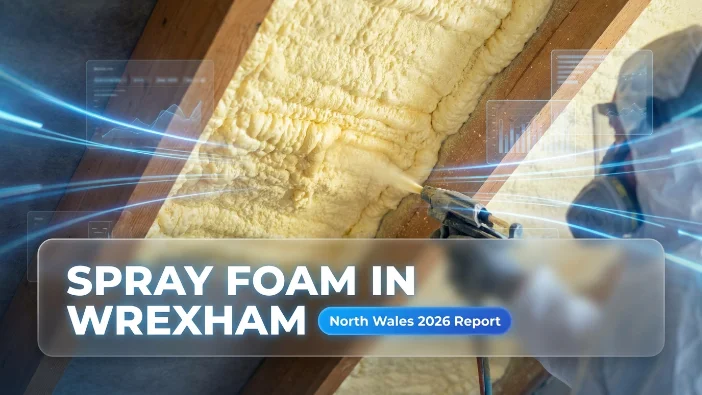
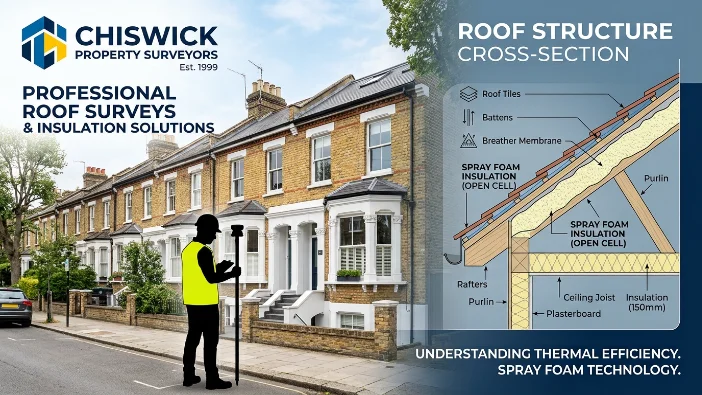
Spray foam applied to roof timbers removes the natural ventilation those structures rely on. Timber needs airflow to stay dry. Without it, moisture builds up behind the foam, and that moisture causes rot. The foam covers the evidence completely. The timber deteriorates invisibly while the home looks and feels perfectly normal from inside.
Wyre Forest’s housing stock contains a significant proportion of properties where spray foam has been in place for fifteen or more years. That is a long time for moisture to work on timber that cannot be seen or inspected. Around 40% of spray foam removals across the UK uncover some level of hidden timber damage. For older Kidderminster properties with foam that dates back to the early 2000s, the risk of finding damage during removal is real.
The practical consequence is straightforward. The longer the foam stays in place, the more expensive the total bill is likely to be. A minor timber treatment today is significantly cheaper than a structural repair in two or three years.
What the Removal Process Looks Like for a Kidderminster Property
Most of the spray foam properties coming to market in Kidderminster are semi-detached or terraced homes with standard pitched roofs. These are among the most straightforward removal jobs in terms of access and process.
The first step is understanding the cost for your specific property. A free online estimate based on your property details gives you a clear figure in around two minutes without any phone call or commitment.
For properties where the foam type or timber condition needs closer assessment before work is agreed, a specialist spray foam survey can be arranged quickly. This is particularly useful where the foam has been in place for a long time and the underlying timber condition is uncertain before removal begins.
Once the removal is underway, accredited technicians clear all foam using specialist equipment. Partial removal will not satisfy lender requirements. Complete removal is essential. Once the loft is cleared, timbers are fully inspected, any damage is discussed and agreed before any additional work begins, and a post-removal report is produced that your surveyor and mortgage lender can rely on to proceed.
Typical Removal Costs for Kidderminster Properties
| Property Type | Typical Cost Range |
|---|---|
| Terraced house | £2,800 to £4,000 |
| Semi-detached house | £3,200 to £5,000 |
| Detached house | £3,800 to £6,000+ |
Closed-cell foam adds approximately £500 to these figures. Open-cell foam is softer and generally quicker to remove. Any timber repairs found during removal are quoted separately and agreed with you before any additional work begins.
For most Kidderminster sellers, the removal cost is significantly less than the financial impact of a stalled sale, a lost buyer, or accepting a reduced offer from a buyer using the foam discovery as negotiating leverage.
Frequently Asked Questions
How do I know if my Kidderminster home has spray foam?
Open your loft hatch and look at the underside of the roof timbers. Spray foam appears as a thick, rigid or slightly soft layer bonded directly to the timber. It is usually cream, yellow, or off-white. If you are unsure, a specialist survey will confirm what is there before any decisions are made.
Can I sell my Kidderminster home without removing the spray foam?
You can attempt to, but the practical reality is that most buyers in Kidderminster rely on mortgage finance and most lenders will not proceed on a spray foam property. The buyer pool for an unresolved spray foam home is very small and the offers that come in typically reflect a significant discount. Most Kidderminster sellers who try this route end up removing the foam anyway, but under more time pressure and at greater overall cost.
Who installed the spray foam in my home?
In many cases, foam was installed by a contractor working under a government energy scheme during a previous ownership or tenancy. Wyre Forest Community Housing oversaw insulation programmes across its stock before properties transferred to private ownership. In some cases, foam was installed by a previous private owner without the current owner’s knowledge. Regardless of how it got there, the mortgage problem it creates is the same.
Does Spray Foam Removal UK cover Kidderminster and the Wyre Forest area?
Yes. The full DY10 and DY11 postcode areas are covered, as well as Stourport-on-Severn, Bewdley, and all surrounding Wyre Forest and Worcestershire areas.
How quickly can removal be arranged in Kidderminster?
When a sale is at risk and time is short, removal can often be arranged and completed within a week. Getting your estimate in place now means you can act quickly if a buyer’s survey flags an issue.
The Problem Does Not Show Up Until You Try to Sell
The defining feature of the spray foam issue in Kidderminster is that it is invisible until a transaction forces it into the open. Homeowners go about daily life with no indication anything is wrong. Then a surveyor opens the loft hatch and the sale stops.
Acting before that moment keeps you in control. You know what the foam will cost to remove, you can address it at a time that suits you, and your property goes to market as fully mortgage-ready.
The first step costs nothing and takes two minutes.