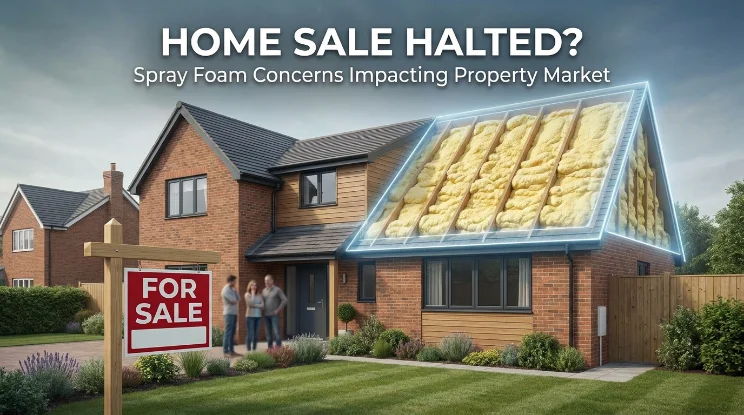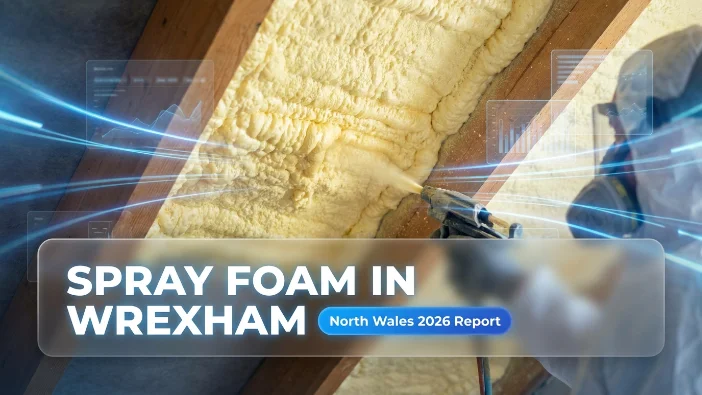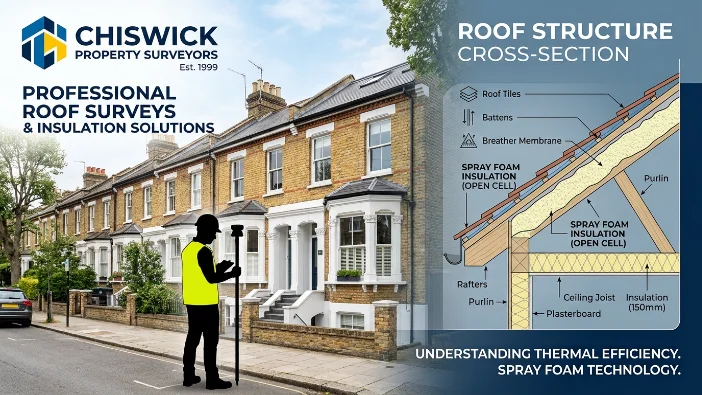
You have spent months saving for a deposit, getting your mortgage agreement in principle sorted, and viewing what feels like every terraced house in Newport. You finally found one you love in NP19, near Caerleon Road or St Julians, at a price that actually works for a first-time buyer. The offer is accepted. Then the survey comes back and your solicitor mentions a word you have probably never heard before in this context. Spray foam.
If this has just happened to you, take a breath. It does not automatically mean the purchase is dead. But it does mean you need to understand exactly what you are dealing with before you go any further, because Newport’s housing market is exactly the kind of market where this problem shows up most often.
Why Newport’s Affordable Terraces Are Where This Problem Lives
Newport has built its reputation among first-time buyers on one thing above all else: affordability that genuinely works. The average price paid by first-time buyers in Newport was around £200,000 in early 2026, noticeably lower than the £278,000 typically paid by home-movers in the same city. Areas like NP19, around Caerleon Road and St Julians, see fierce competition for well-priced terraced homes precisely because that affordability is so hard to find elsewhere within commuting reach of Cardiff and across the Prince of Wales Bridge into Bristol.
That affordability comes from the age and type of housing stock. Newport’s terraced streets were largely built across the late Victorian, Edwardian, and inter-war periods, the same generation of housing that government-backed energy efficiency schemes targeted heavily during the 2000s and into the early 2010s. Spray foam insulation was applied to thousands of these properties, often without the owner at the time fully understanding the long-term implications.
Years later, those same terraces are exactly what first-time buyers are queuing up to purchase. The properties that offer the best value are statistically the most likely to be carrying a spray foam problem inherited from a previous owner. It is one of the most common calls our spray foam removal team receives, almost always from a buyer mid-purchase who has just been told their mortgage is on hold.
What Spray Foam Does to Your Mortgage Application
When your lender instructs a survey on a Newport property, the surveyor needs to confirm the roof timbers are structurally sound. Spray foam bonds directly to those timbers and covers them completely, which means the surveyor cannot see what condition they are actually in. They cannot give your lender the assurance the lender requires, so the application is flagged.
This is not a Newport-specific quirk or an overcautious local surveyor being difficult. According to the RICS spray foam consumer guide, the official position from the body that sets standards for UK chartered surveyors, this is a genuine structural inspection limitation that applies the same way nationwide. You can read the full guidance directly on the RICS website, which explains why surveyors cannot simply look past the issue regardless of how good the rest of the property looks.
Over 90% of UK mortgage lenders will either decline an application outright or pause it pending a specialist removal report once spray foam is identified. For a first-time buyer relying on a mortgage to make the purchase happen at all, this is not a minor technicality. It can stop the purchase completely unless it is resolved.
Who Pays for Removal When You Are Buying
This is usually the first practical question first-time buyers ask, and the honest answer is that there is no fixed rule. It comes down to what you negotiate with the seller.
In Newport’s current market, where stock levels are at an 11-year high for this time of year and buyers have more choice and negotiating power than they have had in some time, you are often in a stronger position than you might expect. Sellers are competing for serious, mortgage-ready buyers, and over a third of newly listed Newport homes are currently failing to attract a buyer at all because they are priced unrealistically. A seller facing that kind of market pressure has a strong incentive to agree to removal rather than lose you as a buyer.
The three most common outcomes are the seller arranging and paying for professional removal before exchange, which is the cleanest route and gets the property to a genuinely mortgage-ready state. The second is a price reduction that reflects the cost of removal, with you arranging it yourself after completion, though this only works if your lender is willing to proceed on the property as it currently stands, which many will not be. The third is walking away, which is sometimes the right call if the seller will not engage and your lender will not budge.
What to Check Before You Make a Decision
Find out what type of foam is present. Closed-cell foam is denser, bonds more aggressively to timber, and is more strongly associated with mortgage refusals and hidden timber damage. Open-cell foam is softer and generally considered a somewhat lower risk by surveyors, though it still triggers the same inspection problem.
Find out how long the foam has been there. Foam in place for ten years or more has had longer to trap moisture against the timber, increasing the chance that damage has developed underneath it that will only become visible once the foam is removed.
Ask whether any documentation exists from the original installation. It will not satisfy your lender on its own, but it can tell you more about what was actually applied and when.
Consider arranging a specialist spray foam survey if the standard mortgage valuation has not given you enough detail to make an informed decision. This involves a closer assessment of the foam type, coverage, and any exposed timber condition before you commit to anything.
What Removal Looks Like and What It Costs
Most Newport terraces are straightforward properties to clear in terms of access, with standard pitched roofs typical of the late Victorian and Edwardian housing stock across NP19 and the surrounding areas. A typical removal takes one to two days from start to finish.
| Property Type | Typical Cost Range |
|---|---|
| Terraced house | £2,800 to £4,000 |
| Semi-detached house | £3,200 to £5,000 |
| Detached house | £3,800 to £6,000+ |
Closed-cell foam adds approximately £500 to these figures due to the extra time and equipment required. Once the foam is cleared, the roof timbers are fully inspected, any damage found is discussed and agreed before further work begins, and a post-removal report is produced that your surveyor and lender can rely on.
If you are negotiating a price reduction with the seller to cover removal yourself, knowing the real figure for the specific property first means you are negotiating from an informed position rather than guessing.
Frequently Asked Questions
Should I walk away from a Newport property if spray foam is found?
Not necessarily. Many Newport purchases involving spray foam complete successfully once the seller agrees to removal or a fair price adjustment. The key is understanding the type of foam, getting a clear cost figure, and making sure removal happens before exchange if your lender requires it.
Will every Newport lender refuse a mortgage on a spray foam property?
The large majority will either decline or pause the application until the foam is removed and documented. A small number may proceed with detailed reports and warranties in place, but this is the exception rather than the rule, so it is not something to rely on.
Can I get a guide price without a survey being arranged first?
Yes. A free online estimate based on the property details gives you a starting figure within a couple of minutes, with no phone call needed and no obligation, which is useful when you are still negotiating with a seller.
Does this service cover NP19 and the wider Newport area?
Yes, the full Newport area is covered, including NP19, NP20, NP10, and the surrounding districts, alongside the wider South Wales region.
Get a Free Estimate Before You Negotiate
If spray foam has come up during your Newport purchase, the strongest position you can be in is knowing exactly what removal will cost before you go back to the seller or your solicitor.