The sale had been agreed for three months. Solicitors were instructed. The buyer had already started planning their move.
Then the survey flagged spray foam in the loft. The buyer’s lender paused the application. Two weeks later the buyer pulled out entirely and found another property.
This exact sequence is playing out in Wisbech and March more often than most local estate agents will say out loud. Fenland’s most affordable market towns are also the ones where spray foam is found most regularly during surveys, and the homeowners who find out about it mid-transaction are the ones with the least time and the fewest options.
Why Wisbech and March Have This Problem
Fenland is the most affordable district in Cambridgeshire. The average house price in Fenland was £228,000 in February 2026, against an East of England average of £335,000 and a national average of £268,000. For first-time buyers, the average paid in Fenland was £197,000, compared with £298,000 in neighbouring East Cambridgeshire. That affordability gap is what brings buyers here.
It also reflects the age and type of housing stock that dominates both towns. Wisbech, a market town and inland port on the River Nene, has a population of over 31,500 and is built predominantly on Victorian and Edwardian terraced streets, with post-war estates spreading across the PE13 postcode on the town’s edges. March, a market town at the heart of the Fens, has a similar mix of Victorian town-centre streets and post-war residential development across the PE15 area.
Both towns were heavily targeted by government energy efficiency schemes during the 2000s and early 2010s. The Carbon Emissions Reduction Target and ECO scheme funding flowed into exactly the kind of older, lower-value housing that Wisbech and March offered in large numbers. Contractors moved through terrace rows and post-war estates applying spray foam to the underside of roof timbers at scale. Many homeowners accepted the insulation without fully understanding what was being installed or what it would mean when they eventually came to sell. Our spray foam removal Cambridgeshire team sees this pattern consistently across both towns.
That moment of selling is what is creating problems across the Fenland market right now.
What Spray Foam Does to a Fenland Sale
The mechanism is the same here as anywhere else in the UK, but the financial impact lands differently in a market where buyers are already stretching to make the numbers work.
A surveyor instructed to value a Wisbech or March property opens the loft hatch and finds spray foam. The foam covers the roof timbers completely. The surveyor cannot confirm the structural condition of what they cannot see. The lender receives a report with a material limitation and either declines the application or pauses it pending specialist documentation.
For a first-time buyer who has been saving for years to purchase a £190,000 terrace in Wisbech or a £210,000 semi in March, a paused mortgage application is not an administrative inconvenience. It is the difference between completing the purchase and losing it entirely. Most buyers in this position, already at the limits of what they can borrow, cannot absorb weeks of delay and uncertainty without the risk of their mortgage offer expiring or their own circumstances changing.
According to the RICS spray foam consumer guide, spray foam creates a genuine structural inspection limitation that cannot be resolved by reassurance or supplementary paperwork while the foam remains in place. Over 90% of UK mortgage lenders will either decline or pause applications on spray foam properties. In a market where most buyers are relying entirely on mortgage finance, that figure eliminates almost the entire buyer pool for a property with unresolved foam.
The Regeneration Context That Makes This Worse
Both Wisbech and March are at a pivotal moment in their development. The Growing Fenland project, part of the Cambridgeshire and Peterborough Combined Authority’s Market Towns Programme, has invested in masterplans for both towns to stimulate regeneration, attract employment, and improve transport links.
Wisbech is the largest town in Fenland and has been described as the Capital of the Fens. The town’s North Brink, with its Georgian architecture including the National Trust’s Peckover House, represents a historic core of real quality. March is a market town with a growing profile as Fenland’s rail connection to Peterborough and Cambridge improves.
Buyers are beginning to notice both towns in a way they perhaps did not five years ago. That growing buyer interest is exactly when an unresolved spray foam problem becomes most costly for sellers. A property that could achieve a strong sale in a market with rising interest is the same property that stalls completely if a survey comes back with a foam flag. The growing buyer pool that regeneration is creating is predominantly mortgage-dependent. Spray foam cuts them off entirely.
Where the Problem Is Concentrated
Wisbech PE13 has the highest concentration of affected properties in Fenland. The Victorian and Edwardian terrace streets running through the central and western parts of the town were exactly the housing type targeted during energy scheme activity in the 2000s. Post-war housing estates across the eastern and southern edges of PE13 were also included in scheme activity, and spray foam discovery during surveys here is a consistent feature of Wisbech property transactions.
March PE15 follows the same pattern. The older town-centre terraces and the post-war residential streets that extend across the PE15 postcode were targeted alongside similar stock in Wisbech during the same scheme period. Survey flags in March property transactions are reported regularly by estate agents covering the Fenland market.
Chatteris and Whittlesey are smaller Fenland towns with a similar mix of older and post-war housing. Both fall within the same pattern of spray foam discovery, though at a lower volume than Wisbech and March due to their smaller overall size.
The Hidden Timber Risk in Fenland Properties
Fenland’s geography adds a dimension to the spray foam problem that is specific to this part of Cambridgeshire. The district sits at or below sea level in many areas, with a high water table, persistent mist, and above-average ground-level humidity throughout the year. Properties in Wisbech and March exist in a moisture-rich environment that is more challenging for roof structures than drier inland locations.
Spray foam applied to roof timbers in this environment traps a higher concentration of ambient moisture against the timber than the same foam would in a lower-humidity area. The PCA inspected over 500 UK properties with spray foam and found that 35% had a hidden defect, with 27% requiring major works. In high-humidity Fenland conditions, the proportion of properties where moisture damage has developed behind the foam is likely to sit toward the higher end of that range.
For homeowners in Wisbech and March who have had foam in place for fifteen or more years, the probability that some level of timber damage exists underneath it is not theoretical. It is a genuine concern that a specialist survey or professional removal will confirm or rule out.
What Removal Costs for a Wisbech or March Property
Most affected properties in both towns are Victorian terraces or post-war semis with standard pitched roofs. These are straightforward to access and typically clear in one to two days.
| Property Type | Typical Cost Range |
|---|---|
| Terraced house | £2,800 to £4,000 |
| Semi-detached house | £3,200 to £5,000 |
| Detached house | £3,500 to £6,000+ |
Closed-cell foam adds approximately £500 to these figures. Timber repairs found during removal are assessed and agreed separately before any additional work begins.
For a seller in Wisbech whose property is on the market at £195,000, a £3,500 removal cost represents under 2% of the sale price. The cost of losing a buyer and relisting is almost always more expensive in direct financial terms, before the cost of additional months on the market is factored in.
Getting a specific figure for your property starts with a free online estimate that takes about two minutes with no phone call and no obligation.
Frequently Asked Questions
How do I know if my Wisbech or March home has spray foam?
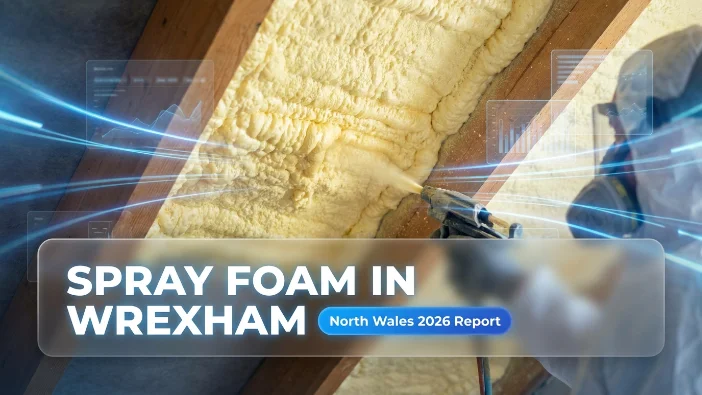
Open your loft hatch and look at the underside of the roof timbers. Spray foam appears as a thick layer, typically cream or yellow, bonded directly to the wood. If the timber surface is not visible because it is covered, spray foam is present. A specialist survey will confirm the type and coverage before any removal is agreed.
Does removing the foam guarantee my sale will go through?
In the large majority of cases, yes, provided removal is complete and documented correctly. A post-removal report gives the surveyor and lender the confirmation they need to proceed with the application on standard terms.
Can I just reduce the asking price and sell as is?
You can attempt to, but most buyers in Wisbech and March rely on mortgage finance and most lenders will not proceed on a spray foam property. The buyer pool for an unresolved foam property is extremely limited in this market. Price reductions rarely compensate fully for the restricted buyer pool.
Does this service cover Chatteris and Whittlesey as well?
Yes. The full Fenland District is covered including Wisbech, March, Chatteris, Whittlesey, and all surrounding PE postcode areas.
Find Out Before the Survey Does
The homeowners in Wisbech and March who handle this well are the ones who check the loft before a sale is agreed, not after a buyer’s mortgage application has been paused.