Stand in any terrace row in the Rhondda and you are standing in one of the most consistent housing stories in Britain. Street after street of near-identical Victorian terraces, built rapidly in the second half of the nineteenth century to house the tens of thousands of workers drawn to the South Wales coalfield.
In 1851, fewer than 1,000 people lived in the Rhondda valley. By 1911, that number had jumped to 153,000. The terraces that housed that extraordinary growth are still there. And in a significant number of them, so is the spray foam insulation applied decades later under government energy efficiency schemes that nobody told the owners would cause problems when they came to sell.
The Shared Story Across Every Former Mining Valley
The spray foam problem in the South Wales Valleys is not unique to any single town or valley. It is the same story in Pontypridd, Aberdare, Tonypandy, Treorchy, Ebbw Vale, Tredegar, Blackwood, and the connecting streets and estates of Caerphilly and Torfaen. The reason it is the same story everywhere is that the housing stock is the same everywhere, and it ended up with the same insulation applied to it during the same scheme period.
The South Wales coalfield stretches across Pembrokeshire, Carmarthenshire, Swansea, Neath Port Talbot, Bridgend, Rhondda Cynon Taf, Merthyr Tydfil, Caerphilly, Blaenau Gwent, and Torfaen. The housing built to serve it followed a consistent pattern. Victorian terraces, tightly packed in the narrow valley floors, built quickly and to a standard specification that prioritised speed over complexity. Many of the roads in the Rhondda and Cynon valleys are still lined with semi-ribbon development of closely packed Victorian terraces that have given these communities their distinctive appearance.
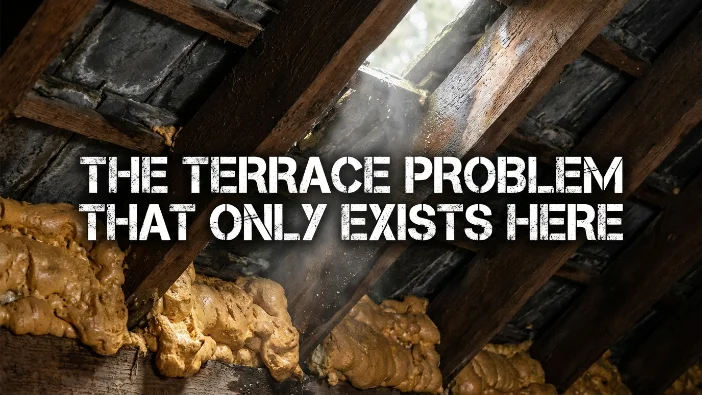
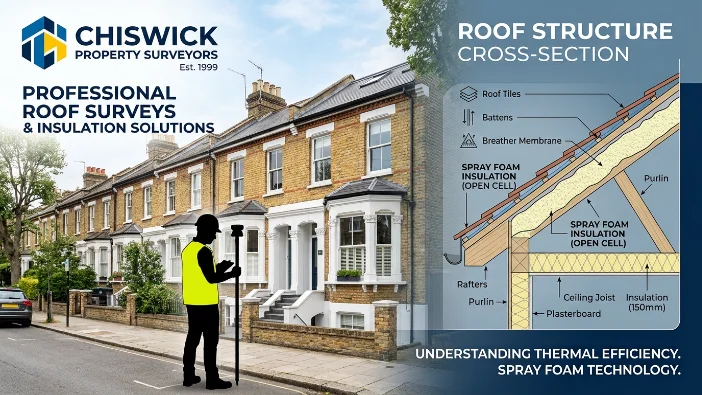
These terraces were built with naturally ventilated roof structures, just as Victorian construction everywhere was. The steep-pitched roofs, generous loft spaces, and carefully planned airflow paths were designed to keep structural timber dry across generations. Our spray foam removal Wales team works across the South Wales Valleys and sees the same pattern in every valley: foam applied during the ECO scheme era, now being discovered mid-transaction as the first or second generation of post-scheme owners tries to sell.
Why the ECO Scheme Hit the Valleys So Hard
The Welsh Government and local authorities across the South Wales Valleys actively promoted energy efficiency improvements during the 2000s and early 2010s. The valleys had a specific need: older, lower-value housing stock that scored poorly on energy performance assessments, occupied by households with lower average incomes who were targeted by Carbon Emissions Reduction Target and ECO scheme funding.
The combination of older Victorian terraces with poor insulation ratings, high eligibility rates among residents, and the ability for contractors to work efficiently through streets of near-identical properties made the Valleys one of the most intensively covered areas in Wales during this period. Local housing associations including Valleys to Coast, Linc Cymru, and others worked alongside scheme contractors to deliver improvements across their stock. Private homeowners were also approached and a significant proportion accepted the free or subsidised insulation offer.
Spray foam was among the measures delivered. It was applied to the underside of roof timbers in thousands of Valleys properties during this period. Homeowners were told it would improve their energy efficiency. They were not told what it would mean for their mortgage options years later.
What Lenders See When a Valleys Terrace Is Surveyed
The mechanism is the same as anywhere in the UK. The surveyor opens the loft hatch, finds spray foam covering the roof timbers, and cannot complete the structural inspection the lender requires. The report carries a material limitation. The application is declined or paused.
According to the RICS spray foam consumer guide, spray foam creates a genuine structural inspection limitation that cannot be resolved by reassurance or additional paperwork while the foam remains in place. Over 90% of UK mortgage lenders will either decline or pause applications on spray foam properties. This includes Principality Building Society, one of the most significant lenders across South Wales, which operates an outright refusal policy on spray foam properties.
For Valleys homeowners, this matters in a specific way. The housing stock here is predominantly lower-value. Average house prices in Rhondda Cynon Taf, Merthyr Tydfil, and Blaenau Gwent are among the lowest in Wales. Buyers in these markets are almost always relying on maximum mortgage advance relative to their deposit. A declined application does not produce a comfortable fallback. It produces a collapsed purchase and a return to the start.
The Right to Buy Dimension
A significant proportion of the Valleys housing stock changed hands under the Right to Buy scheme during the 1980s and 1990s. Local authority and housing association terraces were purchased by tenants who had lived in them for years, often for significantly below market value at the time.
Many of those Right to Buy properties subsequently had spray foam installed by the housing association or a scheme contractor during the energy efficiency period. The new owner had no say in the installation. In some cases they were not even informed it was happening. The foam arrived during a tenancy and stayed through the purchase.
These homeowners, many of whom are now in their fifties, sixties, or seventies and are looking to sell and downsize, or to access equity for retirement, are discovering that the foam installed on their home without their meaningful consent is now blocking the very financial options they planned their retirement around.
The Valley by Valley Picture
Rhondda Cynon Taf (CF37, CF40, CF42, CF43, CF44, CF45) is the most affected county borough in the Valleys for spray foam discovery. The Rhondda Fawr and Rhondda Fach, the Cynon valley around Aberdare and Mountain Ash, and the Taff valley around Pontypridd all carry dense concentrations of Victorian terrace stock where ECO scheme foam installation was widespread. Survey flags in property transactions here are among the most consistent in Wales.
Caerphilly County Borough (NP11, NP12, CF83) bridges the Valleys and the Cardiff commuter belt. Blackwood, Risca, Bargoed, and Caerphilly town itself all carry significant amounts of older terrace stock. The commuter pull toward Cardiff has brought a new wave of buyers into Caerphilly who are applying for larger mortgages than the area traditionally saw, and spray foam discoveries here have a higher financial impact than in the upper valleys.
Blaenau Gwent (NP13, NP23) includes Ebbw Vale, Tredegar, Abertillery, and Brynmawr. Over 90% of residents in Blaenau Gwent were born in Wales, reflecting how deeply rooted and settled these communities are. The housing stock here is among the oldest in the Valleys, and spray foam from both ECO scheme and earlier energy improvement programmes is found regularly in surveys.
Merthyr Tydfil (CF47, CF48) at the head of the Taff valley was Wales’s largest town during the height of the ironworks era. The housing stock from that period is among the oldest in the Valleys and carries the highest timber age risk in the context of spray foam moisture damage.
Torfaen (NP4, NP44) covers Pontypool and Cwmbran. Cwmbran was designated a new town in 1949, meaning it has a significant amount of post-war housing alongside the older Pontypool stock. Both types carry spray foam risk, with the post-war estates having been targeted by energy scheme contractors in a similar way to the new town estates in other parts of the UK.
What the Moisture Risk Looks Like in a Valley Property
The narrow valleys that define the South Wales landscape channel weather patterns in ways that affect roof moisture conditions. Valley floors are sheltered from direct wind but carry higher sustained humidity than open hillside locations, as moisture-laden air funnels along the valley without the dispersal that wider terrain allows.
The PCA surveyed over 500 UK properties with spray foam and found 35% had a hidden defect, with 27% requiring major works. For Valleys properties where foam has been in place since the early 2000s and the underlying Victorian timber may be over a century old, the probability of finding damage during removal sits firmly in the higher-risk range.
Typical Removal Costs for South Wales Valleys Properties
Most affected properties in the Valleys are Victorian terraces or post-war semis with standard pitched roofs. These are among the most straightforward removal jobs in terms of access and process, and most take one to two days.
| Property Type | Typical Cost Range |
|---|---|
| Terraced house | £2,800 to £4,000 |
| Semi-detached house | £3,200 to £5,000 |
| Detached house | £3,800 to £6,000+ |
Closed-cell foam adds approximately £500 to these figures. Timber repairs found during removal are assessed and agreed separately before any additional work begins.
Getting a cost figure for your specific property starts with a free online estimate based on your property details. This takes about two minutes, requires no phone call, and comes with no obligation.
Frequently Asked Questions
Is the spray foam problem worse in the Valleys than in other parts of Wales?
In terms of concentration, yes. The combination of dense Victorian terrace stock, high ECO scheme coverage, significant Right to Buy history, and lower property values that make buyer pool restriction particularly painful makes the Valleys one of the most consistently affected areas in Wales.
Can I claim against the housing association that installed the foam?
If the installation was carried out during a housing association tenancy and was not properly disclosed at the point of Right to Buy purchase, there may be grounds to raise a formal complaint. Some Valleys homeowners have obtained contributions toward removal costs through this route. It requires persistence and documentation. The mortgage problem must be resolved separately and in parallel.
Does removing the foam restore full mortgage eligibility?
In the large majority of cases, yes. Professional removal by accredited specialists, followed by a lender-compliant post-removal certificate, gives the surveyor and lender the confirmation they need to proceed with the application on standard terms.
Does this service cover the full Valleys postcode area?
Yes. The full CF and NP postcode areas are covered including Pontypridd, Aberdare, Rhondda, Merthyr Tydfil, Caerphilly, Blackwood, Ebbw Vale, Tredegar, Pontypool, and all surrounding South Wales Valleys communities.
The Terraces Were Built to Last Generations. The Foam Was Not.
The Victorian terraces of the South Wales Valleys have stood for over a hundred years. The spray foam applied to them in the 2000s was meant to improve them. In many cases it has created a problem that their owners are still navigating today.
The solution is the same as it is in former mining towns across Nottinghamshire, Yorkshire, and the North East. Professional removal, correctly documented, by accredited specialists who understand what lenders need to see.