The terrace streets of Brynmill and Uplands are some of the most in-demand streets in Swansea. Edwardian and Victorian houses close to Swansea University, Singleton Park, and the seafront. The kind of properties that sell quickly when they are well presented and priced right.
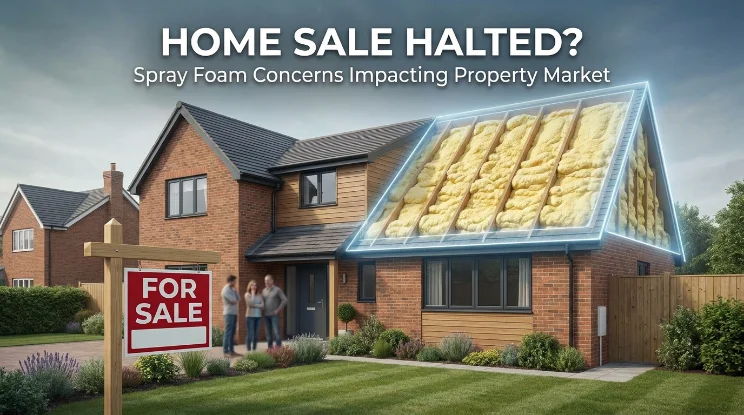
They are also the properties most likely to have spray foam in the loft.
That combination, high demand on the outside and a hidden problem inside, is exactly why spray foam is catching Swansea homeowners and landlords off guard more often than in almost any other part of Wales right now.
Why Swansea’s Most Popular Streets Have the Highest Foam Risk
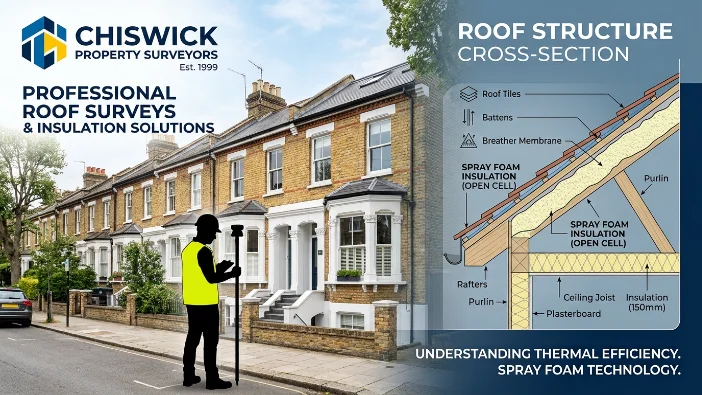
Brynmill, Uplands, and the streets running along the Sketty boundary toward Singleton Park are built predominantly on Edwardian and Victorian terrace stock. These properties were built to house the families of a growing industrial city, and the roof structures they were built with were designed, like all Victorian and Edwardian construction, to breathe and ventilate naturally.
When government energy efficiency schemes moved through these streets during the 2000s and early 2010s, the Carbon Emissions Reduction Target and ECO scheme funding offered insulation to homeowners and landlords at heavily subsidised or zero cost. Spray foam was commonly used. Contractors could move efficiently through terrace rows applying the same treatment to near-identical roof structures. The appeal at the time was genuine. Lower heating bills. A better EPC rating. An improved experience for tenants in a student-heavy rental market.
The consequence is that the streets buyers and landlords are most actively targeting in Swansea are statistically the ones most likely to return a spray foam flag on a mortgage survey. Our spray foam removal Wales team sees this pattern consistently across the SA1 and SA2 postcode areas, and the number of Swansea transactions being stalled or complicated by foam discovery has not reduced as the years have passed. If anything, as more of this stock changes hands and as lender policies have tightened through 2025 and 2026, the problem is landing harder than it did before.
What Spray Foam Does to a Swansea Mortgage Application
The mechanism is consistent wherever spray foam is found, but the specific context in Swansea adds dimensions that make it more financially significant than in many other Welsh cities.
When a surveyor is instructed to value a Swansea property, they need to inspect the roof timbers to confirm structural condition. Spray foam covers those timbers completely. The surveyor cannot see through it. They cannot confirm what is underneath it. The report carries a material limitation and the lender either declines or pauses the application.
According to the RICS spray foam consumer guide, this is a genuine structural inspection limitation that cannot be resolved by reassurance or supplementary paperwork while the foam remains in place. Over 90% of UK mortgage lenders will either decline or pause applications on spray foam properties. That figure applies to Welsh lenders including Principality Building Society, which is one of the most significant regional lenders in South Wales and which operates an outright refusal policy on spray foam properties.
For Swansea homeowners, the practical consequence is a buyer pool that shrinks dramatically the moment foam is discovered on survey. In a market where the average property price is £206,000 and first-time buyers average £178,000, most buyers are relying entirely on standard mortgage finance. Spray foam removes that option for the property it is found in.
The Landlord Dimension in Brynmill and Uplands
Brynmill and Uplands carry additional complexity because of the concentration of HMO and student rental stock across SA2. Rental yields in this area run at 5.5% to 6.5% for standard buy-to-let properties and 8% to 10% for compliant HMOs, making it one of the highest-yielding investment postcodes in Wales.
Many Swansea landlords who bought terrace properties in these streets in the 2000s or early 2010s are now approaching their first or second remortgage on that stock. If spray foam was installed during the tenancy, whether by a previous owner, a housing association programme, or an energy scheme contractor the landlord approved without fully understanding the product, the remortgage application will face the same lender response as any residential sale.
A Swansea landlord with multiple terrace properties across Brynmill and Uplands, all carrying spray foam from the same scheme period, is potentially looking at multiple remortgages that cannot proceed simultaneously. Each one stuck on a standard variable rate adds to the monthly financing cost across the portfolio.
Where the Risk Is Concentrated Across Swansea
Brynmill and Uplands (SA2) sit at the top of the risk profile for spray foam in Swansea. The concentration of Edwardian and Victorian terrace stock, the high level of energy scheme activity through these streets, and the constant churn of student and professional tenancy all contributed to foam being applied widely across this area. Survey flags here are consistent and frequent in both sales and remortgage applications.
Townhill and Mayhill (SA1) include large areas of post-war housing built on the northern slopes above the city centre. These properties, typically semi-detached family homes, were targeted by energy efficiency schemes in large numbers during the 2000s. The density of scheme activity across this postcode means spray foam is found regularly in Townhill transactions.
Morriston (SA6) has a significant stock of post-war and 1960s housing that was included in energy improvement programmes across the Swansea Valley corridor. Spray foam discovery in Morriston surveys is consistent with the wider Swansea pattern.
Sketty (SA2) has a mix of interwar and post-war detached and semi-detached homes that sit at a higher price point than the terrace stock in Brynmill and Uplands. Some of these properties were included in energy scheme activity, and spray foam discovery here occasionally surprises sellers who assumed their property type was lower risk.
Gorseinon and Loughor (SA4) represent the outer Swansea commuter belt, with a mix of older terraces and post-war housing. Foam from scheme activity in the 2000s is found regularly in surveys across this area.
The Coastal Moisture Factor
Swansea sits on the coast of Swansea Bay, with the prevailing south-westerly winds bringing Atlantic weather patterns directly onto the city’s western-facing streets. Properties in Brynmill, Uplands, and West Swansea face a more aggressive moisture environment than sheltered inland cities. Elevated humidity and salt-laden air are part of the daily climate for many of these terrace properties.
Spray foam applied in this coastal moisture context traps a more consistently replenished source of moisture against roof timbers than the same foam would in a drier inland location. The PCA survey of over 500 UK properties found that 35% had a hidden defect caused by spray foam. In coastal Swansea, where moisture conditions are more demanding year-round, the probability of finding timber damage under foam that has been in place for fifteen or more years sits toward the higher end of that range.
What Removal Costs for a Swansea Property
Most affected properties in Brynmill, Uplands, and Townhill are Victorian or Edwardian terraces and post-war semis with standard pitched roofs. These are straightforward to access and typically take one to two days to clear.
| Property Type | Typical Cost Range |
|---|---|
| Terraced house | £2,800 to £4,200 |
| Semi-detached house | £3,200 to £5,000 |
| Detached house | £3,800 to £6,000+ |
Closed-cell foam adds approximately £500 to these figures. Any timber damage found during removal is assessed and agreed separately before additional work begins.
Getting a cost figure for your specific Swansea property starts with a free online estimate that takes about two minutes, requires no phone call, and comes with no obligation.
Frequently Asked Questions
How do I know if my Swansea terrace has spray foam?
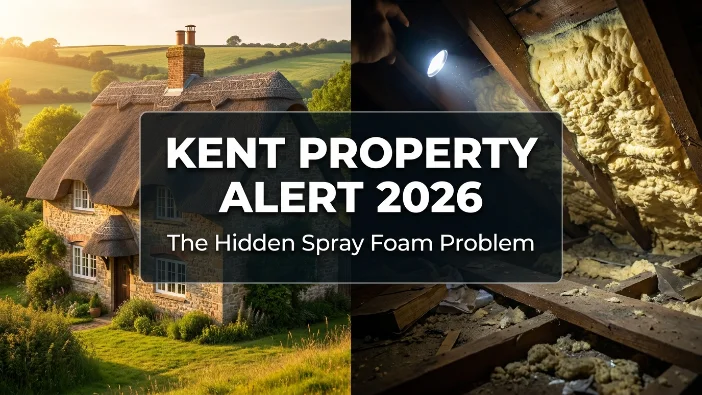
Open your loft hatch and look at the underside of the roof timbers. Spray foam appears as a thick layer, typically cream or yellow, bonded directly to the wood. If you cannot see the timber surface, spray foam is present. A specialist survey will confirm the type and coverage before any removal is agreed.
Does Principality Building Society accept spray foam properties in Swansea?
No. Principality Building Society operates an outright refusal policy on spray foam properties. As one of the most significant lenders in South Wales, this policy affects a meaningful proportion of Swansea mortgage applications where spray foam is discovered.
Can I remortgage a Swansea HMO with spray foam?
No mainstream buy-to-let lender will proceed on a spray foam HMO without removal and certification. Each property on a standard variable rate in a Swansea landlord’s portfolio is costing significantly more per month than a competitive fixed rate would. Getting a removal estimate for each affected property is the starting point for resolving the portfolio-wide cost.
Does this service cover Gorseinon and the wider SA postcode area?
Yes. The full SA postcode belt is covered, including Brynmill, Uplands, Townhill, Morriston, Sketty, Gorseinon, Loughor, and all surrounding Swansea and West Glamorgan areas.
How quickly can removal be arranged when a sale is at risk?
When a transaction is time-sensitive, removal can often be arranged and completed within a week. Getting an estimate in place now means you can act immediately if a survey flags foam mid-sale.
The Streets Buyers Love Most Are the Ones Most at Risk
The demand for terrace stock in Brynmill and Uplands is not going away. Swansea University’s continued growth, the steady appeal of the SA2 postcode for young professionals and families, and the city’s improving connectivity all support continued buyer interest in exactly the streets where spray foam is most commonly found.
A property that is mortgage-ready commands full market attention. One with unresolved spray foam does not.