West Sussex homeowners are facing a problem that was never mentioned when the spray foam was installed.
A product that was sold as a modern insulation upgrade — sometimes funded through government energy schemes, sometimes installed privately — is now causing mortgage refusals, failed surveys, and property sales that collapse before they complete.
If you have spray foam in your loft and you are trying to sell, remortgage, or release equity, this guide explains what is happening, why it affects West Sussex properties specifically, and what your practical options are.
What Are the Problems With Spray Foam Insulation?
Spray foam loft insulation problems fall into two categories — structural and financial. Both are serious.
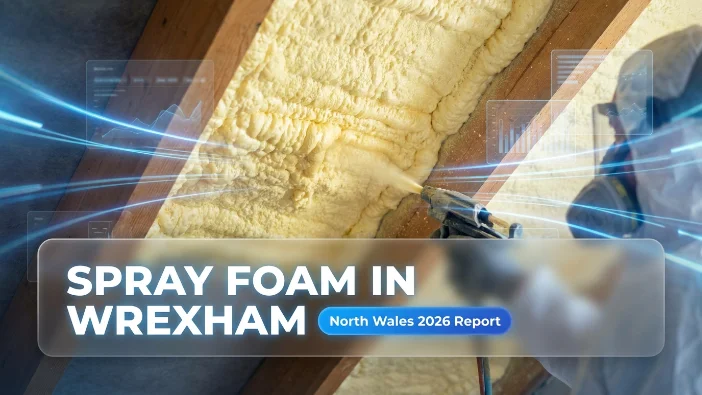
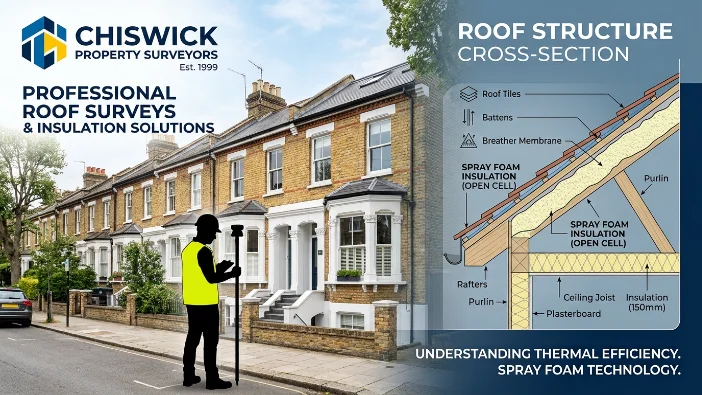
Structural problems arise because of how spray foam interacts with a roof. When foam is sprayed onto the underside of roof tiles and rafters, it seals the roof space completely. Traditional roofs are designed as cold roofs — air circulates between the outer tiles and the insulation below, keeping the roof timbers dry. When spray foam blocks that ventilation, moisture has nowhere to escape.
Condensation builds up against the rafters. Over months and years, that moisture soaks into the timber. The result is damp, mould, and eventually timber rot — happening silently behind a layer of foam that no one can see through. The Property Care Association and Home Owners Alliance found that 35% of properties inspected had at least one defect caused by spray foam insulation, based on inspections of over 500 UK homes.
Financial problems arise because mortgage lenders and surveyors cannot assess what they cannot see. When a surveyor enters a loft and finds foam on the roof rafters, they cannot inspect the condition of the timber underneath. Without that inspection, lenders will not proceed. The result is mortgage refusals, failed sales, and equity release applications that go nowhere.
Open-Cell vs Closed-Cell Spray Foam: What Is the Difference?
Not all spray foam is the same, and understanding which type you have matters.
Open-cell spray foam is soft and flexible. You can press it with your finger and it springs back. It is more breathable than closed-cell foam, which means it poses slightly less moisture risk — but it still covers the roof structure and prevents a surveyor from inspecting it. Most lenders will still flag open-cell foam.
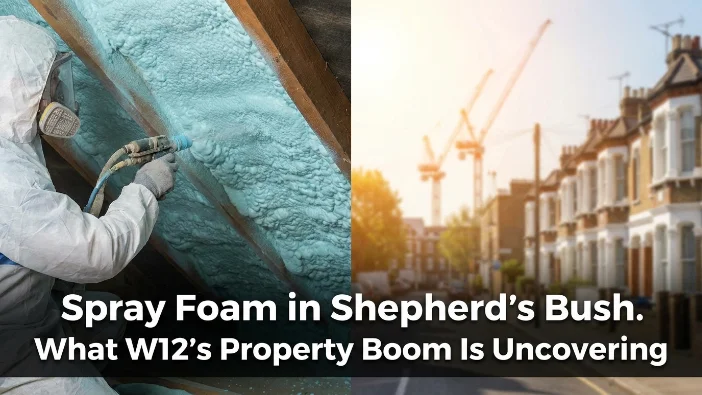
Closed-cell spray foam is rigid and dense. It sets completely hard, bonds aggressively to tiles, felt, and rafters, and creates a completely airtight seal. It is heavier, adds stress to the roof structure, and presents a significantly higher risk of moisture entrapment. Closed-cell foam is the type most likely to result in an outright mortgage refusal. It is also more difficult and more expensive to remove.
If you are not sure which type you have, the easiest check is to press the foam in your loft. Soft and springy is open-cell. Hard and rigid is closed-cell. If you cannot access your loft safely, a professional survey will confirm it.
How Does Spray Foam Affect Mortgages in West Sussex?
The impact on West Sussex property transactions is straightforward — and it is becoming more common as surveyors become more experienced at spotting foam.
When a buyer arranges a mortgage, their lender sends a surveyor to inspect the property. The surveyor goes into the loft. If foam is present on the roof timbers, they flag it. Most lenders will then either put the application on hold or refuse it outright.
Lenders including Halifax, Nationwide, Barclays, NatWest, Santander, TSB, and Skipton Building Society all have policies that flag spray foam as a mortgage risk. TSB in particular will not lend on spray foam properties. Equity release lenders are even stricter — virtually every equity release provider in the UK declines applications on properties where spray foam is present.
Even when spray foam has been installed by a legitimate firm with correct paperwork, lenders are still reluctant to lend where it is present — which means installation certificates and guarantees rarely resolve the issue on their own.
For West Sussex homeowners in towns like Crawley, Horsham, Worthing, Chichester, Bognor Regis, Haywards Heath, and East Grinstead, this is creating real problems in an otherwise active property market.
Foam Insulation Roof Problems: What Surveyors Are Finding
When foam is removed from West Sussex properties, surveyors are regularly finding problems that were hidden underneath.
Minor issues include surface damp and early-stage condensation on timber — manageable with treatment and improved ventilation. More serious findings include significant timber decay, rotten rafters, and in some cases damage to the breathable membrane or roof felt that requires full replacement.
The biggest problem lies with closed-cell spray foam, as it restricts air circulation among timbers — but water vapour can become trapped under open-cell spray foam too, causing wood to rot.
This is why professional removal — not just a survey report — is what most lenders require. Until the foam is physically removed and the roof structure is confirmed as sound, lenders will not proceed regardless of what any survey report says.
Can You Sell a West Sussex Property With Spray Foam?
You can try — but the practical reality is difficult.
Without removal, your buyer pool shrinks to cash buyers only. In West Sussex’s property market, where most buyers are purchasing with a mortgage, that is a significant restriction. Cash buyers who are willing to take on a spray foam property know they are in a strong negotiating position. They will factor the removal cost into their offer and push the price down accordingly.
If you want to sell at full market value, to any buyer, without your sale collapsing at the survey stage — removal is the answer.
Estate agents across West Sussex are now routinely advising sellers to address foam loft insulation problems before listing, rather than waiting for a buyer’s survey to force the issue at the worst possible moment.
How to Remove Spray Foam From a Loft in West Sussex
Professional spray foam removal is not a DIY job, and attempting it yourself creates more problems than it solves.
Spray foam bonds directly to roof tiles, rafters, and membrane. Without specialist tools and technique, removing it damages tiles, tears the felt underneath, and can split timber rafters. You also will not receive the completion documentation your lender needs. A DIY removal does not produce a certificate. It just leaves you with a damaged roof and no paper trail.
Professional loft foam insulation removal follows a clear process:
First, a survey confirms the foam type, coverage, and the condition of the roof structure. On the day of removal, the team sets up respiratory protection and dust containment — spray foam dust contains isocyanates and other chemical compounds that must be managed carefully. The foam is then worked away from the roof surface methodically, using specialist tools to protect tiles and timber. All waste is removed and disposed of correctly under UK environmental regulations. The loft is left clean and accessible. Finally, written documentation is issued confirming professional removal.
That documentation is what your mortgage lender, surveyor, or buyer’s solicitor will need to see before proceeding.
Find out more about our spray foam removal service in West Sussex and what the process involves from start to finish.
How Much Does Spray Foam Removal Cost in West Sussex?
Removal costs depend on property size and foam type.
| House Type | Open-Cell Foam | Closed-Cell Foam |
|---|---|---|
| Terraced | £2,500 – £3,000 | £3,000 – £3,500 |
| Semi-Detached | £3,000 – £3,500 | £3,500 – £4,000 |
| Detached | £3,500 – £4,200 | £4,200 – £5,000+ |
Closed-cell spray foam removal costs more because the foam is denser and more aggressively bonded. Open-cell removal is generally quicker and less expensive.
The cost of removing spray foam needs to be weighed against the alternative — selling at a reduced price to a cash buyer, or not being able to sell or remortgage at all. For most West Sussex homeowners, professional removal unlocks significantly more value than it costs.
What Happens After Removal?
Two things follow professional removal.
Re-insulation. Your loft will need new insulation. Lender-approved alternatives — mineral wool rolls, PIR boards, or blown cellulose — are breathable, mortgage-friendly, and typically cheaper to install than spray foam was in the first place. They also support a good EPC rating.
Timber inspection and any remedial work. With the foam removed, the condition of the roof timbers becomes fully visible. If hidden moisture damage is found, your removal specialist will advise on the appropriate next steps — from surface treatment through to timber replacement where necessary.
FAQs
Is spray foam insulation dangerous?
Correctly installed foam that is in good condition is not considered an immediate health hazard in most cases. However, incorrectly applied foam, degrading foam, or foam installed without proper curing can release chemical compounds — including isocyanates — into the loft space. These can cause respiratory irritation and, with prolonged exposure, more serious lung problems. If you have any concerns about the condition of foam in your loft, a professional survey is the right first step.
My foam was installed under a government scheme — who pays for removal?
The government’s position is that homeowners should seek redress from their installer. In practice, many homeowners find this difficult, particularly where the installer is no longer trading. There is currently no government financial assistance for removal costs. Some homeowners have recourse through TrustMark or an insurance-backed guarantee if one was issued at the time of installation.
How long does removal take for a typical West Sussex property?
Most jobs take between 2 and 5 days. From first contact to completion certificate, most West Sussex homeowners have the issue resolved within 2 to 3 weeks.
Will removal fix my mortgage problem?
In the vast majority of cases, yes. Professional removal with the correct completion documentation allows lenders to reassess your application. Removal resolves the issue for the overwhelming majority of homeowners who go through the process.
Do I need to re-insulate straight after removal?
Not immediately — but you should not leave the loft uninsulated long-term. Heat retention and your EPC rating will both be affected. Most homeowners arrange re-insulation as part of the same project or shortly after removal.
If spray foam insulation is standing between you and your West Sussex sale or mortgage, the sooner you address it the better.
Most of our customers get a quote within 24 hours. No obligation, no pushy sales calls — just a clear picture of what removal involves and what it will cost for your property.