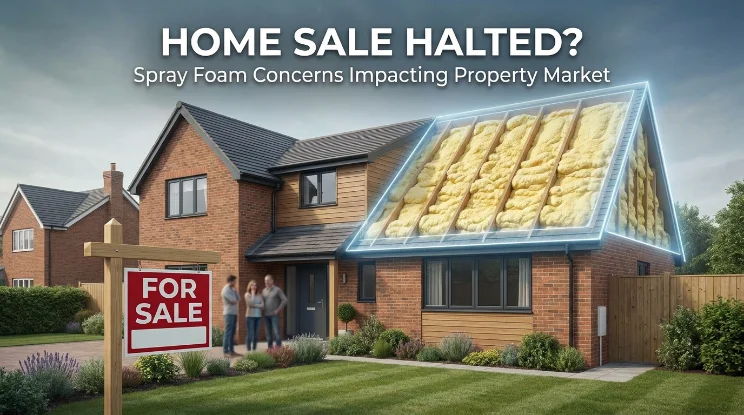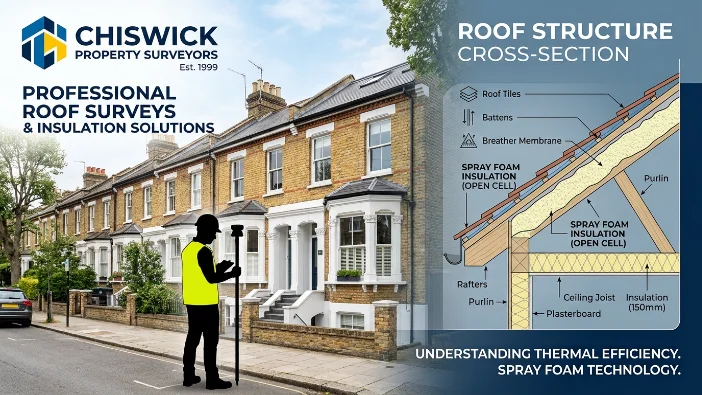
The letter from your solicitor came this morning. Your mortgage application has been declined. The surveyor has given the property a zero valuation because spray foam insulation is present in the loft.
You were not expecting that phrase. Zero valuation. It sounds final. It sounds like the sale is over and there is nothing you can do.
It is not final. But you do need to understand exactly what it means before you do anything else.
What a Zero Valuation Actually Is
A zero valuation does not mean your property is worth nothing. It means the surveyor was unable to place a reliable value on the property for mortgage lending purposes.
When a lender instructs a surveyor to value your home, the surveyor needs to inspect the roof structure to confirm it is structurally sound. That inspection is not optional. It is the foundation of the valuation. Without it, the surveyor cannot give the lender the confirmation they need, and without that confirmation, no mainstream lender will release mortgage funds.
Spray foam bonds directly to roof timbers and covers them completely. The surveyor opens the loft hatch, sees the foam, and faces a fundamental problem. They cannot see through it. They cannot confirm the condition of what is underneath it. They cannot rule out rot, damp, woodworm, or structural movement in the timber that the foam is covering. So they record a limitation on the inspection, and in most cases that limitation results in either a zero valuation or a heavily reduced valuation figure that the lender will not accept.
RICS guidance, which all UK mortgage surveyors follow, specifically instructs surveyors to flag spray foam as a material concern when it is preventing timber inspection. You can read the position in full in the RICS spray foam consumer guide, which makes clear why the inspection limitation cannot simply be overridden by reassurance or additional paperwork while the foam remains in place.
What a Zero Valuation Does to Your Transaction
A zero valuation stops the mortgage application in its tracks. The lender will not release funds on a property that has not been given a reliable valuation figure. That means the sale cannot complete, the remortgage cannot proceed, and in the case of equity release, the application cannot move forward at all.
This is not a problem that resolves itself over time. Every mainstream UK lender including Halifax, Barclays, HSBC, Nationwide, NatWest, and Santander has policies that restrict lending on spray foam properties. TSB updated their policy in 2026 to reject nearly all spray foam applications outright. Skipton Building Society followed with a similar blanket refusal. The direction of travel from lenders has been consistently in one direction, with policies tightening rather than relaxing.
For homeowners mid-sale when a zero valuation lands, the immediate concern is the buyer. Most buyers will not wait indefinitely while the situation is resolved. The clock is running the moment the valuation is returned.
What the Valuation Reduction Looks Like When It Is Not Zero
Not every lender responds to spray foam with an outright zero. Some will place a reduced valuation on the property rather than refusing to value it entirely.
RICS guidance indicates that properties with spray foam insulation may carry a valuation reduction of between 15 and 20 percent to reflect the risk and the cost of potential remediation. On a property that would otherwise be valued at £300,000, that translates to a surveyor figure of between £240,000 and £255,000. This changes the loan to value ratio significantly and can push the application outside the lender’s acceptable parameters even if the lender does not refuse outright.
The practical effect of a reduced valuation is often very similar to a zero valuation. The mortgage terms available on the reduced figure are materially different from those the buyer expected when they made the offer. In many cases the application still cannot proceed on the original terms.
The Only Thing That Reverses a Zero Valuation
There is one route that reliably reverses a spray foam zero valuation. Professional removal of all the foam, carried out by accredited specialists, followed by correct post-removal documentation.
Once the foam is removed, the surveyor can return. The roof timbers are now fully visible and inspectable. The surveyor can confirm the structural condition, complete the valuation, and give the lender the assurance they need to proceed. The zero valuation is replaced by a full valuation figure and the application can move forward.
The documentation produced after removal is critical. A lender will not accept a certificate from an unaccredited company. A DIY removal attempt produces no documentation at all and leaves foam residue that a surveyor with a borescope will identify immediately. If even a small amount of foam remains on the timbers, the surveyor will maintain the zero valuation. The entire removal must be complete, correctly documented, and the paperwork must meet the lender’s specific requirements.
You can start by understanding the cost for your specific property. A free online estimate based on your property details takes about two minutes, requires no phone call, and comes with no obligation.
What the Post-Removal Certificate Needs to Contain
This is where many homeowners get caught out. They arrange removal and receive a certificate, only to find the lender or their valuation panel will not accept it.
A lender-compliant post-removal certificate needs to confirm the following. First, that all spray foam has been fully removed from the roof structure, with no residue remaining on timbers, felt, or fixings. Second, that the roof timbers have been inspected and their structural condition has been assessed and documented. Third, that any timber damage found during removal has been either treated or repaired to an appropriate standard. Fourth, that the roof ventilation meets BS 5250 standards following removal, because removing foam changes how moisture moves through the roof space and ventilation must be reinstated correctly.
A Waste Transfer Note must also be produced to confirm the removed foam was disposed of at a licensed facility. Without this document, some lenders will not accept the completion of the work.
The certificate must be issued by a contractor holding relevant accreditation. Work carried out by contractors accredited by the Confederation of Roofing Contractors and vetted through Checkatrade meets the standard that lenders and their valuation panels expect.
How Long the Reversal Process Takes
For most standard UK properties, the timeline from arranging removal to having a lender-ready certificate in hand is between one and two weeks.
The removal itself takes one to two days for a standard terraced or semi-detached property. Larger detached homes or properties with complex roof structures may take two to three days. Once the foam is cleared and the timber inspection is complete, the post-removal report and certificate are produced. The lender or their valuation panel then needs to review the documentation and instruct the surveyor to return for a follow-up inspection.
When a transaction is already in progress and a buyer is waiting, this timeline is tight but workable in most cases. The key is moving immediately rather than waiting to see whether the buyer will hold on.
What to Do Right Now if You Have Received a Zero Valuation
Contact your solicitor and the estate agent immediately. Explain that you are arranging professional removal and ask for a realistic extension on the completion timeline. Most buyers in a genuine transaction will agree to a short extension if they can see that the problem is being actively resolved with a clear timeline.
Do not attempt to challenge the zero valuation directly with the lender. The valuation reflects a genuine inspection limitation and lenders will not overturn it until the foam is removed and the documentation is in place. Challenging the process without addressing the underlying issue wastes time.
Do not approach the cheapest removal quote without checking accreditation. A certificate from an unaccredited company may not be accepted by the lender’s valuation panel, which means the application remains blocked and the removal cost has been wasted.
Our spray foam survey and removal service produces lender-compliant documentation as standard, covering all the elements that mortgage valuation panels require to lift a zero valuation and allow the application to proceed.
Frequently Asked Questions
Can I challenge a zero valuation without removing the spray foam?
In practice, no. The zero valuation reflects a genuine inspection limitation. The surveyor cannot change their report while the foam remains in place because the limitation that caused the zero valuation still exists. Removal is the only route that addresses the underlying issue.
Will every lender refuse after a zero valuation?
Most mainstream lenders will not proceed while a zero valuation stands. A very small number of specialist lenders may consider applications on foam properties with additional documentation, but at significantly higher rates and with stricter loan to value requirements. Most homeowners find the cost of specialist lending over the mortgage term exceeds the cost of removal.
Does removing the foam guarantee the zero valuation will be reversed?
In the large majority of cases, yes, provided the removal is complete, the timber inspection confirms no outstanding structural issues, and the documentation meets the lender’s requirements. If significant timber damage is found during removal that requires structural repair, that repair must also be completed and documented before the follow-up valuation.
How much does removal typically cost for a UK property?
For most standard properties, the range is between £2,800 and £5,500 depending on property size, foam type, and whether timber repairs are needed. A free online estimate based on your specific property gives you an accurate starting figure.
What if the buyer will not wait for removal to be completed?
This is a genuine risk in time-sensitive transactions. Most buyers will agree to a short extension if removal is confirmed and underway. If a buyer will not wait at all, the most practical option is to arrange removal immediately and relist the property once the documentation is in place. A property with a clean zero-valuation reversal certificate will typically sell faster and at full market value than one with an unresolved foam issue.
A Zero Valuation Is a Problem With a Clear Solution
The phrase sounds worse than the reality. A zero valuation because of spray foam is not a permanent state. It is a documented inspection limitation that professional removal reverses in a matter of days.
The longer the foam stays in place, the more time passes, buyers move on, and costs accumulate. Acting now is always cheaper than acting under more pressure later.