If you own a property in East Sussex and you’re tired of soaring energy bills, cold draughts, and a home that never quite feels warm enough, spray foam insulation could be the solution you’ve been looking for. Across the county — from the coastal towns of Eastbourne and Hastings to the rural villages of the Weald — homeowners are turning to spray foam insulation as one of the most effective ways to improve energy efficiency and indoor comfort.
This comprehensive guide covers everything you need to know about spray foam insulation in East Sussex: how it works, the types available, the costs involved, local regulations, and how to choose the right installer.
What Is Spray Foam Insulation?
Spray foam insulation is a two-component liquid material that, when combined and sprayed onto a surface, expands rapidly to form a solid, airtight foam barrier. It fills gaps, cracks, and cavities with remarkable precision — creating a seamless layer of insulation that traditional materials like fibreglass batts or mineral wool simply cannot match.
There are two main types used in residential and commercial properties:
- Open-cell spray foam – A softer, more flexible foam that is excellent for soundproofing and interior wall applications. It is breathable and typically used in internal spaces.
- Closed-cell spray foam – A denser, rigid foam that offers a higher R-value (thermal resistance) per inch and acts as a vapour barrier. It is ideal for roofs, lofts, and areas exposed to moisture.
Both types expand significantly after application, filling every corner and crevice to eliminate thermal bridging and air leakage — two of the biggest causes of heat loss in UK homes.
Why Is Spray Foam Insulation Popular in East Sussex?
East Sussex has a varied climate. Coastal areas like Bexhill-on-Sea and Seaford are exposed to strong sea winds, while inland areas such as Uckfield and Heathfield experience cold winters. Many properties in the region — including Victorian terraces, Edwardian semis, and older rural cottages — were built before modern insulation standards existed.
This combination of ageing housing stock and a challenging climate makes spray foam insulation particularly well-suited to East Sussex homes. Here’s why local homeowners are choosing it:
1. Superior Thermal Performance
Spray foam insulation provides one of the highest R-values of any insulation material available. Closed-cell foam, in particular, can achieve an R-value of around 6 to 7 per inch — significantly more than fibreglass (R-3.5) or mineral wool (R-3.7 per inch). This means you need less material to achieve the same level of warmth.
2. Air Sealing Properties
Unlike traditional insulation, spray foam doesn’t just slow down heat transfer — it completely seals air pathways. This is critical in older East Sussex properties where gaps around joists, pipes, and roof timbers allow cold air to penetrate the building envelope freely.
3. Moisture Resistance
Closed-cell spray foam is highly resistant to moisture ingress. In coastal parts of East Sussex where humidity levels are higher, this is a significant advantage. It prevents damp from forming within the insulation layer, which can be a problem with certain types of loose fill or batt insulation.
4. Longevity
Once installed, spray foam insulation typically lasts the lifetime of the building. It doesn’t sag, settle, or degrade over time the way fibreglass or mineral wool can. This makes it an excellent long-term investment for East Sussex homeowners.
Common Applications of Spray Foam Insulation in East Sussex
Spray foam is a versatile product used across a wide range of applications in both residential and commercial buildings throughout East Sussex.
Loft and Roof Insulation
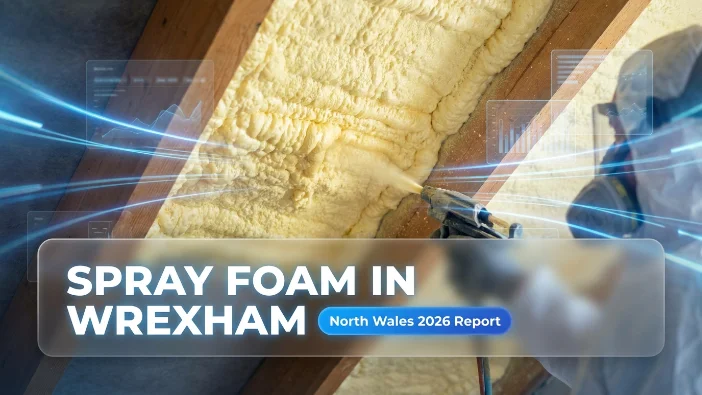
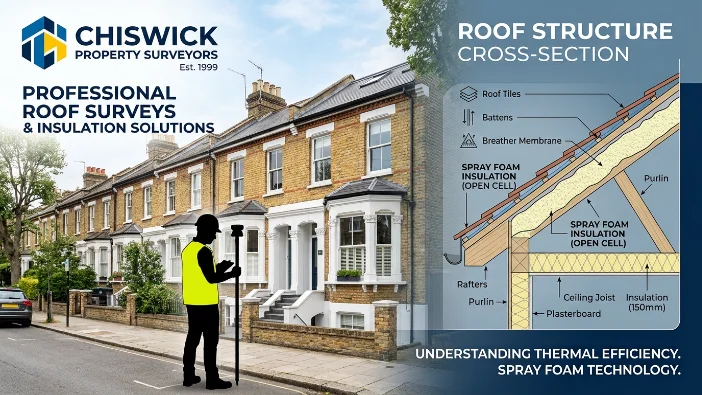
One of the most popular uses is insulating the underside of roof rafters in lofts and attic spaces. This is particularly common in properties where the loft space is used as a habitable room, or where traditional roll-out loft insulation isn’t practical due to irregular roof structures. Spray foam adheres directly to the rafters and forms a continuous, draught-free thermal envelope.
Cavity Wall Insulation
While cavity walls are sometimes treated with blown mineral wool or polystyrene beads, spray foam offers a more thorough fill — especially in properties with awkward cavity shapes or obstructions. Spray foam expands to fill every part of the cavity, significantly reducing heat loss through external walls.
Floor and Underfloor Insulation
Draughty suspended timber floors are common in older East Sussex properties. Spray foam can be applied to the underside of floorboards to seal gaps and insulate the floor from the cold air below — a quick and highly effective solution without the disruption of lifting floorboards.
Garage and Outbuilding Insulation
Spray foam is also widely used in garages, workshops, and agricultural buildings across East Sussex — especially in rural areas like Lewes District and Rother. It can be applied quickly to large areas, making it cost-effective for non-residential structures.
Spray Foam Insulation and Property Mortgages: What East Sussex Homeowners Need to Know
One important consideration for homeowners in East Sussex is the potential impact of spray foam insulation on mortgage applications and property valuations. In recent years, some lenders have raised concerns about spray foam applied directly to roof timbers — primarily because it can be difficult to inspect the underlying structure for rot or damage once foam has been applied.
If you are planning to sell your property or remortgage in the future, it’s worth discussing this with your installer and a mortgage adviser before proceeding. Choosing a reputable, accredited installer and ensuring the work is properly documented can help mitigate these concerns. Some lenders are more accommodating than others, and the landscape is evolving as spray foam becomes more mainstream.
If you opt for spray foam in your loft, consider asking your installer about removable or open-cell options that allow easier access to roof timbers if required.
How Much Does Spray Foam Insulation Cost in East Sussex?
The cost of spray foam insulation in East Sussex varies depending on the size of the area to be treated, the type of foam used, and the complexity of the job. As a general guide:
| Application | Estimated Cost Range |
|---|---|
| Loft/roof insulation (average home) | £1,500 – £4,500 |
| Cavity wall insulation | £500 – £2,000 |
| Underfloor insulation | £800 – £2,500 |
| Garage or outbuilding | £600 – £3,000 |
These are approximate figures. A professional installer will carry out a survey and provide a tailored quote based on your specific property and requirements.
It’s also worth noting that the upfront investment in spray foam insulation often pays for itself over time through reduced energy bills. Homeowners can typically expect to see their heating costs fall significantly — with some reporting savings of 20–40% on annual bills after installation.
Finding a Reputable Spray Foam Insulation Installer in East Sussex
Choosing the right contractor is arguably the most important step in the process. The quality of installation can vary significantly between companies, so it pays to do your research.
Here’s what to look for when selecting a spray foam installer in East Sussex:
Check for Industry Accreditations
Look for installers who are members of recognised trade bodies such as the British Board of Agrément (BBA), the National Insulation Association (NIA), or the Insulation Assurance Authority (IAA). These bodies set standards for installation quality and provide a degree of consumer protection.
Ask for a Detailed Survey
A reputable installer will always carry out a full survey of your property before recommending a product or providing a quote. Be wary of companies that offer fixed-price quotes without visiting your property first.
Request References and Case Studies
Ask for examples of previous work in East Sussex or the surrounding area. A good installer will have a portfolio of local projects and be willing to provide references from previous customers.
Get Multiple Quotes
As with any home improvement project, it’s wise to obtain at least three quotes before committing. This gives you a realistic sense of the market rate and allows you to compare the scope of work being proposed.
Check Guarantees and Warranties
Professional spray foam installations should come with a warranty — often 10 to 25 years depending on the product and installer. Make sure any warranty is backed by a reputable insurance provider in case the company ceases trading.
Energy Efficiency Grants and Financial Support in East Sussex
Homeowners in East Sussex may be eligible for financial assistance towards the cost of insulation through various government and local authority schemes.
The Great British Insulation Scheme and the Energy Company Obligation (ECO4) scheme are two key programmes designed to help lower-income households and those in energy-inefficient properties access insulation improvements at reduced cost or free of charge. Eligibility typically depends on household income, benefit status, and the current energy performance rating of the property.
East Sussex County Council and local district councils — including Wealden District Council, Rother District Council, and Lewes District Council — have also run local energy efficiency programmes in partnership with the government. It’s worth checking with your local council or a registered energy assessor to find out what support may be available to you.
Is Spray Foam Insulation Right for Your East Sussex Property?
Spray foam insulation is an excellent solution for many East Sussex properties — but it isn’t right for every situation. It works best when:
- Your property has hard-to-reach or irregularly shaped areas where traditional insulation would be difficult to install effectively
- You are looking for a combined insulation and air sealing solution
- Your home is losing significant heat through the roof, walls, or floor
- You want a long-lasting, low-maintenance insulation option
It may be less suitable if you plan to sell or remortgage in the near future and your lender has concerns about foam applied to roof timbers, or if the cost doesn’t align with your current budget.
A qualified energy assessor can help you evaluate your options and determine the best insulation strategy for your specific property.
Conclusion: Invest in Comfort and Efficiency with Spray Foam Insulation in East Sussex
Spray foam insulation represents one of the most effective home improvements available to East Sussex homeowners today. Whether you live in a period cottage in the South Downs, a seaside terrace in Hastings, or a modern new-build on the outskirts of Brighton, the right insulation can transform the comfort of your home and dramatically reduce your energy bills.
With a range of products to suit different budgets and applications, and a growing number of accredited local installers operating across East Sussex, there has never been a better time to explore spray foam insulation as a solution for your property.
Take the first step by arranging a professional survey — and start enjoying a warmer, quieter, and more energy-efficient home year-round.
FAQs
Is spray foam insulation worth it in East Sussex?
Yes. Given East Sussex’s cold winters and ageing housing stock, spray foam delivers excellent thermal performance and can cut heating bills by 20–40%. It’s a long-term investment that pays for itself over time.
Will spray foam insulation affect my mortgage?
It can. Some lenders are cautious about spray foam applied to roof timbers as it can prevent inspection for rot or damage. Always inform your mortgage lender and consult an adviser before installation.
How long does spray foam insulation last?
Spray foam insulation typically lasts the lifetime of the building — often 30 to 50 years or more. It does not sag, settle, or degrade like fibreglass or mineral wool.
Can spray foam insulation be removed?
Open-cell foam is relatively easier to remove than closed-cell foam. Closed-cell foam bonds very strongly to surfaces and removal can be costly and time-consuming, so it’s important to choose the right product from the start.
How much does spray foam loft insulation cost in East Sussex?
For an average-sized home, loft spray foam insulation typically costs between £1,500 and £4,500 depending on the roof area, accessibility, and type of foam used.