As energy costs continue to put pressure on household budgets and the UK government pushes harder towards net zero targets, more homeowners than ever are looking at open cell spray foam insulation in 2026 as a practical, cost-effective way to improve their home’s thermal performance. Whether you’re insulating a new build, retrofitting an older property, or simply upgrading from outdated fibreglass rolls, open cell spray foam has emerged as one of the most talked-about insulation solutions of the year.
But what exactly is it? How does it compare to closed cell foam and traditional insulation? Is it right for your home in 2026? This comprehensive guide answers all of those questions — covering the technology, costs, benefits, drawbacks, and the latest thinking from industry experts and energy assessors
What Is Open Cell Spray Foam Insulation?
Open cell spray foam insulation is a type of spray-applied polyurethane foam made up of tiny cells that are intentionally left open during the curing process. This gives the foam a soft, sponge-like texture that is flexible, lightweight, and highly effective at filling complex shapes, gaps, and cavities.
When sprayed onto a surface, open cell foam expands dramatically — up to 100 times its original volume — before setting into a semi-rigid structure. This expansion allows it to fill every nook, crack, and irregular space that traditional insulation materials simply cannot reach.
The key characteristic that sets open cell foam apart from its counterpart — closed cell foam — is its breathability. Because the cells remain open, air and moisture vapour can pass through the material. This makes it particularly well-suited to interior applications where vapour permeability is desirable and a hard vapour barrier is not required.
Open Cell vs Closed Cell Spray Foam: What’s the Difference in 2026?
Understanding the difference between open cell and closed cell spray foam is essential before making any insulation decision. In 2026, both products are widely available across the UK, but they serve different purposes.
| Feature | Open Cell Foam | Closed Cell Foam |
|---|---|---|
| R-value per inch | ~R-3.5 to R-4 | ~R-6 to R-7 |
| Density | Low (0.5 lb/ft³) | High (2 lb/ft³) |
| Vapour permeability | Breathable | Acts as vapour barrier |
| Expansion rate | Up to 100x | Up to 30–40x |
| Soundproofing | Excellent | Moderate |
| Water resistance | Low | High |
| Cost | Lower | Higher |
| Best use | Interior walls, ceilings, lofts | Roofs, external walls, damp areas |
Open cell foam is the more affordable of the two and is ideal for interior applications where breathability, soundproofing, and air sealing are the primary goals. Closed cell foam is denser, more thermally efficient per inch, and water resistant — making it the go-to choice for external-facing applications or areas prone to moisture.
In 2026, the trend is towards using both types strategically within the same property — open cell for interior partitions and loft spaces, and closed cell for flat roofs, garages, and areas requiring a moisture barrier.
Key Benefits of Open Cell Spray Foam Insulation in 2026
Superior Air Sealing Performance
One of the most significant advantages of open cell spray foam is its ability to seal air leaks completely. Unlike fibreglass batts or mineral wool, which simply slow air movement, spray foam physically blocks the pathways through which conditioned air escapes and cold air enters. Studies consistently show that air leakage accounts for up to 40% of a home’s heat loss — making effective air sealing one of the highest-impact upgrades any homeowner can make.
In 2026, with energy prices still elevated compared to pre-2021 levels, this air sealing capability is one of the primary reasons homeowners are investing in open cell spray foam.
Excellent Soundproofing Properties
Open cell spray foam is widely regarded as one of the best insulation materials for sound attenuation. Its soft, porous structure absorbs sound waves rather than reflecting them — reducing airborne noise transmission between rooms, floors, and from outside. This makes it particularly popular in 2026 for home offices, media rooms, bedroom walls, and properties in busy urban areas or near main roads.
Fills Irregular and Hard-to-Reach Spaces
Open cell foam’s dramatic expansion rate means it can fill cavities, roof structures, and wall spaces that would be impossible to insulate effectively with traditional roll or batt products. It flows around pipes, cables, joists, and beams — creating a seamless, gap-free layer of insulation throughout the building envelope.
Breathable and Moisture-Friendly
Unlike closed cell foam, open cell spray foam allows moisture vapour to pass through it. In older UK properties where some degree of vapour movement through walls and roofs is normal and desirable, this breathability helps prevent moisture from becoming trapped within the structure — reducing the risk of condensation and mould in certain applications.
Lightweight and Structurally Non-Invasive
Open cell foam is extremely lightweight — approximately 0.5 lb per cubic foot. This means it adds virtually no structural load to the building, making it safe to use in loft spaces, ceiling voids, and lightweight timber frame constructions without any engineering concerns.
Environmentally Improved Formulations in 2026
One notable development in 2026 is the continued improvement of spray foam formulations from an environmental perspective. Leading manufacturers have significantly reduced the global warming potential (GWP) of open cell foam blowing agents in recent years, making modern products considerably more eco-friendly than those available even five years ago. Many UK suppliers now offer products with a GWP of less than 1 — a dramatic improvement on earlier generations of spray foam.
Common Applications of Open Cell Spray Foam Insulation
Loft and Attic Insulation
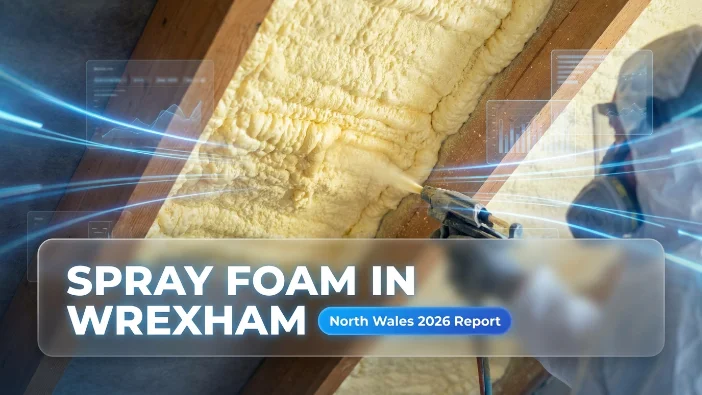
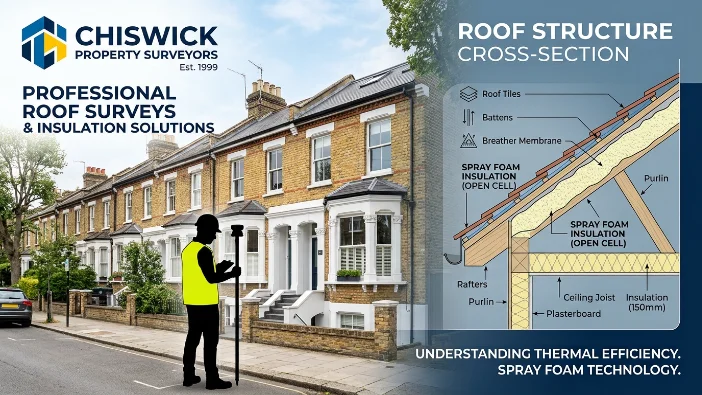
Open cell spray foam is widely used to insulate the underside of roof rafters in loft spaces — particularly where the loft is used as a habitable room or where the roof structure makes traditional roll-out insulation impractical. The foam bonds directly to the rafters, creating a warm roof construction that eliminates cold bridging and air infiltration.
Interior Wall Insulation
Open cell foam is an excellent choice for insulating interior stud walls — both for thermal performance and soundproofing. It fills the entire stud cavity, eliminating the gaps and compression issues associated with fibreglass or mineral wool batts.
Floor Joists and Underfloor Spaces
Applied between floor joists in suspended timber floor constructions, open cell foam seals draughts and provides effective thermal insulation underfoot — without the need to lift floorboards or undertake major building work.
Timber Frame Construction
In 2026, open cell spray foam is increasingly specified by architects and builders working on new timber frame homes. It integrates seamlessly with timber frame construction, filling every void within the structural frame and delivering consistent insulation performance throughout the building envelope.
Crawl Spaces and Basement Walls
Open cell foam is used in crawl spaces and basement areas to insulate walls and reduce air movement from the ground into the living space. Its breathability is an advantage here, as it allows any residual moisture to escape rather than becoming trapped.
What Are the Drawbacks of Open Cell Spray Foam in 2026?
Open cell spray foam is an outstanding product — but it’s important to understand its limitations before making a decision.
Lower R-Value Than Closed Cell Foam
With an R-value of around R-3.5 to R-4 per inch, open cell foam is less thermally efficient per inch than closed cell foam. In applications where space is very limited, or where maximum thermal performance is required, closed cell foam may be the better choice.
Not Suitable for External or Wet Areas
Open cell foam is not water resistant and should not be used in areas exposed to persistent moisture, standing water, or direct weather exposure. For external walls, flat roofs, or below-ground applications, closed cell foam is the appropriate product.
Mortgage Implications
As with closed cell foam, open cell spray foam applied to roof timbers has been flagged by some UK mortgage lenders as a potential concern during property valuations. While the industry and lenders are working towards clearer guidance in 2026, it remains important to consult a mortgage adviser before installation — particularly if you plan to sell or remortgage within the next few years.
Requires Professional Installation
Open cell spray foam is not a DIY product. It requires specialist equipment, trained operatives, and appropriate personal protective equipment during application. Always use a qualified, accredited installer for any spray foam project.
How Much Does Open Cell Spray Foam Insulation Cost in 2026?
Costs vary depending on the area to be treated, the thickness of foam required, and the complexity of the job. In the UK market in 2026, typical price ranges are:
| Application | Estimated Cost (2026) |
|---|---|
| Loft rafter insulation (average home) | £1,200 – £3,500 |
| Interior wall insulation (per room) | £400 – £1,200 |
| Underfloor insulation | £700 – £2,200 |
| Timber frame new build (per m²) | £15 – £30 per m² |
| Crawl space / basement walls | £800 – £2,500 |
Energy bill savings of 20–35% are commonly reported by homeowners following installation, meaning the investment typically pays for itself within five to eight years — and continues delivering savings for the lifetime of the building.
Choosing a Qualified Open Cell Spray Foam Installer in 2026
With demand for spray foam insulation growing rapidly, the number of installers operating across the UK has increased significantly. Not all are equal — so choosing the right contractor is critical.
Look for installers who are accredited by the National Insulation Association (NIA), the Insulation Assurance Authority (IAA), or whose products hold British Board of Agrément (BBA) certification. Always insist on a full property survey before any quote is provided, obtain at least three competitive quotes, and ensure any warranty is backed by insurance and provided in writing before work begins.
In 2026, the most reputable installers will also be able to provide documentation on the environmental credentials of the foam product being used — including its GWP rating and compliance with current UK building regulations.
Open Cell Spray Foam and UK Building Regulations in 2026
In 2026, spray foam insulation installations in the UK must comply with current Building Regulations — specifically Part L (Conservation of Fuel and Power) and Part C (Site Preparation and Resistance to Contaminants and Moisture). A professional installer will ensure all work meets these requirements and can provide the relevant documentation for your records.
For properties in conservation areas or listed buildings, additional planning consent may be required before insulation work can proceed. Always check with your local planning authority if your property has any heritage designations.
Conclusion: Is Open Cell Spray Foam Insulation the Right Choice for Your Home in 2026?
Open cell spray foam insulation in 2026 represents a mature, well-proven technology that delivers genuine benefits for homeowners looking to improve energy efficiency, reduce noise, and create a more comfortable living environment. With improved eco-friendly formulations, a competitive cost profile, and an expanding network of qualified installers across the UK, it has never been more accessible.
It is best suited to interior applications — loft spaces, timber frame walls, floor joists, and internal partitions — where its breathability, soundproofing, and air sealing properties can be fully utilised. For external or moisture-exposed areas, closed cell foam remains the more appropriate choice.
If you are considering open cell spray foam insulation in 2026, start with a professional energy assessment and a survey from an accredited local installer. The right guidance from the outset will ensure you choose the right product, for the right application, at the right price — and enjoy the benefits for decades to come.
Frequently Asked Questions
Is open cell spray foam insulation a good choice in 2026?
Yes. With improved eco-friendly formulations, excellent air sealing, and strong soundproofing performance, open cell foam remains one of the most effective interior insulation solutions available to UK homeowners in 2026.
What is the R-value of open cell spray foam in 2026?
Open cell foam delivers approximately R-3.5 to R-4 per inch. While lower than closed cell foam, it compensates with superior expansion, air sealing, and acoustic performance.
How does open cell foam differ from closed cell foam?
Open cell foam is softer, breathable, and more affordable — ideal for interior use. Closed cell foam is denser, waterproof, and more thermally efficient per inch — better suited for external or moisture-prone areas.
Can open cell spray foam cause mortgage problems in 2026?
Some lenders remain cautious about spray foam on roof timbers. The situation is improving in 2026 but it’s still worth speaking to a mortgage adviser before installation if you plan to sell or remortgage soon.
How much does open cell spray foam insulation cost in 2026?
Typical costs range from £1,200 to £3,500 for loft insulation in an average UK home, with energy bill savings of 20–35% helping to recoup the investment over five to eight years.