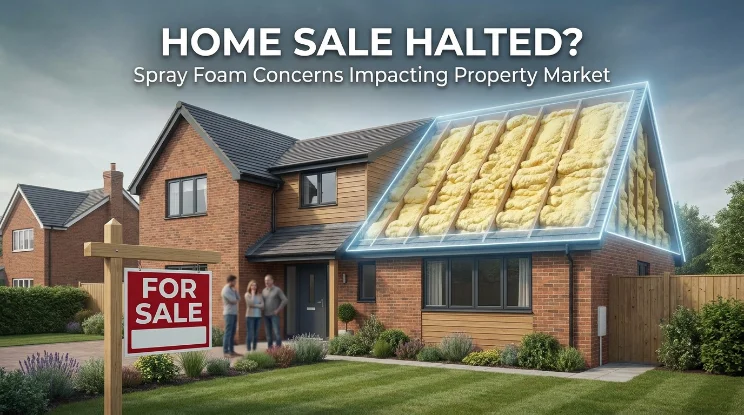
You have found a house you love in Hampshire, the offer has been accepted, and everything is moving forward. Then the survey comes back. Your solicitor calls to tell you that spray foam insulation has been found in the loft, and suddenly the purchase you were excited about is in doubt.
This is exactly the situation thousands of buyers across Hampshire face every year. In Southampton, Portsmouth, Winchester, Fareham, Gosport, Havant, Eastleigh, Andover, and towns and villages across the county, spray foam insulation is sitting in lofts quietly waiting to cause problems at the worst possible moment.
The good news is that spray foam does not have to end your purchase. But you do need to understand what it means, what questions to ask, and what steps to take before you exchange contracts.
This guide covers all of it. And if you need a removal estimate fast, you can get a free online estimate from Spray Foam Removal UK right now without picking up the phone.
Why Spray Foam Is Such a Problem for Buyers in Hampshire
Hampshire has one of the most varied housing stocks in England. The county includes Victorian terraces in Portsmouth and Southampton, post-war semis in Fareham and Gosport, 1960s and 1970s estates in Basingstoke and Andover, Georgian townhouses in Winchester, and rural properties spread across the New Forest and South Downs.
What many of these properties share is a history of spray foam insulation being applied to the underside of roof timbers. Government-backed energy efficiency schemes through the 2000s and early 2010s, including the ECO scheme and the Green Homes Grant, funded or heavily subsidised spray foam installation in hundreds of thousands of UK homes. Many Hampshire homeowners took up the offer.
At the time, it seemed like a good deal. Today, it is one of the most common reasons property sales in Hampshire fall apart.
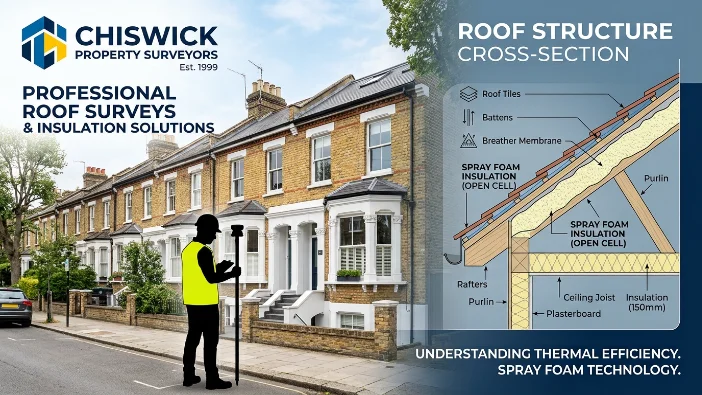
The problem is straightforward. Spray foam bonds tightly to roof timbers. Once it is in place, a surveyor cannot see through it. They cannot inspect the timber underneath it for rot, damp, woodworm, or structural movement. Because they cannot inspect it, they cannot give the lender the assurance the lender needs.
So they flag it. And most lenders treat that flag as a serious problem.
What Happens to Your Mortgage When Spray Foam Is Found
Around 250,000 UK homes have spray foam insulation, much of it installed under government schemes designed to improve energy efficiency. A significant number of those homes are in Hampshire. When a surveyor finds spray foam during a mortgage valuation, the lender faces a simple question: can we be confident this property is structurally sound? Because spray foam prevents proper inspection, the honest answer is often: no.
The result is that most high street lenders will either refuse the mortgage outright or ask for a specialist spray foam report before they will consider proceeding. Some lenders agree to lend on a property with spray foam only where detailed warranties or structural reports are present, but these documents are not easy to come by.
For buyers in Hampshire, this creates three possible outcomes when spray foam is discovered during a purchase.
The first is that your lender refuses to proceed entirely. The purchase cannot go ahead unless the foam is removed or another solution is agreed.
The second is that your lender asks for a specialist spray foam survey before deciding. This takes additional time and cost and may still result in a refusal.
The third is that the lender agrees to proceed but only if the foam is fully removed before exchange. In this case, the question of who pays for removal becomes part of the negotiation between buyer and seller.
Who Pays for Spray Foam Removal When You Are Buying
This is one of the most commonly asked questions in Hampshire property transactions where spray foam is involved. The honest answer is that it depends entirely on what you negotiate.
There is no fixed rule on who pays. It comes down entirely to what you negotiate. In practice, most Hampshire buyers in this position take one of three routes.
The first is to ask the seller to have the foam professionally removed before exchange. This is the cleanest solution. The property becomes mortgage-ready and the buyer proceeds with confidence. Many sellers agree to this because the alternative is losing the sale entirely.
The second is to negotiate a reduction in the purchase price that covers the cost of removal. The buyer agrees to purchase at a lower price and arranges removal themselves after completion. This only works if your lender is willing to proceed on the property as it stands, which many will not.
The third is to walk away. If the seller will not negotiate and your lender will not proceed, withdrawing is sometimes the right decision. Spray foam that has been left for years may be hiding timber damage that costs significantly more to repair than the removal itself.
What to Check Before You Decide
If you are a buyer in Hampshire and spray foam has come up on your survey, there are four things you need to find out before you make any decisions.
What type of foam is it? There are two main types. Open-cell foam is softer and more breathable. It is generally considered lower risk by surveyors and some lenders may be more flexible about it. Closed-cell foam is denser, harder, and bonds more aggressively to timber. It is the type most associated with mortgage refusals and the type most likely to be hiding timber damage underneath.
How long has it been there? Spray foam that has been in place for ten or more years has had more time to trap moisture and potentially cause timber damage. Newer installations may have caused less damage but lenders are increasingly cautious regardless of age.
Is there any documentation? Some foam installations come with warranties or installation certificates. These do not satisfy most lenders but they can be useful in understanding what was installed and by whom.
Has a specialist assessed the timber? A standard surveyor cannot see through the foam. A specialist spray foam survey involves an accredited technician assessing the foam type, coverage, and where possible the condition of exposed areas of timber. This gives you a clearer picture of what you are dealing with before you commit.
According to RICS, the Royal Institution of Chartered Surveyors, in their official spray foam consumer guide, homeowners and buyers should seek independent expertise from a qualified professional before making decisions about properties with spray foam insulation. Their guidance makes clear that the presence of foam creates a genuine valuation and inspection difficulty that cannot be resolved without professional input.
Hampshire Areas Where Spray Foam Is Commonly Found
Spray foam is found across all of Hampshire but certain areas have a particularly high concentration due to the age and type of housing stock.
Portsmouth and Southsea have dense Victorian and Edwardian terraces across Fratton, North End, Copnor, and Baffins. These properties were commonly targeted during government energy schemes and spray foam is a frequent finding in surveys here.
Southampton has a mix of post-war semis and Victorian terraces across areas like Bitterne, Shirley, Portswood, and Thornhill. The SO14 to SO19 postcode band has a high rate of spray foam discovery during property transactions.
Fareham and Gosport have large areas of 1950s and 1960s council-built housing that was later sold under right to buy schemes. Many of these properties had insulation schemes applied during the 2000s.
Havant and Waterlooville include significant numbers of post-war terraces and semis across the PO7, PO8, and PO9 postcode areas. Spray foam is regularly flagged in surveys here.
Eastleigh and Chandler’s Ford have a mix of interwar semis and 1960s estates. The SO50 and SO53 areas see regular spray foam cases in property transactions.
Winchester and surrounding villages include Georgian and Victorian properties in the city itself plus a wide range of rural homes in the SO21, SO22, and SO23 areas. Spray foam is less common here than in coastal areas but is found regularly, particularly in older cottages and village properties.
Andover and Basingstoke have large post-war estates built during the 1960s and 1970s new town expansion. Spray foam installation was common across the SP10, SP11, RG21, RG22, and RG24 postcodes during government energy schemes.
Fleet, Aldershot, and Farnborough cover a broad range of 1930s through to 1980s housing in the GU postcodes. Spray foam is frequently found in lofts across this area during surveys.
What Happens During a Spray Foam Removal in Hampshire
If you are buying a Hampshire property and the seller has agreed to remove the foam before exchange, or if you are considering arranging removal yourself, here is what the process looks like.
A specialist assesses the foam type and coverage. For most Hampshire properties this takes a single visit and a specialist spray foam survey can be arranged quickly when a transaction is time-sensitive.
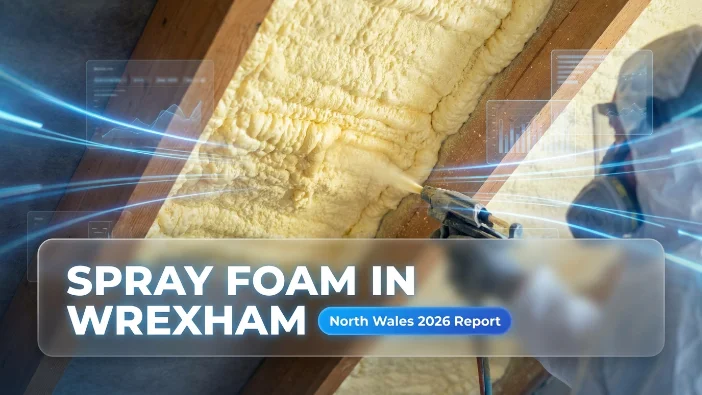
Trained technicians remove all the foam using specialist equipment. This is not a job for a general builder. Partial or poor removal does not satisfy lender requirements and can make the situation worse.
Once the foam is cleared, the roof timbers are fully inspected. Any damage found is discussed with the property owner before any additional work is agreed. There are no hidden costs or surprise extras.
A post-removal report is produced. This document is what your surveyor and mortgage lender need to confirm the property is now fully inspectable and mortgage-ready.
For most Hampshire terraced or semi-detached homes, the full removal process takes one to two days.
How Much Does Spray Foam Removal Cost in Hampshire
Costs vary depending on the size of the roof space, the type of foam, and whether timber repairs are needed. For most standard Hampshire homes the range is between £1,500 and £5,500.
If the seller is funding the removal, this cost typically comes out of the sale proceeds or is reflected in a price reduction. If you are negotiating a price reduction to cover removal yourself, getting an estimate before you agree a figure is important. You need to know what you are actually negotiating for.
Getting an estimate is free, takes about two minutes online, and requires no phone call or commitment.
Frequently Asked Questions
Can I still buy a house in Hampshire if it has spray foam insulation?
Yes, in many cases. The key is understanding what type of foam is present, whether your lender will proceed, and whether a removal or price negotiation is possible. Many Hampshire purchases with spray foam
Should I ask the seller to remove the spray foam before I buy?
In most cases, yes. Professional removal before exchange is the cleanest solution. It makes the property mortgage-ready and removes the risk of hidden timber damage being discovered after you have become the owner.
What if my lender says they will not lend on a spray foam property?
You have two main options. The first is to make removal a condition of the purchase. The second is to find a different lender, though the pool of lenders willing to proceed on spray foam properties is very small. In practice, most buyers in this situation find that making removal a condition of sale is the most straightforward route.
Does the type of foam matter?
Yes. Open-cell foam is generally treated as lower risk. Closed-cell foam is the type most commonly associated with mortgage refusals and hidden timber damage. A specialist survey will confirm which type is present.
Does Spray Foam Removal UK cover all areas of Hampshire?
Yes. Southampton, Portsmouth, Winchester, Fareham, Gosport, Havant, Eastleigh, Andover, Basingstoke, Farnborough, Aldershot, Fleet, Waterlooville, Romsey, Totton, Chandler’s Ford, Hedge End, and all surrounding Hampshire areas are covered.
Do Not Let Spray Foam Stop Your Hampshire Purchase
Spray foam does not have to end your Hampshire purchase. Act quickly, use the right specialists, and it becomes a solvable problem.
Get Your Free Online Estimate Now.
If you are mid-purchase and need answers fast, do not wait for the situation to resolve itself. Get the information you need today and keep your Hampshire home purchase on track.